Receipt Template (General)
Create Receipt Template (General)
Receipt Template (General)
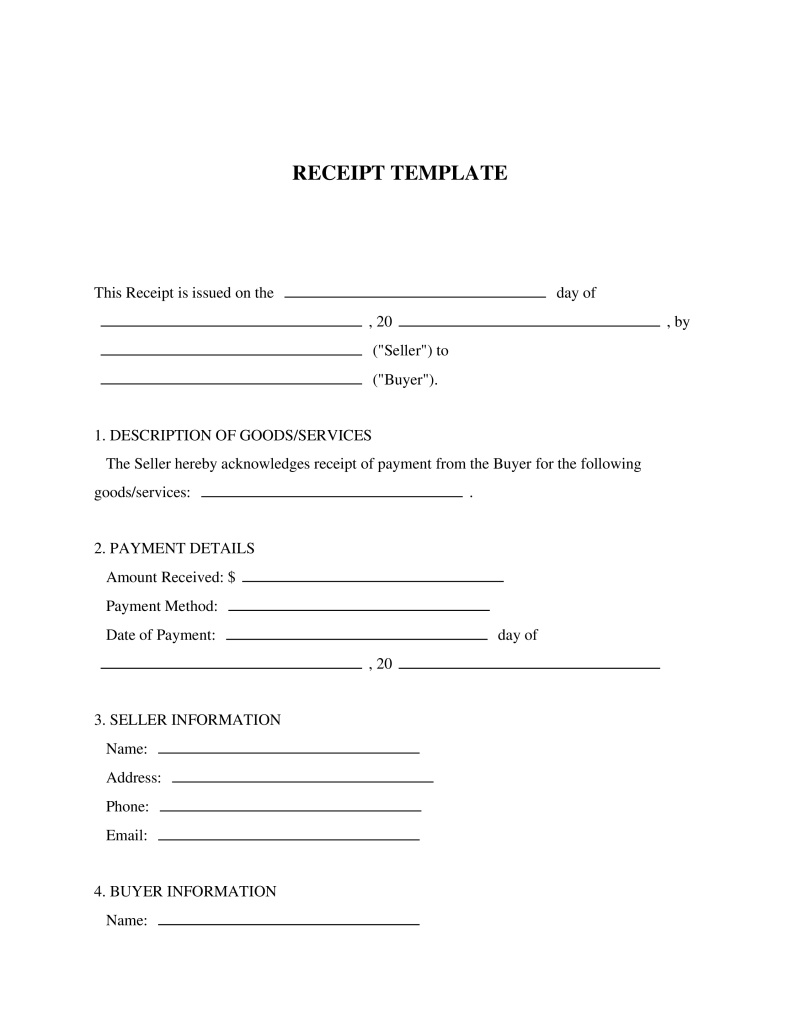
A receipt template provides a standardized format for recording transactions, ensuring clarity and proof of purchase for both buyers and sellers.
Answer the question(s) below to create your Receipt Template (General)
Receipt Type
Select the type of receipt you are issuing from the options provided. This helps clarify the purpose of the transaction, which is important for record-keeping and tax purposes. If you choose "Other," briefly describe the type of receipt in the space provided.
Provide details if 'Other' was selected.
Table of Contents
What is a Receipt Template (General)?
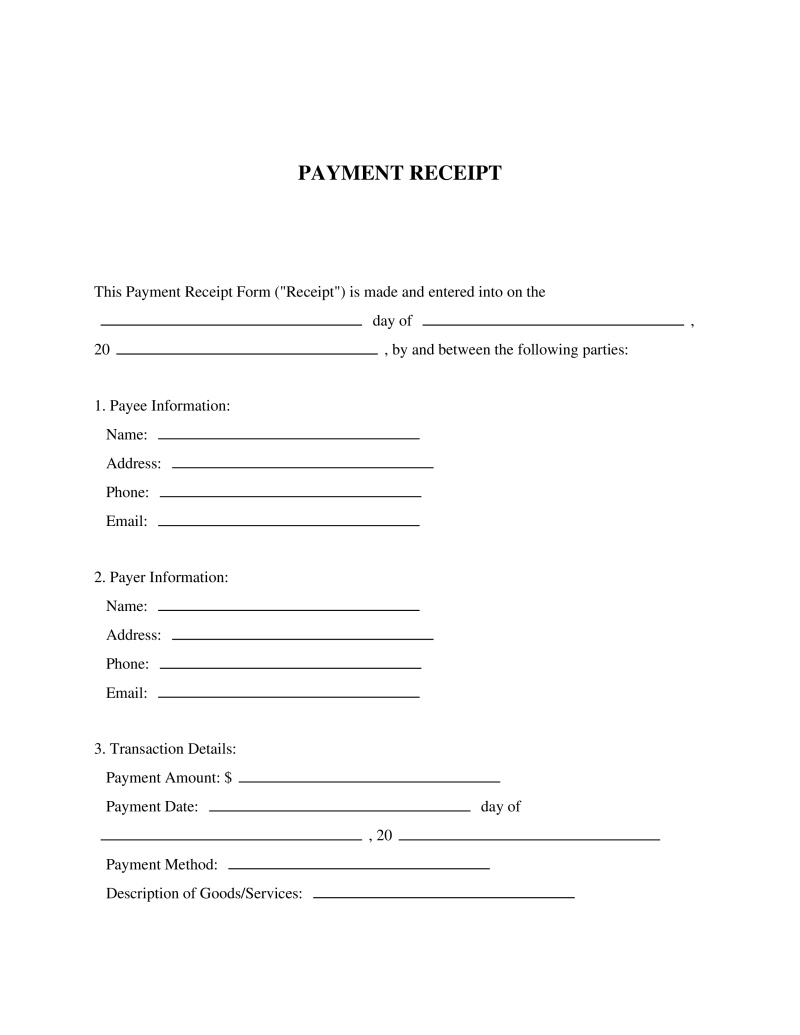
A general receipt template is a standardized document used to acknowledge the transfer of money, goods, or services from one party to another. It serves as proof of a transaction, detailing the items or services exchanged, the amount paid, the date, and the identities of the parties involved. Businesses, individuals, and organizations utilize these templates to maintain accurate records, track financial activities, and provide formal confirmation of payments received or made, which can be crucial for accounting, tax purposes, and dispute resolution.
Purpose and Function of a General Receipt
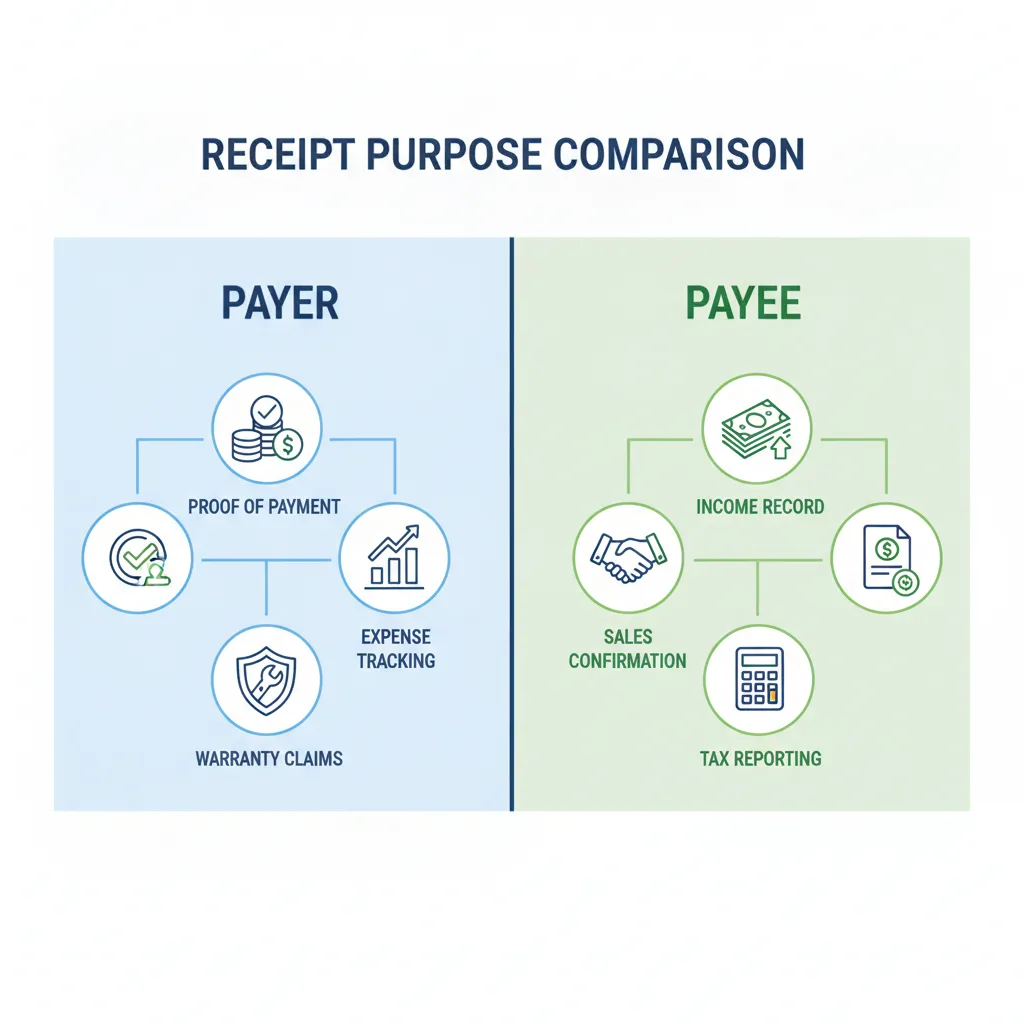
The primary purpose of a general receipt is to create a verifiable record of a transaction. This record can be vital for both the payer and the payee. For the payer, it confirms that payment was rendered and goods or services were received, protecting against claims of non-payment. For the payee, it documents income and the completion of a sale or service, aiding in financial reconciliation and inventory management.
Beyond simple acknowledgment, receipts serve several critical functions:
- Proof of Purchase - Establishes that an item or service was acquired, which is necessary for returns, warranties, or exchanges.
- Financial Record-Keeping - Aids in tracking expenses and income for personal budgeting, business accounting, and auditing.
- Tax Documentation - Provides evidence of deductible expenses or taxable income, supporting declarations to tax authorities. USAGov provides guidance on obtaining tax forms, including instructions and mailing addresses, underscoring the importance of accurate financial records for tax purposes.
- Dispute Resolution - Offers concrete evidence in case of discrepancies or disagreements regarding payment, delivery, or service provision.
- Inventory Management - For businesses, receipts can help track the movement of goods, indicating sales and reducing inventory counts.
Key Elements of a General Receipt Template
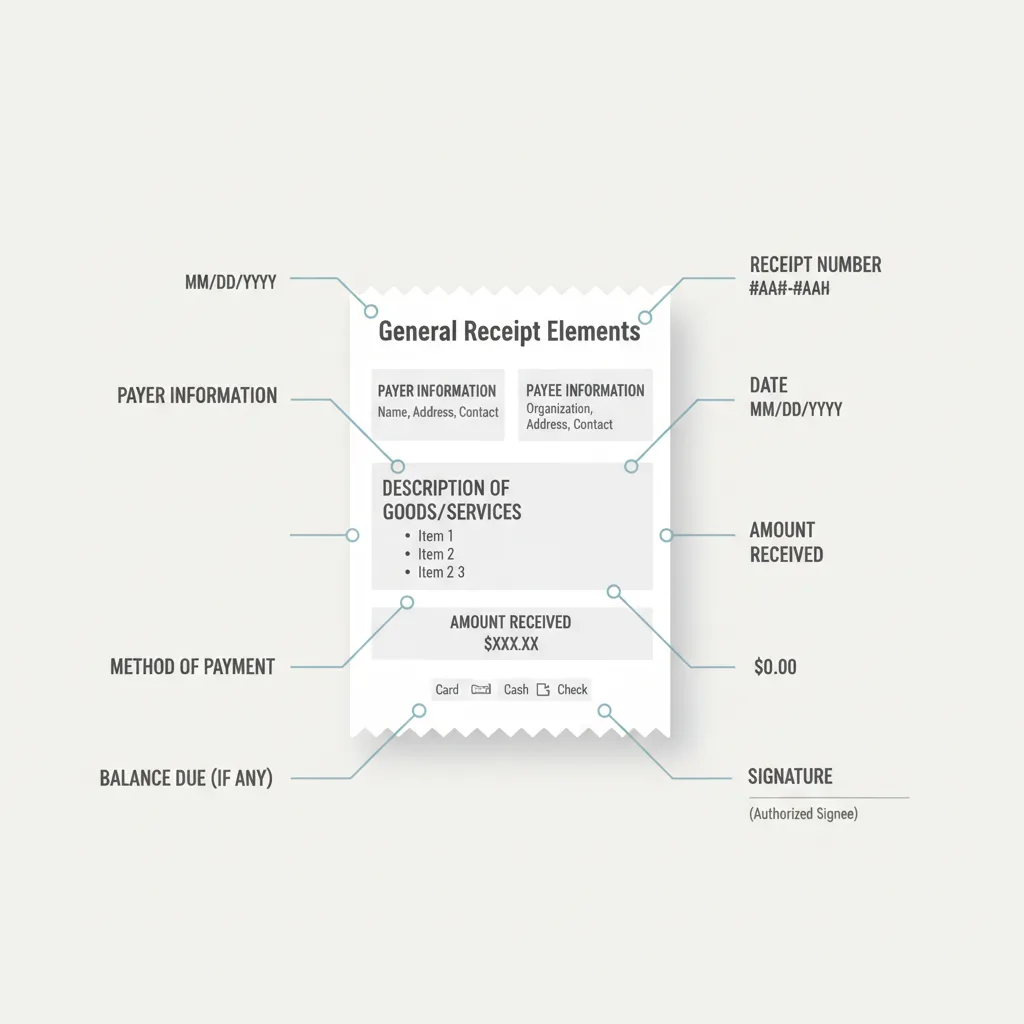
While specific fields may vary, a comprehensive general receipt template typically includes several core components to ensure clarity and completeness. These elements ensure that all necessary information about the transaction is captured and easily accessible:
- Receipt Number - A unique identifier for tracking and referencing the transaction.
- Date of Transaction - The exact date when the payment was received and the transaction occurred.
- Payer's Information - The name and, sometimes, contact details of the individual or entity making the payment.
- Payee's Information - The name and contact details of the individual or entity receiving the payment.
- Amount Received - The total monetary value of the transaction, typically displayed in both numerical and written form to prevent discrepancies.
- Method of Payment - How the payment was made (e.g., cash, check, credit card, bank transfer).
- Description of Goods/Services - A clear, itemized list or detailed description of what was purchased or for what service the payment was made.
- Balance Due (if any) - If the payment is partial, this field indicates the remaining amount owed.
- Signature - The signature of the person receiving the payment, confirming its acknowledgment.
- Notes/Memo Line - An optional field for additional details, special instructions, or relevant comments.
Types of Receipts
While the 'general receipt' serves broad purposes, various specialized receipts exist to cater to specific transactional contexts. Each type is tailored to capture relevant details for its particular use case:
- Sales Receipt - Issued by businesses to customers at the point of sale, detailing items purchased, quantities, prices, taxes, and the total amount.
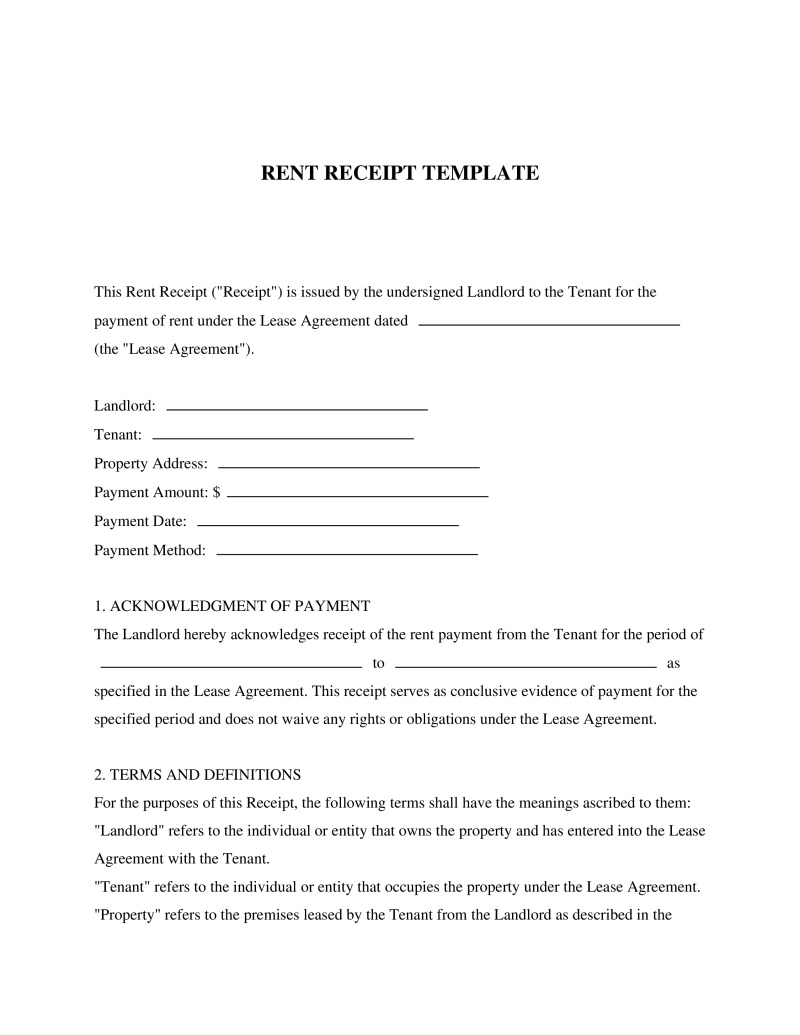
- Rent Receipt - Provided by landlords to tenants upon receiving rent payments, specifying the rental period, property address, and amount paid.
- Donation Receipt - Issued by non-profit organizations to donors, acknowledging charitable contributions for tax deduction purposes.
- Service Receipt - Given after the completion of a service, such as repairs or consultations, detailing the service provided, hours worked, and associated costs.
- Delivery Receipt - Confirms the successful delivery of goods, often requiring a recipient's signature to acknowledge receipt of items.
- Payment Receipt - A broad category, often used interchangeably with general receipt, specifically confirming that a payment has been made for any purpose.
Legal and Tax Implications
Receipts carry significant legal and tax implications for both individuals and businesses. They are often considered primary evidence in legal disputes involving financial transactions, such as contract breaches or claims of non-payment. For tax purposes, receipts are indispensable for substantiating income and expenses.
One important concept related to receipts and taxation is the constructive receipt of income. According to federal regulations:
- Constructive Receipt of Income - Income is considered constructively received when it is credited to the taxpayer's account, set apart, or otherwise made available so that the taxpayer may draw upon it at any time, or could have drawn upon it during the taxable year if notice of intention to withdraw had been given. This principle applies even if the income is not physically possessed by the taxpayer (26 CFR § 1.451-2). A receipt can serve as documentation of when funds were made available, thereby establishing the point of constructive receipt for tax reporting.
For businesses, maintaining accurate records supported by receipts is crucial for compliance with tax laws, financial audits, and demonstrating due diligence. Individuals rely on receipts to claim deductions, prove eligibility for credits, and verify income for various government programs or loan applications.
Best Practices for Issuing and Retaining Receipts
To maximize the utility and validity of receipts, both issuers and recipients should adhere to certain best practices. These practices ensure clarity, accuracy, and accessibility of transactional records over time:
- Complete All Fields - Ensure every relevant field on the receipt template is accurately filled out, leaving no ambiguity regarding the transaction details.
- Be Specific - Provide clear and detailed descriptions of goods or services. Vague entries can lead to misunderstandings or difficulties in substantiating claims later.
- Issue Promptly - Receipts should be issued immediately upon completion of the transaction or receipt of payment.
- Retain Copies - Both the payer and payee should keep copies of the receipt for their records. Digital copies are often acceptable and can be easier to store and retrieve.
- Organize Records - Establish a systematic method for filing and storing receipts, whether physical or digital, to facilitate easy retrieval for tax purposes, audits, or future reference.
- Verify Information - Payers should review receipts upon receipt to ensure all details are correct before leaving the transaction point.
- Digital vs. Physical - While physical receipts are traditional, digital receipts (e.g., emailed PDFs) offer convenience and often greater longevity. Ensure digital copies are backed up securely.
Frequently Asked Questions
A receipt serves as proof of a transaction and can be used as evidence in legal proceedings. While not a contract, it legally acknowledges the transfer of goods, services, or money.
The Internal Revenue Service (IRS) generally recommends keeping tax-related receipts and records for at least three years from the date you filed your original return or two years from the date you paid the tax, whichever is later. Some situations may require longer retention.
Yes, a handwritten receipt can be perfectly valid as long as it contains all the essential information, such as the date, amount, description, and details of both parties. Clarity and completeness are more important than the format.
An invoice is a request for payment, detailing what is owed for goods or services provided. A receipt, conversely, is proof that payment has already been received for those goods or services.
While a signature from the payee adds a layer of formal acknowledgment and authenticity, it is not always strictly legally required for a receipt to be valid, especially for digital or automated transactions. However, it is a best practice for significant or cash transactions.
Yes, digital receipts are generally considered as valid as paper receipts for record-keeping, tax purposes, and legal evidence. It is important to ensure digital receipts are legible, unaltered, and securely stored.
Sources
- Formularios para declarar impuestos | USAGov - Provides information on obtaining tax forms, including instructions and mailing addresses.
- Constructive receipt of income | 26 CFR § 1.451-2 - Defines the concept of constructive receipt of income for tax purposes.
Related Documents
Forms commonly used with Receipt Template (General).
Not the form you're looking for?
Try our legal document generator to create a custom document
Disclaimer: The templates available on this website are provided for general informational purposes only and do not constitute legal advice. They are not intended to be, and should not be interpreted as, compliant with any specific legal, regulatory, or privacy requirements. These templates are not a replacement for professional legal guidance and should not be relied upon for any particular matter or circumstance. Users are strongly encouraged to seek advice from a qualified attorney licensed in their jurisdiction before using, modifying, or relying on any template.
All templates are provided on an "as is," "with all faults," and "as available" basis. The provider disclaims any and all warranties of any kind, whether express, implied, statutory, or otherwise, including without limitation warranties of merchantability, fitness for a particular purpose, title, or non-infringement.
LegalTemplates.com makes no guarantees or representations regarding the accuracy, completeness, expected outcomes, or reliability of the materials contained in these templates or any materials referenced or linked from them.