Wyoming Power of Attorney Form
A Wyoming Power of Attorney Form is a legal instrument that authorizes an appointed agent to manage financial or medical affairs on behalf of a principal.
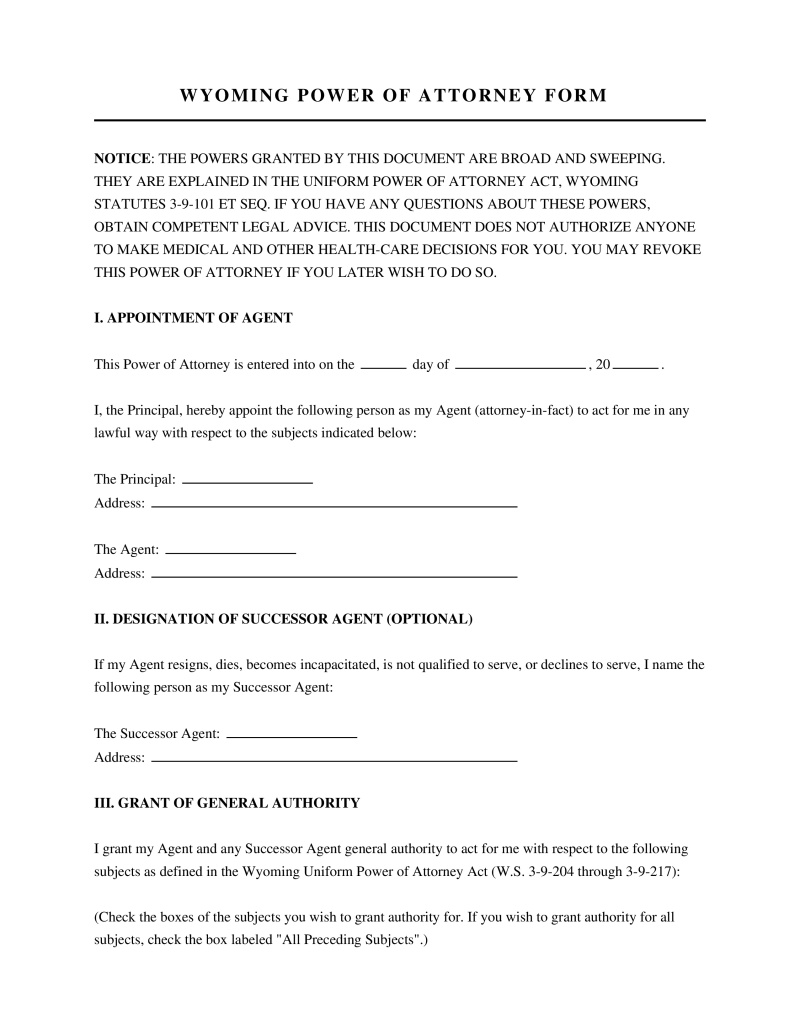
Authority Effective Timing
Many powers of attorney are effective immediately. A springing power of attorney becomes effective only after a stated event, commonly the Principal's incapacity, but some jurisdictions impose special requirements for proving that event.
Use this only if the authority should not begin immediately and should start on a calendar date.
Describe the triggering event clearly, such as written certification of incapacity by one or two licensed physicians.
For springing authority, third parties often need clear proof before accepting the Agent's authority.
Use precise language so banks, healthcare providers, or other institutions can verify when the authority has begun.
Table of Contents
What is a Wyoming Power of Attorney Form?
A Wyoming Power of Attorney Form is a legal document that allows an individual, known as the principal, to grant authority to another person, referred to as the agent or attorney-in-fact, to make decisions and act on their behalf. This instrument is crucial for planning for future incapacity or for delegating specific responsibilities when the principal is unable to act themselves. It ensures that financial, medical, or other personal matters can be managed continuously and according to the principal's wishes.
Types of Wyoming Power of Attorney Forms
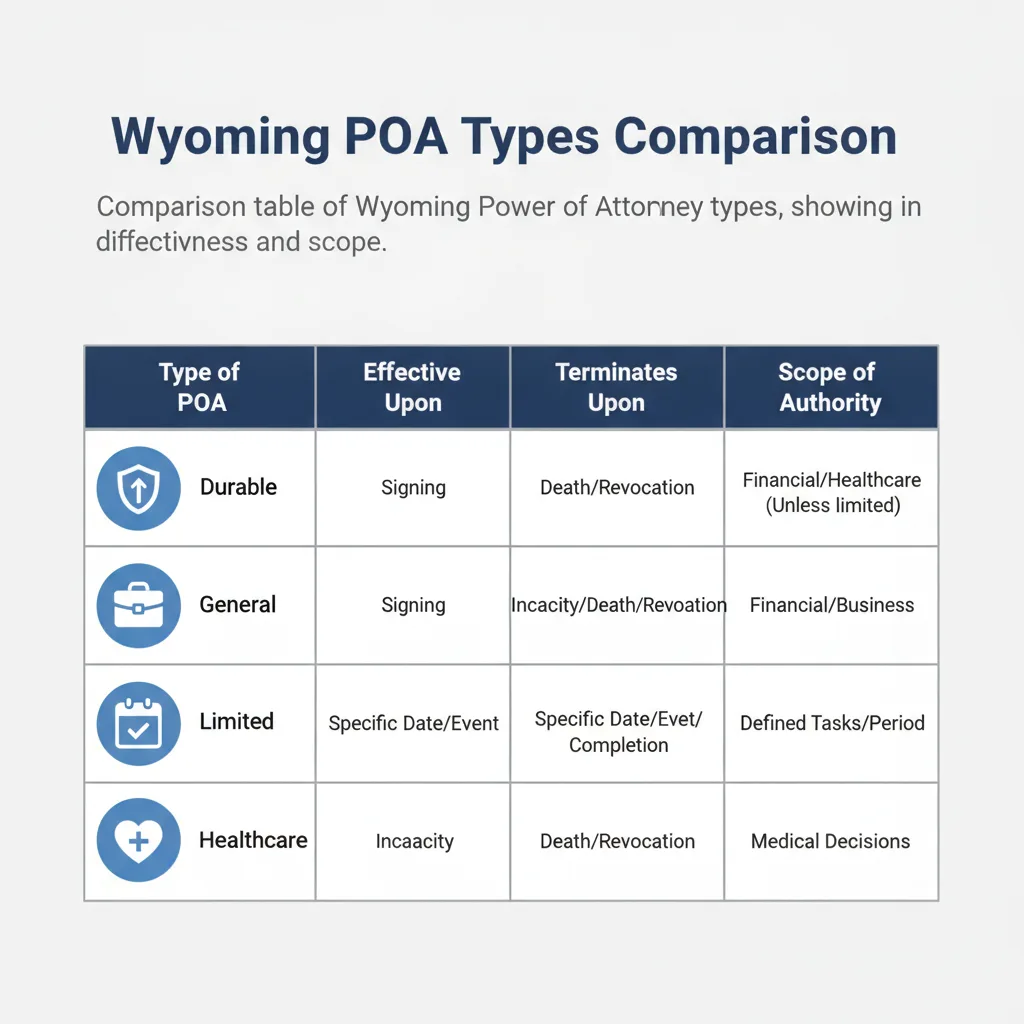
Wyoming law recognizes several types of power of attorney forms, each designed for specific purposes and circumstances. The choice of form depends on the scope of authority the principal wishes to grant and the conditions under which that authority will be exercised:
- Durable Power of Attorney - This form remains effective even if the principal becomes incapacitated or disabled. It is a common choice for long-term planning, ensuring that an agent can manage affairs without interruption due to unforeseen health events.
- General Power of Attorney - This grants broad authority to the agent to act on the principal's behalf in all financial and business matters. Unlike a durable power of attorney, a general power of attorney typically terminates if the principal becomes incapacitated.
- Limited (or Special) Power of Attorney - This grants the agent specific, narrowly defined powers for a particular transaction or period. For example, it might authorize an agent to sell a specific property, manage a single investment account, or act for a defined duration.
- Healthcare Power of Attorney (or Medical Power of Attorney) - This document empowers an agent to make medical decisions for the principal if they are unable to do so themselves. It often includes provisions for end-of-life care, treatment preferences, and access to medical records.
- Springing Power of Attorney - This type of power of attorney becomes effective only upon the occurrence of a specified future event, such as the principal's incapacitation, as determined by a physician. It is less common today, as many prefer a durable power of attorney for immediate effectiveness.
Key Parties Involved
Understanding the roles of the individuals involved in a Wyoming Power of Attorney is fundamental to its proper execution and function. Each party has distinct responsibilities and rights that are established within the document:
- Principal (Grantor) - This is the individual who creates the power of attorney and grants authority to another person. The principal must be of sound mind and legal age (18 years or older in Wyoming) at the time of signing to ensure the document's validity.
- Agent (Attorney-in-Fact) - This is the individual designated by the principal to act on their behalf. The agent must be a competent adult and is expected to act in the principal's best interests, adhering to the terms outlined in the power of attorney.
- Successor Agent - The principal may name one or more successor agents to serve if the primary agent is unable or unwilling to act. This provision helps ensure continuity of representation.
Creating a Wyoming Power of Attorney
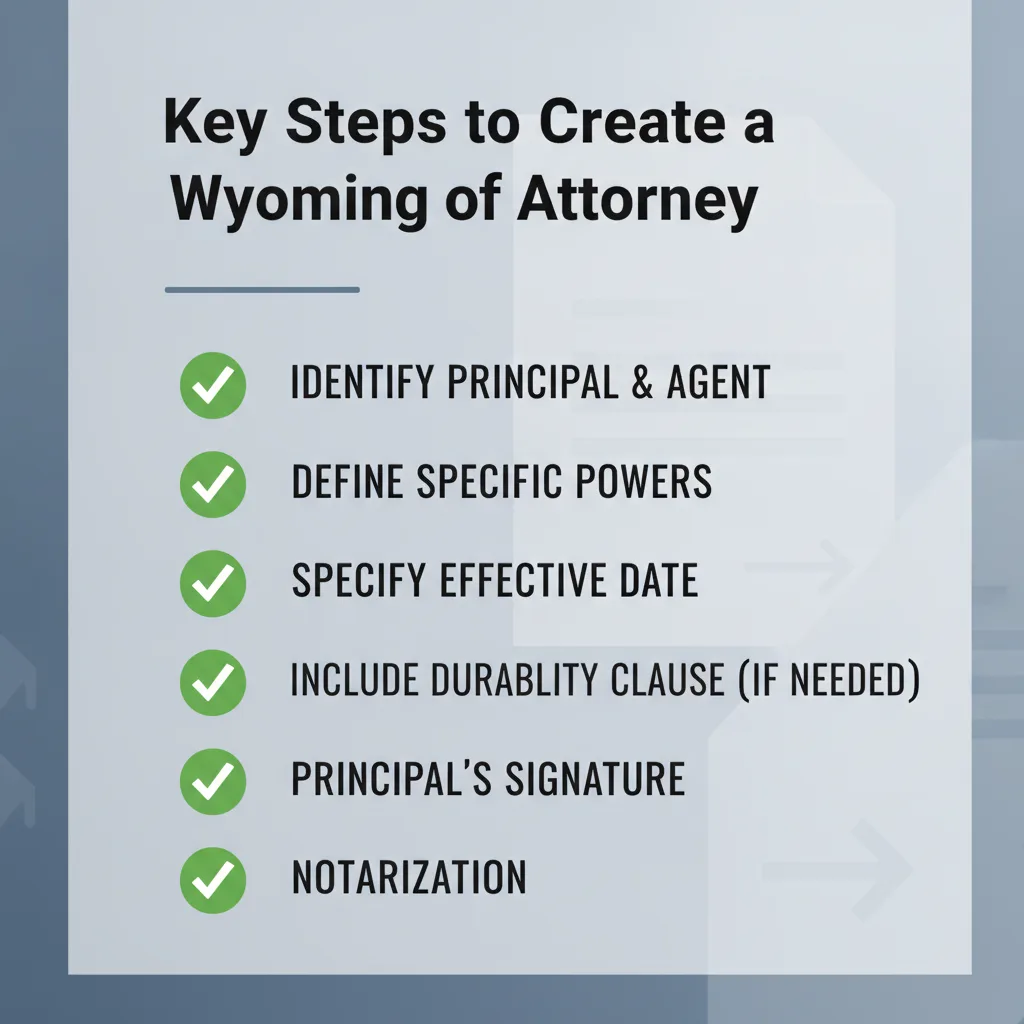
The creation of a valid Wyoming Power of Attorney Form involves several important steps to ensure it accurately reflects the principal's intentions and holds legal standing. While specific forms can vary, certain elements are universally crucial:
Essential components for a valid Wyoming Power of Attorney generally include:
- Clear Identification of Parties - The full legal names and addresses of both the principal and the designated agent (and any successor agents) must be clearly stated.
- Grant of Authority - The document must explicitly detail the specific powers granted to the agent. This can range from broad general powers to a very narrow, limited scope, depending on the type of power of attorney.
- Effective Date and Conditions - The power of attorney should specify when it becomes effective (e.g., immediately upon signing, or upon a specific event for a springing power of attorney).
- Durability Clause (if applicable) - For a durable power of attorney, specific language must be included stating that the authority granted remains effective even if the principal becomes incapacitated.
- Principal's Signature - The principal must sign the document voluntarily and while possessing the mental capacity to understand its contents and implications.
- Notarization - A Wyoming Power of Attorney generally requires notarization. This involves the principal signing the document in the presence of a notary public, who verifies their identity and witnesses the signature.
Revoking a Wyoming Power of Attorney
A principal may revoke a Wyoming Power of Attorney at any time, provided they are of sound mind and possess the legal capacity to do so. Revocation is an important right that allows the principal to regain full control over their affairs or to appoint a new agent.
To effectively revoke a power of attorney, the following steps are typically recommended:
- Create a Written Revocation Document - Prepare a formal document explicitly stating the principal's intention to revoke the existing power of attorney. This document should clearly identify the original power of attorney being revoked.
- Notarization - The revocation document should be signed by the principal in the presence of a notary public.
- Provide Notice to Agent and Third Parties - It is crucial to notify the previously appointed agent, as well as any banks, financial institutions, healthcare providers, or other third parties who may have acted on the agent's authority. This prevents the agent from continuing to act on the principal's behalf after the revocation.
Frequently Asked Questions
Power of Attorney in other states
Not the form you're looking for?
Try our legal document generator to create a custom document
Disclaimer: The templates available on this website are provided for general informational purposes only and do not constitute legal advice. They are not intended to be, and should not be interpreted as, compliant with any specific legal, regulatory, or privacy requirements. These templates are not a replacement for professional legal guidance and should not be relied upon for any particular matter or circumstance. Users are strongly encouraged to seek advice from a qualified attorney licensed in their jurisdiction before using, modifying, or relying on any template.
All templates are provided on an "as is," "with all faults," and "as available" basis. The provider disclaims any and all warranties of any kind, whether express, implied, statutory, or otherwise, including without limitation warranties of merchantability, fitness for a particular purpose, title, or non-infringement.
LegalTemplates.com makes no guarantees or representations regarding the accuracy, completeness, expected outcomes, or reliability of the materials contained in these templates or any materials referenced or linked from them.