Change Order Form
A Change Order Form documents modifications to a contract, detailing changes in scope, costs, or timelines, ensuring clarity between parties.
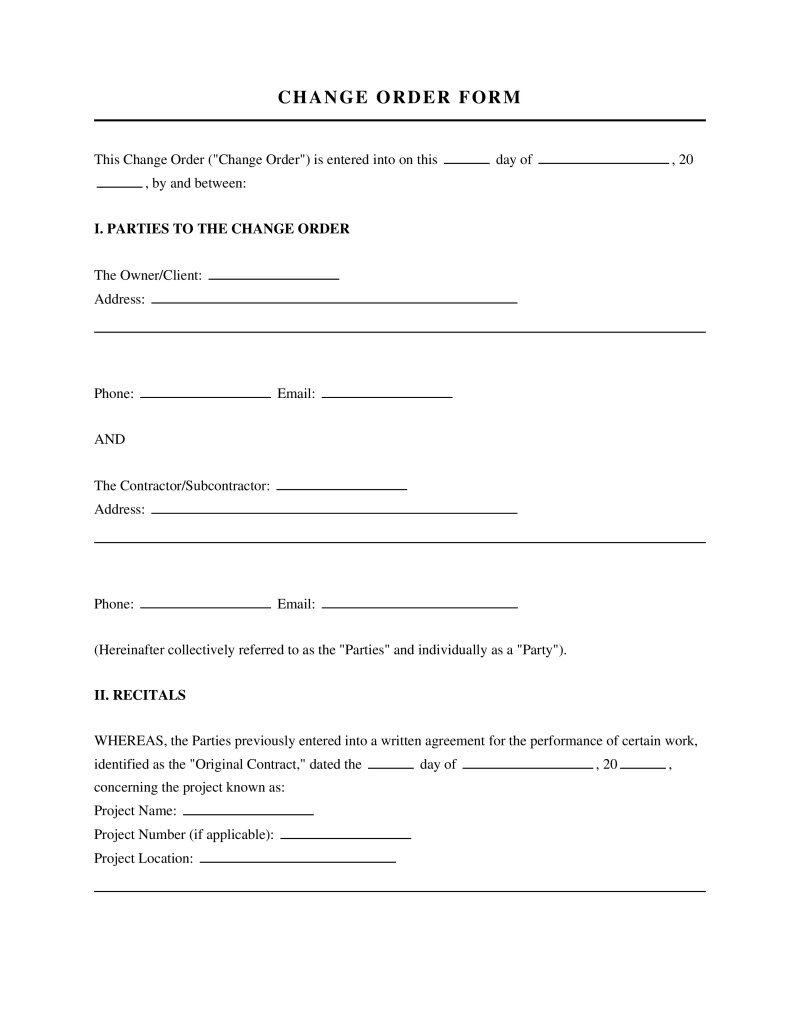
Change Type
Select the main category that best describes the change being requested.
Provide details if 'Other' was selected.
Table of Contents
What is a Change Order Form?
A Change Order Form is a formal document used to modify the terms of an existing contract, most commonly within the construction industry. It serves as a written agreement between the parties involved, typically an owner and a contractor, to adjust the original scope of work, project cost, or schedule. This form ensures that all changes are officially documented, preventing misunderstandings and providing a clear record of modifications to the initial contractual agreement.
Purpose and Necessity of Change Orders
Change orders are essential instruments in contract management, particularly in dynamic environments like construction and service provision. They provide a structured mechanism to address unforeseen circumstances, evolving requirements, or client-requested modifications that arise after a contract has been signed. Without a formal change order process, alterations to a project could lead to disputes, cost overruns, and delays, as the original contract would not reflect the new terms.
The necessity of a Change Order Form stems from the need for transparency and accountability. Projects rarely proceed exactly as initially planned, and changes are often inevitable. By documenting these changes, all parties acknowledge and agree to the revised terms, which legally bind them to the new scope, costs, and timelines. This formal process protects both the client from unexpected charges and the contractor from performing extra work without compensation.
Key Elements of a Change Order Form
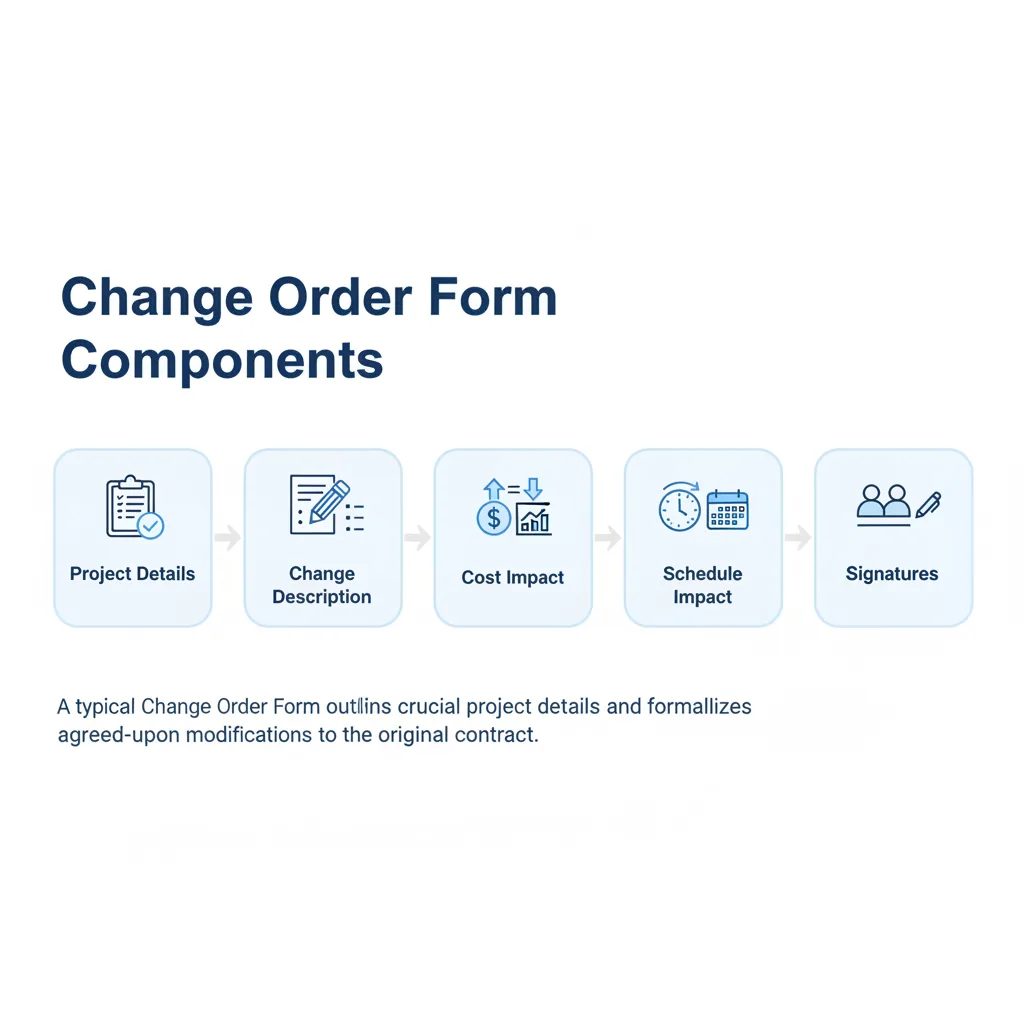
While the specific layout and terminology may vary, a Change Order Form typically includes several core components to ensure clarity and enforceability. These elements provide a comprehensive record of the modification and its impact on the original agreement. Official forms, such as those provided by the California Department of Transportation or the Oregon Construction Contractors Board, illustrate these common sections.
- Project Identification - Details such as the project name, number, and original contract date to link the change order to the specific project.
- Change Order Number - A unique identifier for tracking purposes, ensuring each modification is distinct.
- Description of Change - A clear, detailed explanation of the work being added, removed, or altered. This section often includes drawings, specifications, or other supporting documentation.
- Reason for Change - An explanation of why the change is necessary, whether due to unforeseen conditions, design changes, or client requests.
- Impact on Contract Sum - A precise breakdown of how the change affects the total cost of the project. This includes itemized costs for labor, materials, equipment, and any associated overhead or profit.
- Impact on Project Schedule - Any adjustments to the project's completion date or key milestones as a result of the change.
- Authorization Signatures - Spaces for authorized representatives from all involved parties (e.g., owner, contractor, architect/engineer) to sign, indicating their agreement to the revised terms.
- Date of Agreement - The date on which all parties formally agree to the change.
- Original Contract Reference - Explicit reference to the original contract and any previous change orders that have been executed.
When a Change Order Form is Used
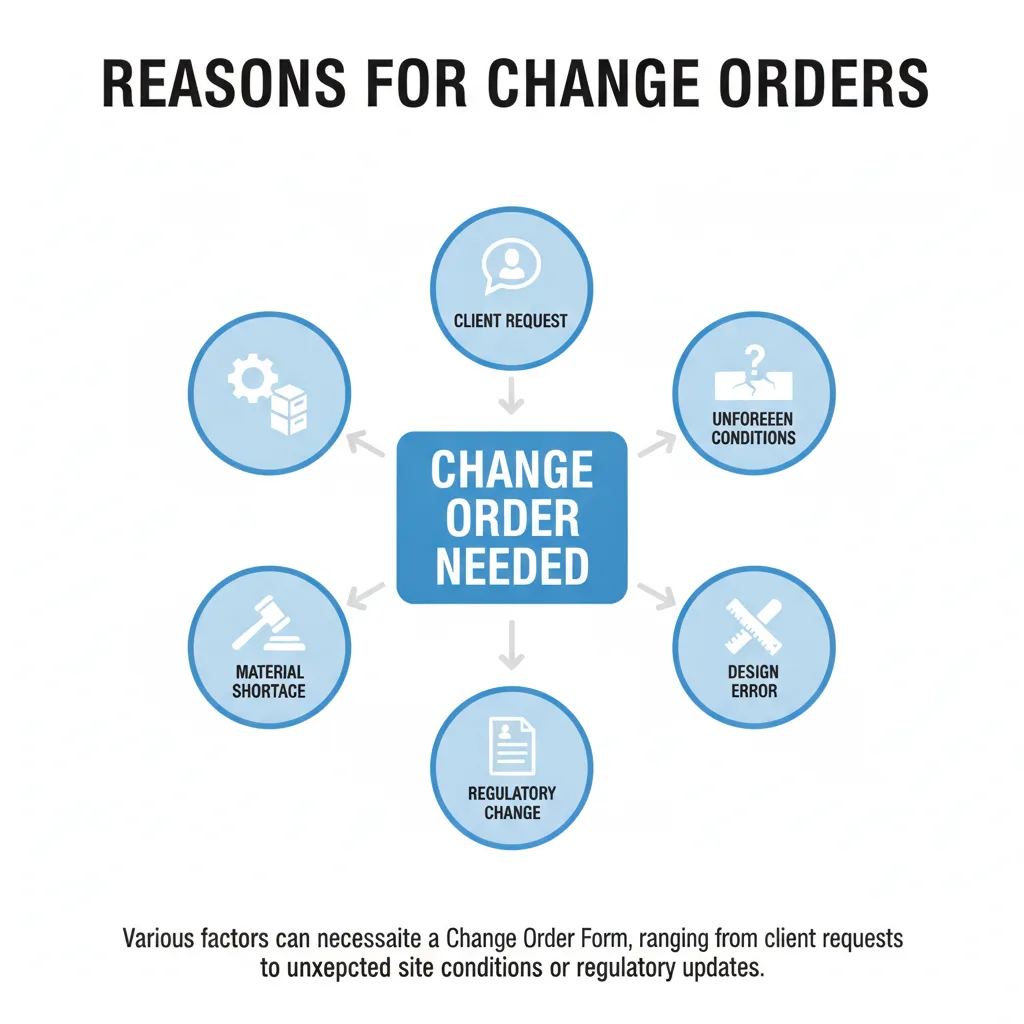
A Change Order Form is utilized whenever there is a deviation from the original scope of work, cost, or schedule outlined in the initial contract. This can occur in various scenarios across different industries, though it is most prevalent in construction projects. The form ensures that any adjustments are formally recognized and agreed upon by all parties.
Common situations that necessitate a Change Order Form include:
- Client-Requested Modifications - When the client or owner asks for alterations to the design, materials, or scope of work that were not part of the original plan.
- Unforeseen Site Conditions - Discovery of unexpected issues such as soil contamination, undisclosed underground utilities, or differing geological conditions that require additional work or different methods.
- Design Errors or Omissions - When flaws or missing details in the original design documents necessitate corrective or additional work.
- Regulatory Changes - New building codes, environmental regulations, or safety standards that emerge during the project and require adjustments to the work.
- Material or Labor Availability Issues - Shortages of specified materials or labor that require substitutions or alternative approaches impacting cost or schedule.
- Value Engineering Proposals - Suggestions from the contractor to modify the design or materials to reduce costs or improve efficiency, which still require formal approval.
Parties Involved and Agreement
The primary parties involved in executing a Change Order Form are typically the project owner and the contractor. In larger projects, an architect or engineer may also be required to approve the change, especially if it relates to design specifications or structural integrity. Each party's signature signifies their formal acceptance of the modified terms.
The agreement formalized by a Change Order Form supersedes or amends the relevant sections of the original contract. This means that once signed, the terms of the change order become legally binding. For instance, the Texas Department of Public Safety specifies that work acceptance for services and enhancements within an original contract scope requires a signed amendment or Purchase Order Change Notice, which functions similarly to a change order.
Legal Implications and Contractual Authority
From a legal standpoint, a Change Order Form acts as an amendment to the original contract. It explicitly modifies the contractual obligations, rights, and responsibilities of the parties involved. Without a signed change order, a contractor performing extra work might not be legally entitled to additional payment, and an owner might not be able to enforce changes they verbally requested.
The authority to issue or approve a change order typically rests with individuals explicitly designated in the original contract. This ensures that only authorized personnel can commit the parties to new terms. Adherence to the change order process outlined in the contract is crucial to maintain the legal validity of any modifications and prevent potential disputes regarding scope creep, cost overruns, or project delays.
Frequently Asked Questions
Sources
- Change Order Templates - Provides sample change order forms and guidance for construction projects in California.
- Change Order Request Form - Defines detailed requirements for change orders within the scope of the originally awarded contract in Texas.
- CHANGE ORDER FORM - Sample change order form for construction projects in Oregon, detailing contract adjustments.
Not the form you're looking for?
Try our legal document generator to create a custom document
Disclaimer: The templates available on this website are provided for general informational purposes only and do not constitute legal advice. They are not intended to be, and should not be interpreted as, compliant with any specific legal, regulatory, or privacy requirements. These templates are not a replacement for professional legal guidance and should not be relied upon for any particular matter or circumstance. Users are strongly encouraged to seek advice from a qualified attorney licensed in their jurisdiction before using, modifying, or relying on any template.
All templates are provided on an "as is," "with all faults," and "as available" basis. The provider disclaims any and all warranties of any kind, whether express, implied, statutory, or otherwise, including without limitation warranties of merchantability, fitness for a particular purpose, title, or non-infringement.
LegalTemplates.com makes no guarantees or representations regarding the accuracy, completeness, expected outcomes, or reliability of the materials contained in these templates or any materials referenced or linked from them.