Small Business Plan
A Small Business Plan is a legal document that outlines the operational and financial objectives of a small business.
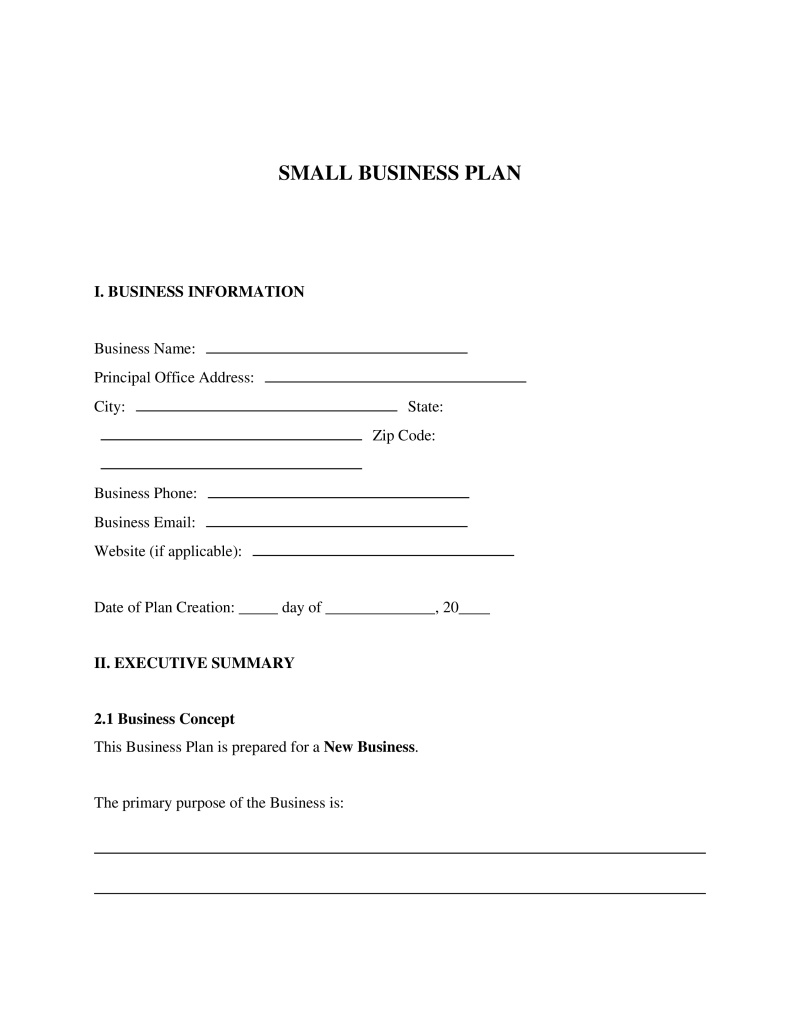
Table of Contents
What Is a Small Business Plan Template?
A small business plan template is a structured framework designed to help entrepreneurs and small business owners outline their company's objectives, strategies, and financial projections. It serves as a foundational document for guiding decision-making, attracting investors, and aligning internal operations. By providing pre-defined sections and prompts, this template streamlines the complex process of business planning, ensuring all critical aspects are considered and documented efficiently.
What Is Included
A robust small business plan template includes several key sections, each crucial for providing a comprehensive overview of your venture:
- Executive Summary - This section provides a high-level overview of your entire business plan, summarizing your company's mission, products or services, market opportunity, and financial highlights. It's often the first and sometimes only part potential investors or partners read, making its clarity and conciseness paramount.
- Company Description - Here, you detail your business's legal structure, history, mission statement, vision, and core values. It explains what your business does, its unique selling proposition, and the problems it solves for customers, setting the stage for the rest of the plan.
- Market Analysis - This section involves a deep dive into your target market, including customer demographics, market size, trends, and competitive landscape. Understanding your market helps identify opportunities, potential threats, and how your business can carve out a sustainable niche.
- Organization and Management - This outlines your company's organizational structure, key personnel, their roles, responsibilities, and relevant experience. It also covers legal structure (e.g., sole proprietorship, LLC, corporation) and any advisory boards, demonstrating the leadership and operational framework.
- Service or Product Line - Detail the products or services your business offers, including their features, benefits, and competitive advantages. Discuss the product lifecycle, intellectual property, and any future development plans to showcase innovation and growth potential.
- Marketing and Sales Strategy - This section explains how you plan to reach your target customers, generate leads, and convert them into sales. It covers pricing strategy, promotion and advertising channels, distribution methods, and the sales process itself, aligning with your market analysis.
- Funding Request (if applicable) - If you are seeking external funding, this section clearly states the amount of money you need, how you plan to use it, and what you will offer in return (e.g., equity, loan repayment terms). It also includes a breakdown of current and projected financial needs.
- Financial Projections - This is where you present your financial outlook, typically including profit and loss statements, cash flow projections, and balance sheets for the next 3-5 years. It should include assumptions behind these projections and be realistic and well-researched.
- Appendix - The appendix is used for supplementary documents that support the main body of your plan, such as résumés of key personnel, market research data, permits, licenses, letters of intent, and detailed product specifications.
Who Should Use This Template?
This small business plan template is a versatile tool, but its utility varies depending on the specific needs and stage of a business.
Best For
- Startup Founders - Ideal for new entrepreneurs who need a structured way to articulate their business idea, validate assumptions, and secure initial funding.
- Sole Proprietors and Freelancers - Excellent for individuals looking to formalize their operations, set clear goals, and understand their market position for sustainable growth.
- Small and Medium-Sized Businesses (SMBs) Seeking Funding - Essential for businesses that need to present a professional, comprehensive case to banks, angel investors, or venture capitalists.
- Businesses Undergoing Significant Change - Useful for established small businesses that are pivoting their strategy, launching a new product line, or entering new markets, requiring a revised roadmap.
- Internal Strategic Alignment - Beneficial for small teams (<15 people) that need to ensure all members understand the business's direction, goals, and operational plans.
Not Ideal For
- Very Early-Stage Idea Validation - For entrepreneurs just brainstorming or testing an initial concept, a lean canvas or simpler one-page business model might be more appropriate initially, as a full plan can be overkill.
- Large Corporations or Complex Enterprises - Businesses with multiple departments, diverse product portfolios, and intricate global operations will likely require more specialized and granular strategic planning frameworks.
- Hyper-Agile, Rapid-Iteration Startups - While elements are useful, startups focused solely on rapid prototyping and immediate market feedback might find a traditional plan too rigid for their initial phases, preferring continuous adaptation over a fixed long-term document.
- Businesses Solely Focused on Operational Documentation - If the primary need is to document day-to-day processes or standard operating procedures, a specific operations manual or workflow documentation tool would be more suitable.
Quick Start Guide
Embarking on your small business plan doesn't have to be daunting. Follow these tactical steps to create a compelling and effective plan:
- Define Your Core Vision and Mission: Before diving into details, clearly articulate what your business aims to achieve (mission) and what it aspires to become (vision). This foundational step guides all subsequent sections and ensures consistency in your narrative. Spend time refining these statements to be concise and inspiring.
- Conduct Thorough Market Research: Don't guess your market. Utilize tools like surveys, competitor analysis, and industry reports to understand your target audience, identify market gaps, and assess the competitive landscape. This research informs your marketing, sales, and product development strategies significantly.
- Outline Your Products/Services and Unique Value Proposition: Detail precisely what you're selling and, more importantly, why customers should choose you over alternatives. Focus on the benefits you provide, not just features. This clarity is crucial for your marketing and sales sections.
- Develop a Realistic Marketing and Sales Strategy: Based on your market research, craft specific tactics for reaching customers (e.g., social media, local ads, networking) and converting them into sales. Define your pricing model, distribution channels, and customer acquisition costs. Be specific with channels and budget allocations.
- Construct Detailed Financial Projections: This is a critical section for any small business plan. Create 3-5 year projections for sales, expenses, profit and loss, and cash flow. Be transparent about your assumptions and provide a break-even analysis. Consider various scenarios (optimistic, realistic, pessimistic) to demonstrate foresight.
- Craft a Compelling Executive Summary Last: Although it appears first in the plan, write your executive summary after all other sections are complete. This allows you to synthesize the most important information, ensuring it accurately reflects the detailed content and captures the reader's attention effectively.
- Seek Feedback and Iterate: Share your draft plan with trusted advisors, mentors, or even potential customers. Solicit honest feedback on clarity, feasibility, and completeness. Be open to making revisions and improvements; a business plan is a living document, not a static one.
Frequently Asked Questions
Not the form you're looking for?
Try our legal document generator to create a custom document
Disclaimer: The templates available on this website are provided for general informational purposes only and do not constitute legal advice. They are not intended to be, and should not be interpreted as, compliant with any specific legal, regulatory, or privacy requirements. These templates are not a replacement for professional legal guidance and should not be relied upon for any particular matter or circumstance. Users are strongly encouraged to seek advice from a qualified attorney licensed in their jurisdiction before using, modifying, or relying on any template.
All templates are provided on an "as is," "with all faults," and "as available" basis. The provider disclaims any and all warranties of any kind, whether express, implied, statutory, or otherwise, including without limitation warranties of merchantability, fitness for a particular purpose, title, or non-infringement.
LegalTemplates.com makes no guarantees or representations regarding the accuracy, completeness, expected outcomes, or reliability of the materials contained in these templates or any materials referenced or linked from them.