LLC Operating Agreement Amendment
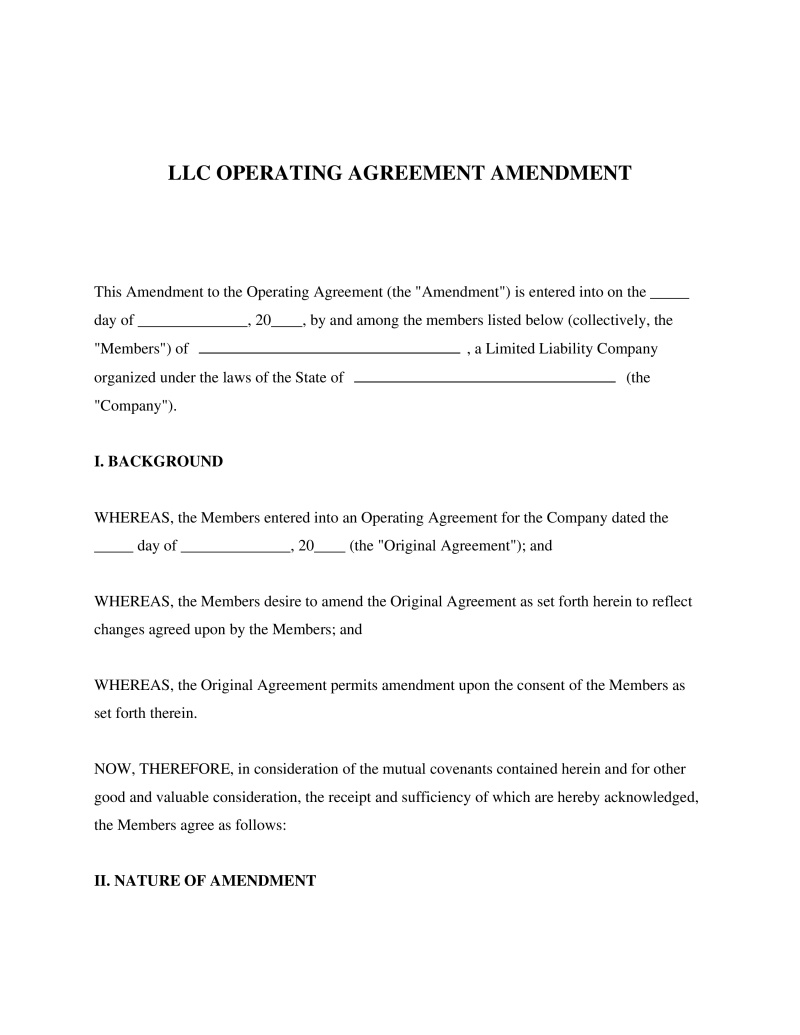
An LLC Operating Agreement Amendment is a formal legal document used to modify, add, or remove provisions within an existing Limited Liability Company (LLC) operating agreement, reflecting changes in the LLC's structure, management, or ownership.
Amendment Approach
Most amendments either replace specific sections, add new language, delete obsolete language, or restate multiple provisions in one document.
Use this if the amendment does not fit the listed categories.
Table of Contents
What is a LLC Operating Agreement Amendment?
An LLC Operating Agreement Amendment is a formal legal document used to modify, add, or remove provisions within an existing Limited Liability Company (LLC) operating agreement. This amendment reflects changes in the LLC's structure, management, ownership, or operational procedures that have occurred since the original agreement was adopted. It ensures that the foundational document governing the LLC accurately reflects the current understanding and agreements among its members.
Purpose and Necessity of Amendments
An operating agreement serves as the blueprint for an LLC, outlining the rights and responsibilities of members, profit and loss allocations, management structure, and dissolution procedures. Over time, an LLC's circumstances can evolve, necessitating adjustments to this foundational document. Amendments are crucial to maintain legal compliance, accurately reflect current business practices, and prevent future disputes among members.
The need for an LLC Operating Agreement Amendment typically arises from significant internal or external changes affecting the company. Without a properly executed amendment, the LLC could operate under outdated terms, potentially leading to confusion, legal challenges, or internal disagreements. It ensures that all members are clear on their roles, rights, and obligations under the revised terms.
Consent and Authorization Requirements
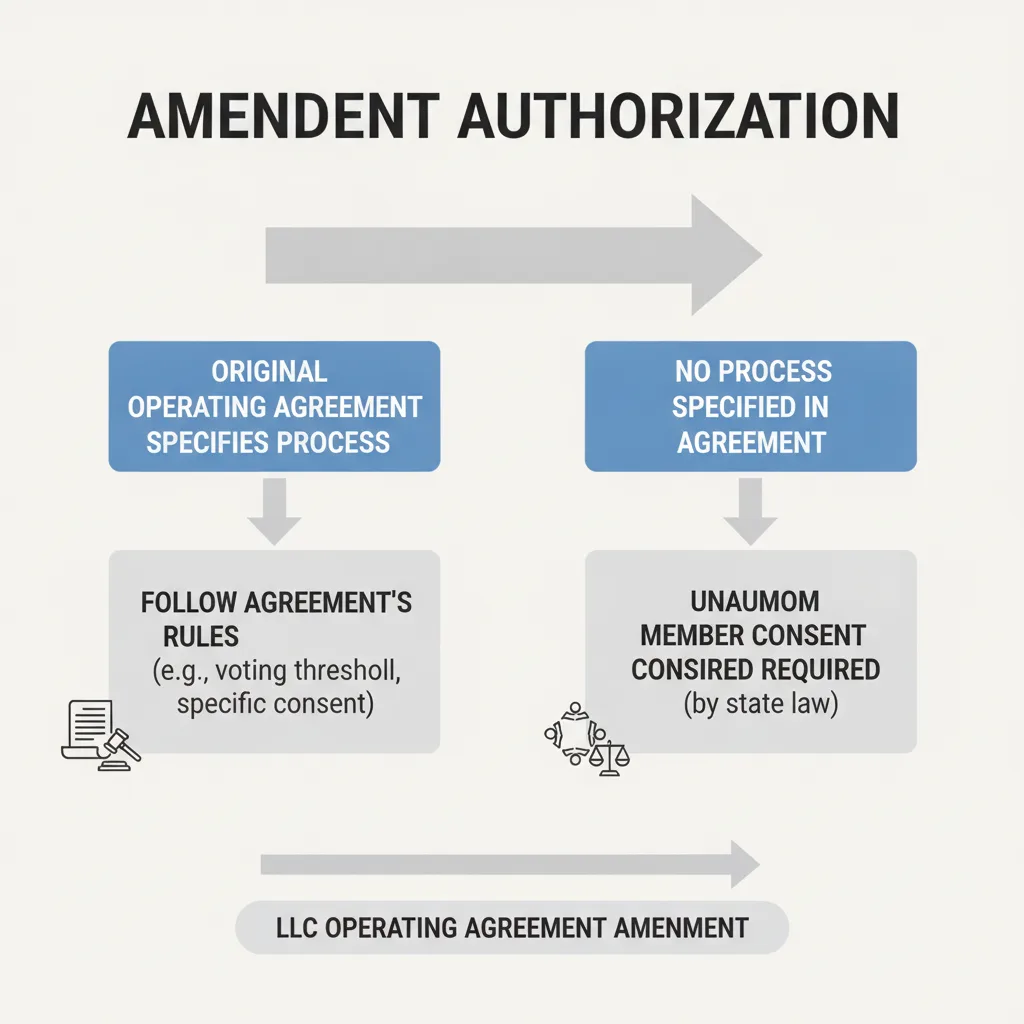
The process for amending an LLC operating agreement is primarily governed by the provisions set forth in the original agreement itself, as well as applicable state statutes. Adhering to these established procedures is critical to ensure the amendment's legal validity.
- Agreement-Defined Procedures - An operating agreement may specify the exact method for its amendment, including the necessary voting thresholds or consent requirements. If such a method is outlined, it must be followed for the amendment to be effective (Ohio Revised Code Section 1706.082).
- Unanimous Consent - In the absence of specific amendment procedures within the operating agreement, state laws often require the consent of all members to effectuate a change (Ohio Revised Code Section 1706.082).
- Non-Party Approval or Conditions - Some state laws permit an operating agreement to stipulate that an amendment requires the approval of a person who is not a party to the agreement or the satisfaction of a specific condition. Such an amendment is ineffective if it does not include the required approval or satisfy the condition (Florida Revised Limited Liability Company Act Section 0107; Arizona Revised Statutes Section 29-3107).
- Written Agreement - Members typically adopt a written operating agreement, which implies that any amendments should also be in writing to maintain clarity and enforceability (New York Limited Liability Company Law Section 417).
Common Reasons for Amendment
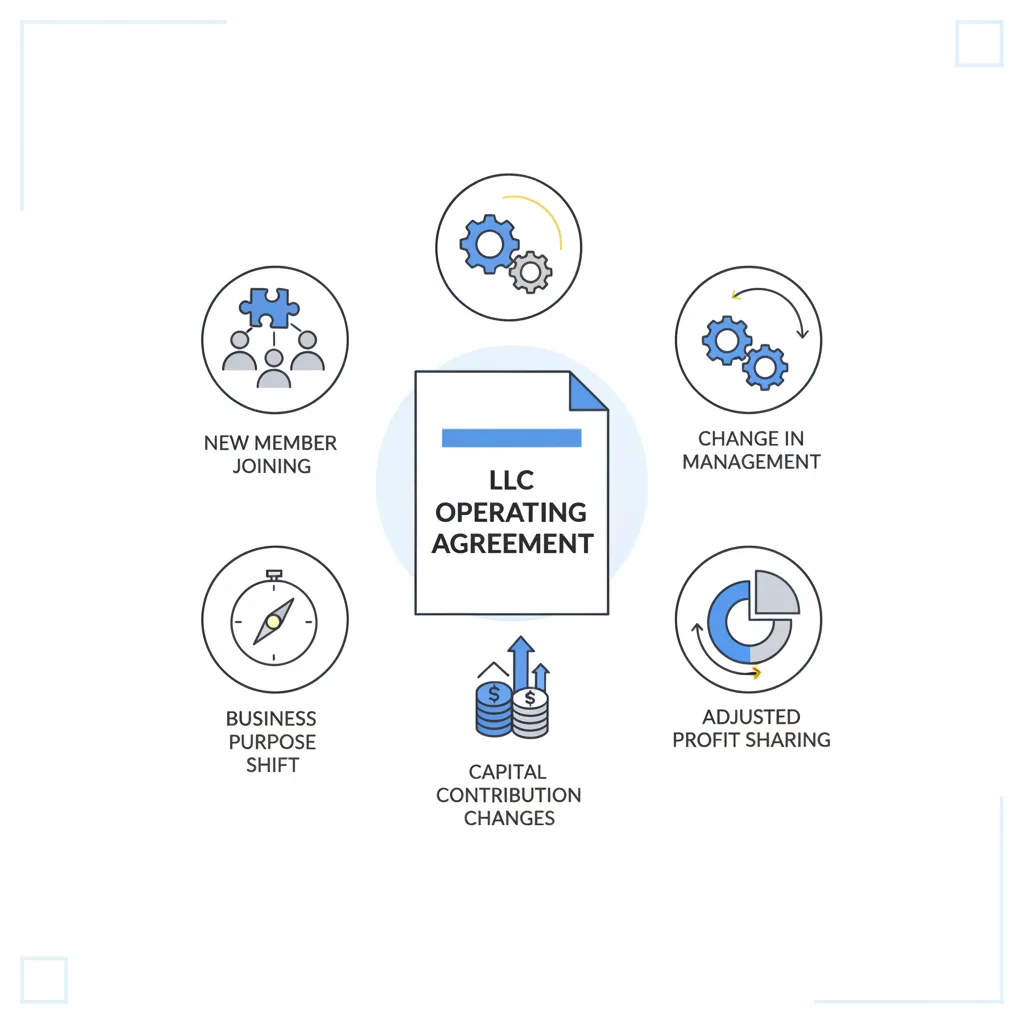
Various operational, structural, or financial shifts within an LLC commonly trigger the need for an operating agreement amendment. These changes are fundamental to the company's ongoing functionality and member relations.
- Changes in Membership - The addition of new members, the departure of existing members, or changes in member ownership percentages often necessitate an amendment to update capital contributions, profit-sharing ratios, and voting rights.
- Management Structure Alterations - A decision to shift from a member-managed to a manager-managed structure, or vice-versa, requires formal amendment to redefine roles, responsibilities, and decision-making authority.
- Capital Contributions - If members agree to make additional capital contributions or adjust existing ones, the operating agreement must be updated to reflect these financial changes.
- Profit and Loss Allocations - Any modifications to how profits and losses are distributed among members, perhaps due to performance or new investment, require an amendment.
- Changes in Business Purpose or Scope - If the LLC decides to expand into new markets, alter its primary business activities, or change its name, the operating agreement should be updated to reflect the new direction.
- Regulatory or Tax Law Changes - Amendments may be necessary to ensure the LLC remains compliant with evolving state or federal regulations, or to optimize its tax treatment.
Content of an Amendment
An LLC Operating Agreement Amendment typically includes specific information to clearly identify the original agreement and detail the changes being made. Precision in drafting is essential to avoid ambiguity and ensure the amendment's enforceability.
Key elements commonly found in an amendment include:
- Identification of the Original Agreement - The amendment should clearly state the name of the LLC and the effective date of the original operating agreement it is modifying.
- Recitals - A preamble explaining the reason for the amendment and confirming that all necessary approvals have been obtained.
- Specific Amendments - Detailed descriptions of the changes, additions, or deletions to specific sections, articles, or clauses of the original operating agreement. This might involve replacing entire sections or adding new ones.
- Affirmation of Unchanged Provisions - A statement affirming that all other provisions of the original operating agreement, not explicitly amended, remain in full force and effect.
- Effective Date - The date on which the amendment officially takes effect.
- Signatures - Signatures of all members whose consent is required for the amendment, often accompanied by the date of signing.
Distinction from Articles of Organization Amendments
It is important to differentiate between an LLC Operating Agreement Amendment and an amendment to the LLC's Articles of Organization (also known as a Certificate of Organization or Certificate of Formation). While both are formal changes to an LLC's foundational documents, they serve distinct purposes and are typically filed with different entities.
The operating agreement is an internal document governing the relationship among the LLC members and the internal operations of the business. Conversely, the Articles of Organization is a public document filed with the state, establishing the legal existence of the LLC and containing basic information such as the LLC's name, registered agent, and principal office address. Amending the Articles of Organization requires authorization, often by a majority in interest of the members, unless the operating agreement specifies otherwise, and involves filing with the relevant state authority (New York Limited Liability Company Law Section 213).
Changes to the Articles of Organization are typically for public-facing information, such as changing the LLC's name or registered agent. Changes to the operating agreement address internal governance, member rights, and operational specifics. While an internal change might necessitate a corresponding public filing (e.g., a name change), the amendment processes for each document are separate.
Frequently Asked Questions
Sources
- Section 1706.082 - Ohio Revised Code | Ohio Laws - Provides statutory guidelines on amending LLC operating agreements in Ohio, including consent requirements and procedures.
- Section 417 - New York Limited Liability Company Law - Details the requirements for LLC operating agreements in New York, including provisions for amendment and member obligations.
- Section 213 - New York Limited Liability Company Law - Addresses the authorization process for amending LLC articles of organization in New York, including member voting requirements.
- Section 0107 - Florida Revised Limited Liability Company Act - Covers the effect of operating agreements on third parties and the relationship to records effective on behalf of LLCs in Florida.
- Section 29-3107 - Arizona Revised Statutes - Discusses the amendment of operating agreements and their effect on third parties and records effective on behalf of LLCs in Arizona.
Already have a LLC Operating Agreement?
Get it reviewed free — checked against your state's laws in about a minute.
Not the form you're looking for?
Try our legal document generator to create a custom document
Disclaimer: The templates available on this website are provided for general informational purposes only and do not constitute legal advice. They are not intended to be, and should not be interpreted as, compliant with any specific legal, regulatory, or privacy requirements. These templates are not a replacement for professional legal guidance and should not be relied upon for any particular matter or circumstance. Users are strongly encouraged to seek advice from a qualified attorney licensed in their jurisdiction before using, modifying, or relying on any template.
All templates are provided on an "as is," "with all faults," and "as available" basis. The provider disclaims any and all warranties of any kind, whether express, implied, statutory, or otherwise, including without limitation warranties of merchantability, fitness for a particular purpose, title, or non-infringement.
LegalTemplates.com makes no guarantees or representations regarding the accuracy, completeness, expected outcomes, or reliability of the materials contained in these templates or any materials referenced or linked from them.