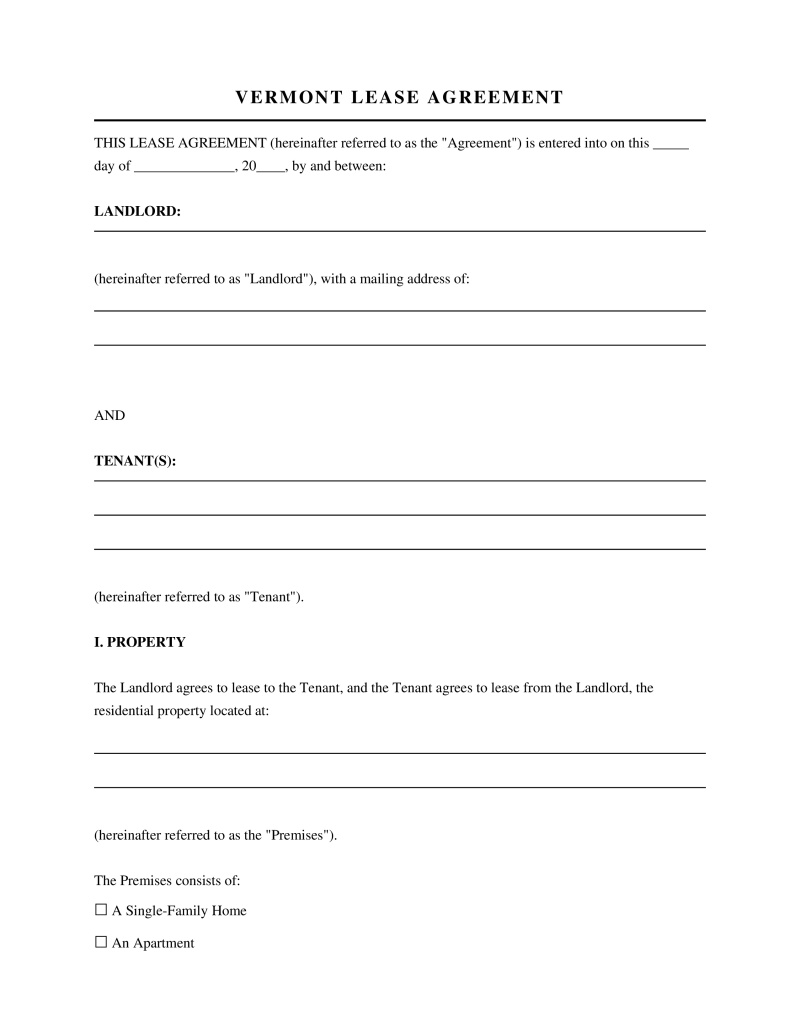
Vermont Lease Agreement
A Vermont Lease Agreement is a legally binding contract between a landlord and a tenant outlining the terms for renting residential property within the state.
Residential Property Type
Select the residential property category that best describes the rental premises.
Use this if the rental property does not fit one of the listed categories.
Table of Contents
What is a Vermont Lease Agreement?
A Vermont Lease Agreement is a legally binding contract executed between a landlord and a tenant for the rental of residential or commercial property within the state. This document outlines the specific terms under which the tenant agrees to occupy the premises, including the monthly rent amount, the duration of the tenancy, and the responsibilities regarding maintenance, utilities, and conduct. It serves as the primary legal record of the arrangement, protecting the rights of both parties by adhering to state-specific regulations found in the Vermont Statutes Annotated. By signing this agreement, both the lessor and lessee acknowledge their obligations and the consequences of failing to uphold the agreed-upon terms.
Legal Framework and Statutory Basis
Landlord-tenant relationships in this jurisdiction are primarily governed by Title 9, Chapter 137 of the Vermont Statutes Annotated (V.S.A.). These statutes establish the baseline requirements for habitability, security deposits, and the eviction process, overriding any lease clauses that attempt to waive a tenant's statutory rights. While federal laws like the Fair Housing Act prohibit discrimination based on race, religion, and national origin, Vermont state law extends these protections to include sexual orientation, gender identity, marital status, and receipt of public assistance. Consequently, a Vermont Lease Agreement must be drafted to comply strictly with these anti-discrimination laws and the specific provisions regarding rental housing health and safety codes.
Security Deposits and Rent Regulations
Vermont law provides specific guidelines regarding the collection and return of security deposits, which distinguishes it from many other states. While there is no statutory cap on the amount a landlord may charge for a security deposit, the timeline for returning these funds is strictly enforced. Landlords must return the security deposit, along with a written statement itemizing any deductions, within 14 days after the tenant vacates the rental unit. Allowable deductions are limited to unpaid rent, damage beyond normal wear and tear, and expenses required to remove abandoned property. If a landlord fails to return the deposit or the itemized statement within this 14-day window, they may forfeit the right to withhold any portion of the deposit and could be liable for returning the full amount.
Required Elements and Disclosures
To ensure a Vermont Lease Agreement is valid and enforceable, it must contain specific information and disclosures mandated by state and federal law. Omitting these elements can lead to legal complications or render certain parts of the contract void.
- Identification of Parties: The full legal names of all adult tenants and the landlord or property manager.
- Property Description: The complete physical address of the rental unit, including unit numbers where applicable.
- Lead-Based Paint Disclosure: A federal requirement for any property built prior to 1978, warning tenants of potential lead hazards.
- Term and Rent Details: The start and end dates of the lease, the amount of rent, the due date, and acceptable payment methods.
- Landlord Contact Information: The name and address of the owner or the person authorized to manage the premises and receive legal notices.
Implied Warranty of Habitability
Every residential rental contract in Vermont carries an implied warranty of habitability, regardless of whether it is explicitly stated in the text. This legal doctrine ensures that the landlord provides a safe, clean, and fit living environment throughout the tenancy. Essential services such as heat, water, and electricity must be maintained in working order, and the structure must comply with applicable building and housing codes. If a landlord fails to make necessary repairs within a reasonable time after receiving notice, tenants may have legal remedies available to them. These remedies can include withholding rent or repairing the defect and deducting the cost from the rent, provided they follow the specific procedures outlined in Vermont statutes.
Termination and Eviction Procedures
The process for terminating a tenancy in Vermont varies depending on the type of lease and the reason for termination. For non-payment of rent, a landlord must provide a 14-day notice to quit, allowing the tenant time to pay the arrears or vacate the property. For termination without specific cause in a month-to-month tenancy, the required notice period depends on the tenant's length of residency; tenants who have resided in the unit for two years or less generally require 60 days' notice, while those with a tenure exceeding two years are entitled to 90 days' notice. Actual eviction can only be executed through a court order obtained from the Vermont Superior Court, and "self-help" eviction tactics, such as changing locks or shutting off utilities, are illegal.
Frequently Asked Questions
Already have a Lease Agreement?
Get it reviewed free — checked against your state's laws in about a minute.
Not the form you're looking for?
Try our legal document generator to create a custom document
Disclaimer: The templates available on this website are provided for general informational purposes only and do not constitute legal advice. They are not intended to be, and should not be interpreted as, compliant with any specific legal, regulatory, or privacy requirements. These templates are not a replacement for professional legal guidance and should not be relied upon for any particular matter or circumstance. Users are strongly encouraged to seek advice from a qualified attorney licensed in their jurisdiction before using, modifying, or relying on any template.
All templates are provided on an "as is," "with all faults," and "as available" basis. The provider disclaims any and all warranties of any kind, whether express, implied, statutory, or otherwise, including without limitation warranties of merchantability, fitness for a particular purpose, title, or non-infringement.
LegalTemplates.com makes no guarantees or representations regarding the accuracy, completeness, expected outcomes, or reliability of the materials contained in these templates or any materials referenced or linked from them.