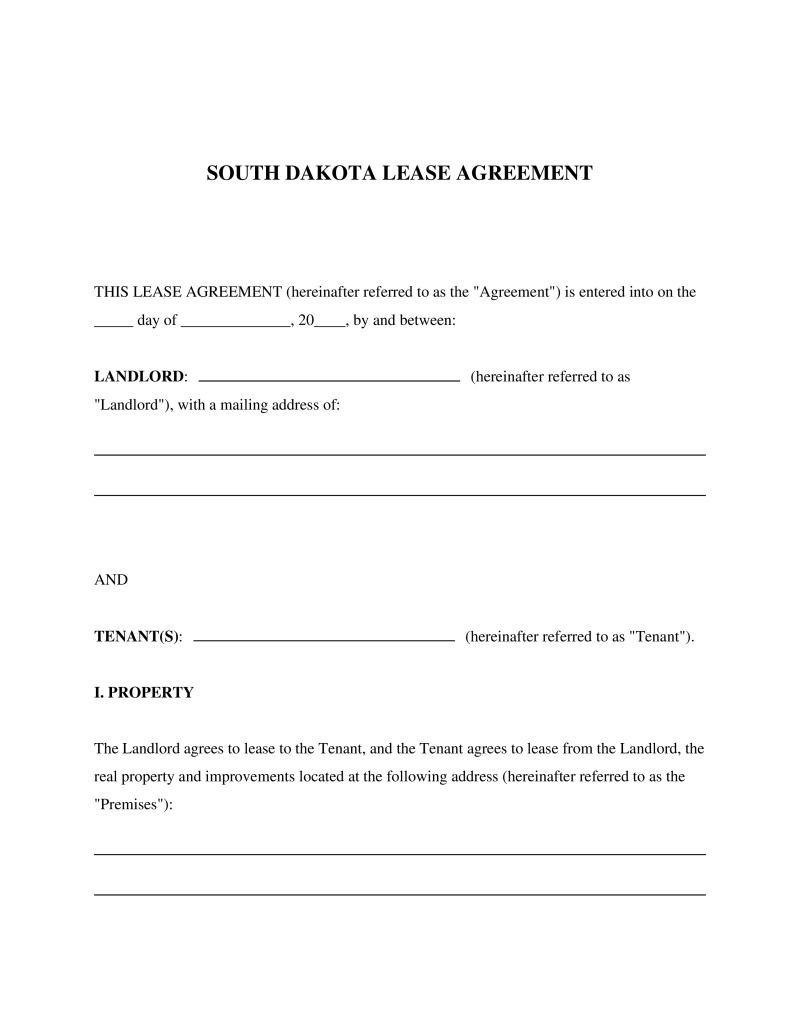
South Dakota Lease Agreement
A South Dakota Lease Agreement is a legal document that outlines the rental terms, obligations, and conditions agreed upon by a landlord and tenant for property leased within the state.
Residential Property Type
Select the residential property category that best describes the rental premises.
Use this if the rental property does not fit one of the listed categories.
Table of Contents
What is a South Dakota Lease Agreement?
A South Dakota Lease Agreement is a legally binding contract executed between a landlord (lessor) and a tenant (lessee) for the rental of residential or commercial property. This document outlines the terms and conditions of the tenancy, establishing the rights and obligations of both parties regarding the use of the premises. It serves as the primary governing instrument for the rental arrangement, detailing critical information such as the monthly rent amount, payment schedules, security deposit requirements, and property maintenance policies. By signing this agreement, both parties consent to adhere to the stipulations provided, which must comply with the state's landlord-tenant statutes found in the South Dakota Codified Laws.
Legal Framework and Statutory Requirements
The landlord-tenant relationship in South Dakota is regulated principally by Title 43, Chapter 32 of the South Dakota Codified Laws (SDCL). These statutes define the parameters for lease durations, liability, and the general duties of the parties involved. For example, SDCL § 43-32-2 establishes that if a lease term is not specified in writing, it is presumed to be for one year, unless the custom of the usage implies otherwise. The state requires that any lease for a duration longer than one year be in writing to be enforceable under the Statute of Frauds. Additionally, federal laws such as the Fair Housing Act apply, prohibiting discrimination in housing based on race, color, religion, sex, national origin, familial status, or disability.
Security Deposit Regulations
South Dakota maintains specific regulations regarding the collection and return of security deposits to protect tenants from excessive financial burdens. According to SDCL § 43-32-6.1, a landlord is generally prohibited from demanding a security deposit that exceeds the amount of one month's rent. However, exceptions exist where a higher deposit may be negotiated if there are special conditions that pose a danger to the maintenance of the premises. Upon the termination of the tenancy, the landlord must return the security deposit, or the remaining balance after lawful deductions, within two weeks (14 days) of the tenant vacating the property and providing a forwarding address. If deductions are made for damages beyond normal wear and tear, a written itemized accounting must be provided to the tenant.
Mandatory Disclosures
To ensure transparency and public safety, a South Dakota Lease Agreement must include specific disclosures mandated by state and federal law. A prominent state-specific requirement involves the disclosure of prior methamphetamine manufacturing. If a landlord has actual knowledge that the residential premises were previously used for the manufacture of methamphetamines, this must be disclosed to the prospective tenant unless the property has been remediated and certified safe by the Department of Health. Furthermore, for any residential property constructed prior to 1978, federal regulations require the landlord to provide a lead-based paint disclosure form and an informational pamphlet regarding the hazards of lead paint exposure.
Key Elements of a Valid South Dakota Lease Agreement
For a lease to be legally robust and effective, it should contain several essential components that address the specific needs of the tenancy while adhering to state laws. Missing or vague information can lead to legal disputes regarding the intent of the agreement.
- Parties Clause: The full legal names of the landlord and all adult tenants responsible for the lease.
- Property Description: The specific physical address and unit number of the rental property.
- Lease Term: The start date and end date of the agreement, or a statement indicating a month-to-month arrangement.
- Rent Details: The exact amount of rent, the due date, acceptable payment methods, and where payment should be sent.
- Security Deposit: The amount collected and the specific conditions under which it may be withheld.
- Utilities and Services: A clear designation of which party is responsible for paying for utilities such as electricity, water, gas, and trash removal.
- Occupancy Limits: Restrictions on the number of people who may reside in the unit and rules regarding guests.
Termination and Eviction Procedures
The process for ending a tenancy is strictly outlined in state statutes to ensure due process. For month-to-month tenancies, SDCL § 43-32-13 requires that either party provide at least 30 days' notice to terminate the arrangement. If a tenant fails to pay rent or breaches the terms of the South Dakota Lease Agreement, the landlord may initiate eviction proceedings. South Dakota utilizes a "Notice to Quit," which allows the landlord to demand possession of the premises. If the tenant has not vacated after three days following the service of this notice, the landlord may file a Forcible Entry and Detainer action in court to obtain a judgment for eviction.
Rights and Responsibilities
Under a South Dakota Lease Agreement, landlords are obligated to keep the premises in reasonable repair and fit for human habitation. This includes maintaining electrical, plumbing, and heating systems in good working order. Conversely, tenants are responsible for keeping the part of the premises they occupy safe and sanitary. Tenants must not deliberately or negligently destroy, deface, damage, or remove any part of the premises. Failure to maintain the property can result in deductions from the security deposit or eviction, depending on the severity of the damage.
Frequently Asked Questions
Already have a Lease Agreement?
Get it reviewed free — checked against your state's laws in about a minute.
Not the form you're looking for?
Try our legal document generator to create a custom document
Disclaimer: The templates available on this website are provided for general informational purposes only and do not constitute legal advice. They are not intended to be, and should not be interpreted as, compliant with any specific legal, regulatory, or privacy requirements. These templates are not a replacement for professional legal guidance and should not be relied upon for any particular matter or circumstance. Users are strongly encouraged to seek advice from a qualified attorney licensed in their jurisdiction before using, modifying, or relying on any template.
All templates are provided on an "as is," "with all faults," and "as available" basis. The provider disclaims any and all warranties of any kind, whether express, implied, statutory, or otherwise, including without limitation warranties of merchantability, fitness for a particular purpose, title, or non-infringement.
LegalTemplates.com makes no guarantees or representations regarding the accuracy, completeness, expected outcomes, or reliability of the materials contained in these templates or any materials referenced or linked from them.