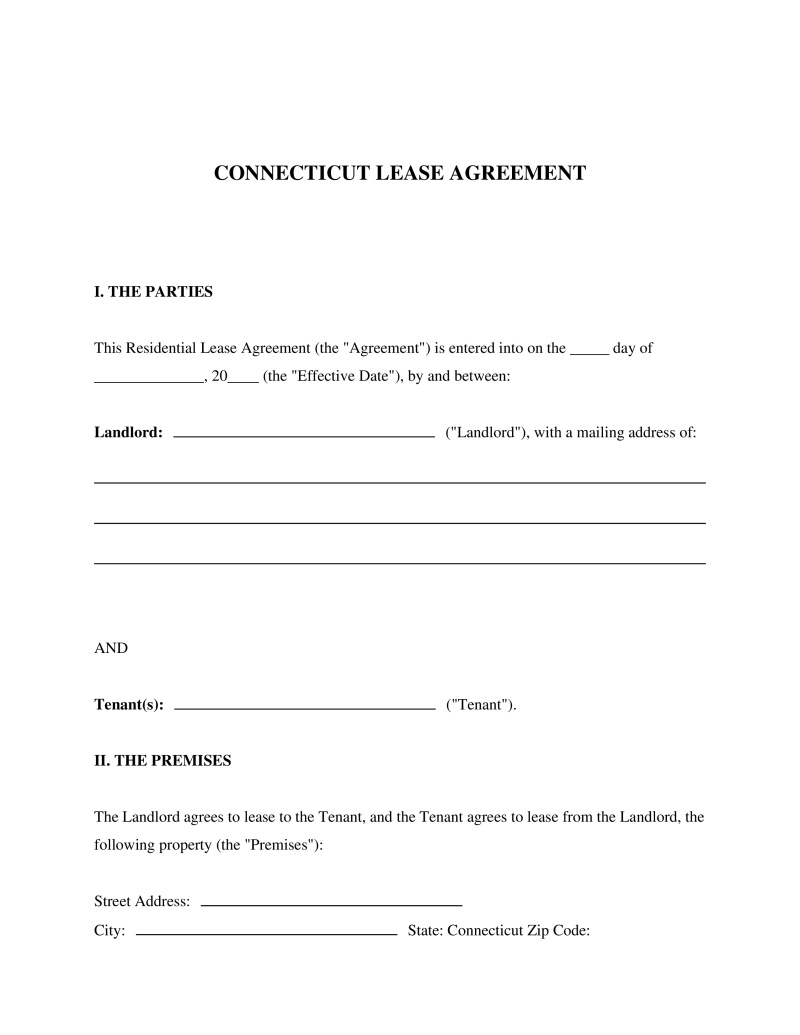
Connecticut Lease Agreement
A Connecticut Lease Agreement is a legal document that outlines the terms and conditions of renting property in Connecticut.
Residential Property Type
Select the residential property category that best describes the rental premises.
Use this if the rental property does not fit one of the listed categories.
Table of Contents
What is a Connecticut Lease Agreement?
A Connecticut Lease Agreement is a legally binding contract between a landlord and a tenant that outlines the terms and conditions for renting a residential property in Connecticut. This document establishes the rights and responsibilities of both parties, ensuring clarity and compliance with state landlord-tenant laws. Its primary purpose is to define the rental period, rent amount, maintenance obligations, and procedures for lease termination, providing a framework for a stable tenancy.
Key Provisions of a Connecticut Lease Agreement
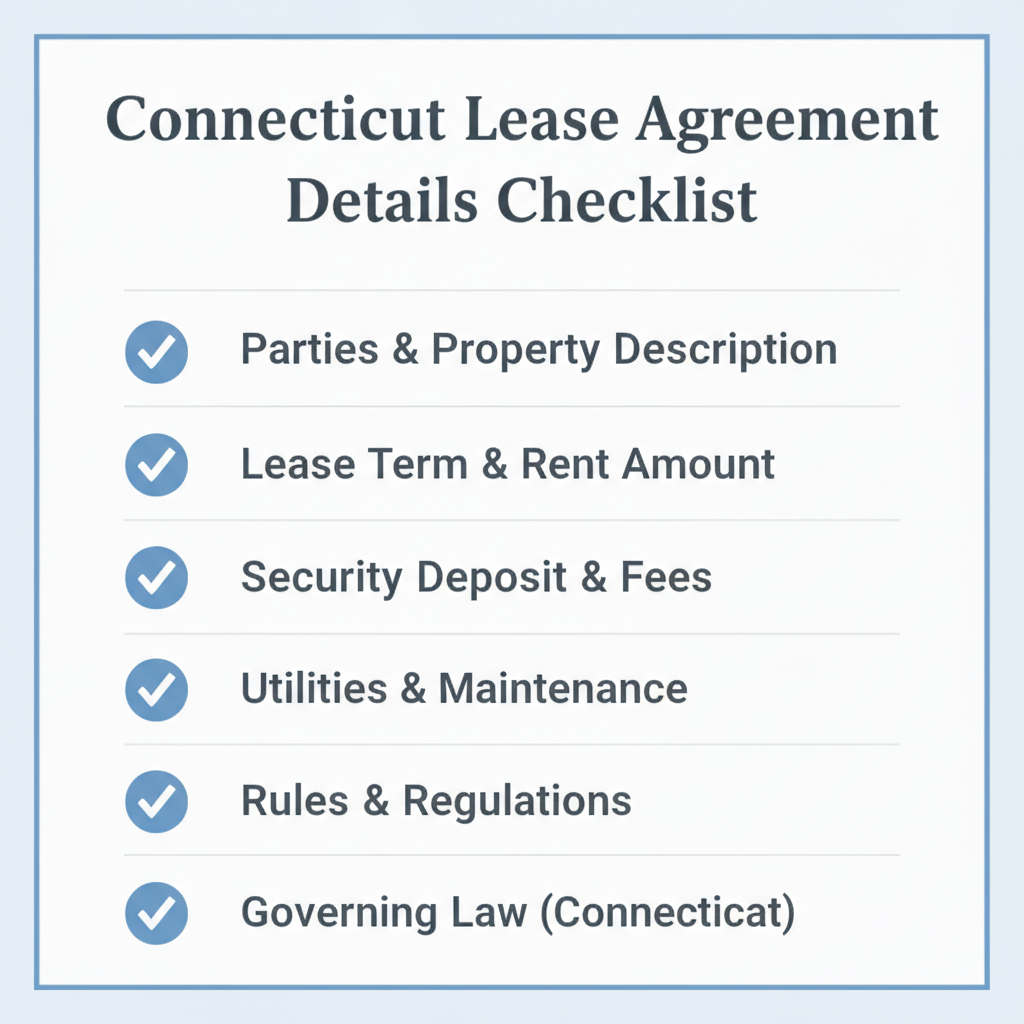
A comprehensive Connecticut Lease Agreement typically includes several essential provisions that protect both the landlord and the tenant. These elements ensure that all aspects of the rental arrangement are clearly understood and legally enforceable under state law.
- Parties Involved - Identifies the full legal names of all landlords and tenants, including contact information.
- Property Description - Provides a detailed description of the rental property, including its address, unit number, and any specific areas included in the lease (e.g., parking spaces, storage units).
- Lease Term - Specifies the start and end dates of the tenancy, indicating whether it is a fixed-term lease (e.g., one year) or a periodic tenancy (e.g., month-to-month).
- Rent Amount and Payment Terms - States the exact amount of rent, the due date, acceptable payment methods, and any grace periods or late fees for overdue payments.
- Security Deposit - Outlines the amount of the security deposit, the conditions for its return, and any permitted deductions in accordance with Connecticut law.
- Utilities - Clarifies which utilities are the responsibility of the landlord and which are the responsibility of the tenant.
- Maintenance and Repairs - Details the responsibilities of both parties regarding property maintenance, including who is responsible for specific repairs and how repair requests should be made.
- Use of Premises - Sets rules regarding the use of the property, such as restrictions on pets, smoking, or alterations to the premises.
- Entry by Landlord - Defines the circumstances under which a landlord may enter the rental unit and the notice requirements, typically requiring reasonable notice except in emergencies.
- Default and Remedies - Explains the consequences of breaching the lease agreement, such as non-payment of rent or violation of terms, and the legal remedies available to the non-breaching party.
Rights and Responsibilities of Landlords and Tenants in Connecticut
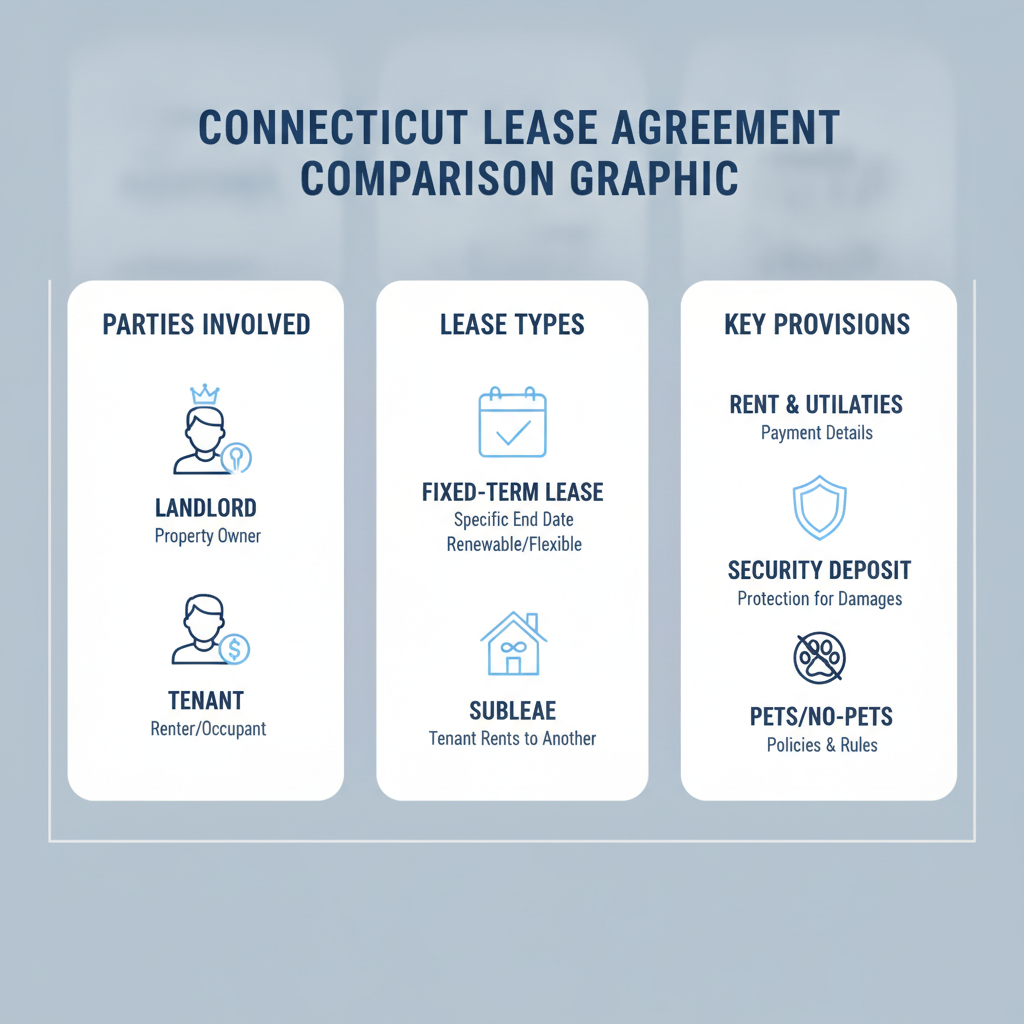
Connecticut law outlines specific rights and responsibilities for both landlords and tenants, which are typically reflected in a lease agreement. These provisions aim to create a balanced relationship and ensure fair housing practices.
Landlords in Connecticut have several key responsibilities and rights:
- Provide a Habitable Residence - Landlords are required to provide and maintain a clean, safe, and fit dwelling unit (Connecticut General Statutes Title 47a, Chapter 830). This includes ensuring essential services like heating, running water, and electricity are in working order.
- Maintain Common Areas - Landlords must keep all common areas of the premises in a clean and safe condition (Connecticut General Statutes Title 47a, Chapter 830).
- Provide Notice for Entry - Except in emergencies, landlords must provide reasonable notice, typically 24 hours, before entering a tenant's unit.
- Right to Collect Rent - Landlords have the right to collect rent as specified in the lease agreement.
- Right to Evict for Cause - Landlords can initiate eviction proceedings if a tenant violates lease terms, such as non-payment of rent or property damage, following proper legal procedures.
Tenants in Connecticut also have specific responsibilities and rights:
- Pay Rent on Time - Tenants are responsible for paying rent by the due date specified in the lease agreement (Connecticut General Statutes Title 47a, Chapter 830).
- Maintain Cleanliness - Tenants must keep their dwelling unit clean and safe (Connecticut General Statutes Title 47a, Chapter 830).
- Notify Landlord of Repairs - Tenants are responsible for notifying the landlord of necessary repairs that impact the habitability or safety of the property.
- Use Premises Reasonably - Tenants must use the premises in a reasonable manner and not engage in destructive behavior or disturb neighbors.
- Right to Quiet Enjoyment - Tenants have the right to peaceful and undisturbed occupancy of their rental unit.
- Right to a Habitable Unit - Tenants have the right to a dwelling that is safe, clean, and in good repair, with essential services functioning.
Types of Connecticut Lease Agreements
Different types of lease agreements cater to various rental situations, each with distinct terms regarding duration and termination.
- Fixed-Term Lease Agreement - This type of lease specifies a definite period, typically six months or one year, during which the tenant agrees to rent the property for a set rent amount. Neither party can terminate the lease before the end date without cause or mutual agreement, unless a specific break clause is included.
- Month-to-Month Lease Agreement - This agreement has no fixed end date and automatically renews each month unless either the landlord or tenant provides proper notice to terminate. It offers greater flexibility for both parties but also less stability compared to a fixed-term lease.
- Sublease Agreement - A sublease occurs when an existing tenant (the sublessor) rents out all or part of their leased property to another tenant (the sublessee). The original tenant remains responsible to the landlord for rent payments and any damages caused by the sublessee, and the original lease terms usually still apply.
Legal Framework in Connecticut
The legal framework governing lease agreements in Connecticut is primarily established by the state's General Statutes. These laws define the parameters within which landlords and tenants must operate, ensuring fairness and protection for both parties.
Key statutes impacting Connecticut lease agreements include:
- Rights and Responsibilities of Landlord and Tenant - Chapter 830 of Title 47a of the Connecticut General Statutes outlines the core legal duties and entitlements of landlords and tenants (Connecticut General Statutes Title 47a, Chapter 830). This chapter covers areas such as security deposits, maintenance obligations, landlord entry, and eviction procedures.
- Security Deposit Limits - Connecticut law specifies the maximum amount a landlord can charge for a security deposit, typically two months' rent for tenants under 62 years of age, and one month's rent for tenants 62 years of age or older (Connecticut General Statutes Title 47a-21). It also dictates the timeline for its return and permissible deductions.
- Eviction Procedures - The statutes detail the specific legal steps a landlord must follow to evict a tenant, including notice requirements and court proceedings, ensuring due process (Connecticut General Statutes Title 47a).
- Model Lease Agreement - The Connecticut Department of Housing provides a Model Lease Agreement to help standardize rental contracts and ensure they comply with state laws (Connecticut Department of Housing). While not mandatory, it serves as a useful guide for landlords and tenants.
Frequently Asked Questions
[faq id=
Frequently Asked Questions
Sources
- Connecticut Law About Landlord/Tenant Law - Provides comprehensive information on landlord and tenant laws in Connecticut, including rights, responsibilities, and relevant statutes.
- Connecticut General Statutes Title 47a - Rights and Responsibilities of Landlord and Tenant - Contains the full text of Connecticut's landlord and tenant laws, detailing rights, responsibilities, and procedures for both parties.
- Connecticut Model Lease Agreement - Provides a standardized lease agreement form for landlords and tenants in Connecticut, ensuring compliance with state laws.
Already have a Lease Agreement?
Get it reviewed free — checked against your state's laws in about a minute.
Not the form you're looking for?
Try our legal document generator to create a custom document
Disclaimer: The templates available on this website are provided for general informational purposes only and do not constitute legal advice. They are not intended to be, and should not be interpreted as, compliant with any specific legal, regulatory, or privacy requirements. These templates are not a replacement for professional legal guidance and should not be relied upon for any particular matter or circumstance. Users are strongly encouraged to seek advice from a qualified attorney licensed in their jurisdiction before using, modifying, or relying on any template.
All templates are provided on an "as is," "with all faults," and "as available" basis. The provider disclaims any and all warranties of any kind, whether express, implied, statutory, or otherwise, including without limitation warranties of merchantability, fitness for a particular purpose, title, or non-infringement.
LegalTemplates.com makes no guarantees or representations regarding the accuracy, completeness, expected outcomes, or reliability of the materials contained in these templates or any materials referenced or linked from them.