Colorado Lease Agreement
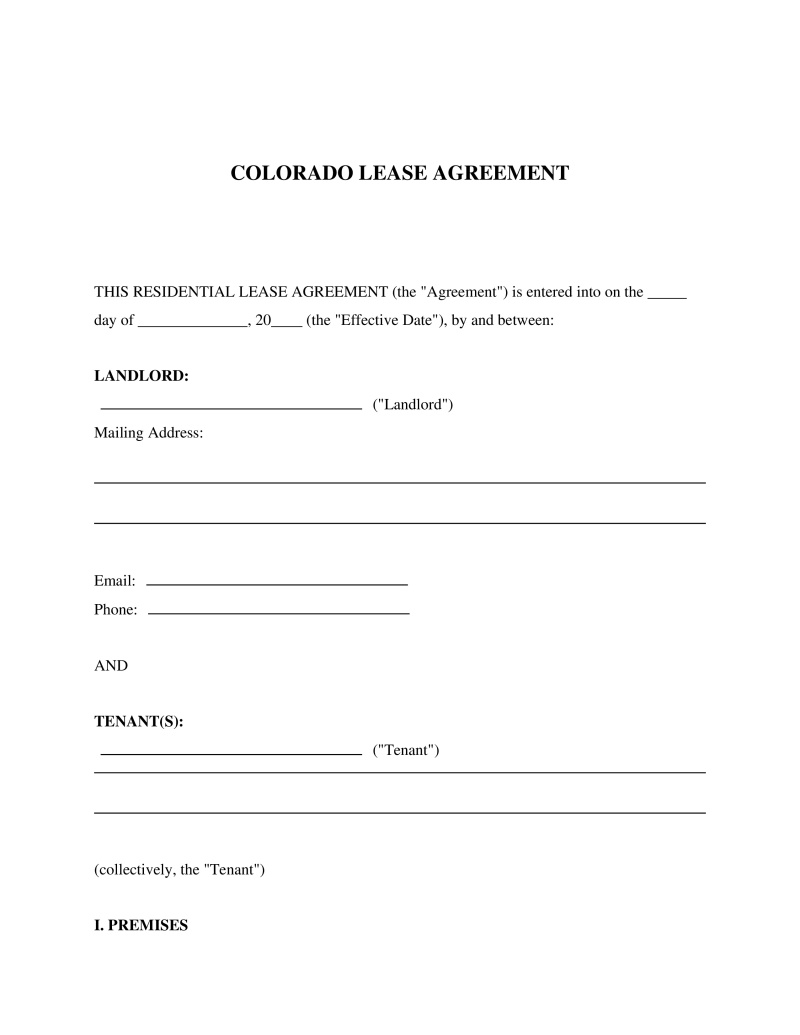
A Colorado Lease Agreement is a legal document that outlines the terms under which a rental property is leased by a landlord to a tenant in Colorado.
Residential Property Type
Select the residential property category that best describes the rental premises.
Use this if the rental property does not fit one of the listed categories.
Table of Contents
What is a Colorado Lease Agreement?
A Colorado Lease Agreement is a legally binding written contract between a landlord and a tenant that outlines the terms and conditions for renting a property in Colorado. This agreement grants the tenant the right to occupy the landlord’s property for a specified period in exchange for regular rent payments. It serves as a foundational document for residential tenancies, clarifying the obligations and rights of both parties involved in the rental arrangement.
Fundamental Components of a Colorado Lease
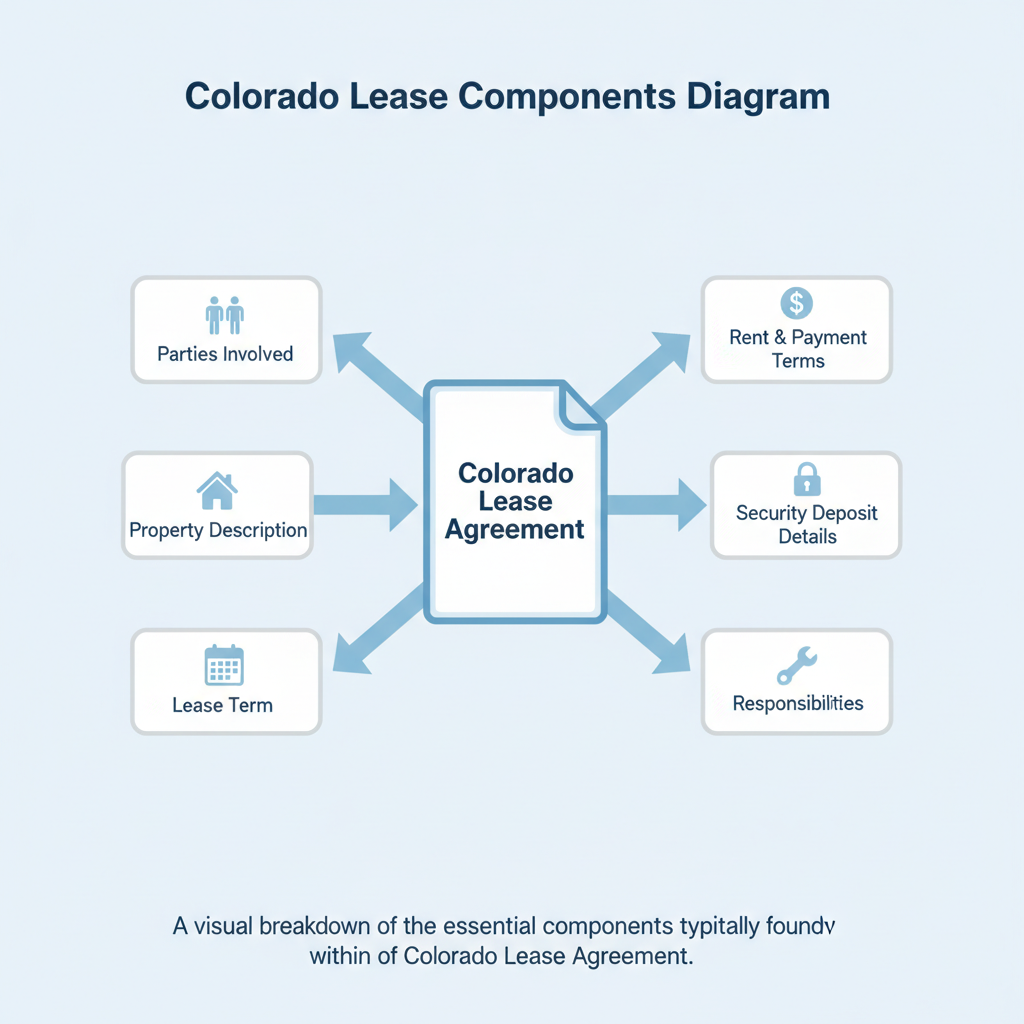
A comprehensive Colorado Lease Agreement typically includes several key provisions to ensure clarity and avoid disputes. These elements define the scope of the tenancy and the expectations for both the landlord and the tenant. While specific clauses can vary, certain information is standard across most residential leases.
- Parties Involved - Identifies the full legal names of all landlords and tenants who are party to the agreement.
- Property Description - A detailed description of the rental property, including the full address, unit number (if applicable), and any specific areas included or excluded from the lease.
- Lease Term - Specifies the start and end dates of the tenancy, indicating whether it is a fixed-term lease (e.g., one year) or a month-to-month arrangement.
- Rent Amount and Payment Terms - Clearly states the monthly rent amount, the due date for payments, acceptable payment methods, and any grace periods or late fees.
- Security Deposit Details - Outlines the amount of the security deposit, how it will be held, and the conditions under which it will be returned or deductions may be made.
- Utilities - Specifies which utilities are the responsibility of the tenant and which are covered by the landlord.
- Maintenance and Repairs - Defines the responsibilities of both parties regarding property maintenance and the process for requesting and performing repairs.
- Rules and Regulations - Includes any specific rules governing the property, such as pet policies, smoking restrictions, or parking guidelines.
- Signatures - Requires the signatures of all adult tenants and the landlord(s) to confirm agreement to the terms.
Rights and Responsibilities of Parties
Colorado law establishes a framework of rights and responsibilities for both landlords and tenants within a lease agreement. These provisions are designed to ensure fair treatment and maintain habitable living conditions throughout the tenancy.
- Tenant Responsibilities - Tenants are primarily responsible for:
- Paying rent on time as stipulated in the lease agreement (dre.colorado.gov).
- Maintaining the rental property in good and clean condition (dre.colorado.gov).
- Using the premises in a reasonable manner and not causing damage beyond normal wear and tear.
- Notifying the landlord promptly of any necessary repairs.
- Landlord Responsibilities - Landlords are primarily responsible for:
- Ensuring the rental property is habitable and safe for occupancy (dre.colorado.gov).
- Making necessary repairs to maintain the property in a fit and livable condition (dre.colorado.gov).
- Respecting the tenant's right to quiet enjoyment of the property.
- Providing proper notice before entering the tenant's dwelling, except in cases of emergency.
Colorado Security Deposit Regulations
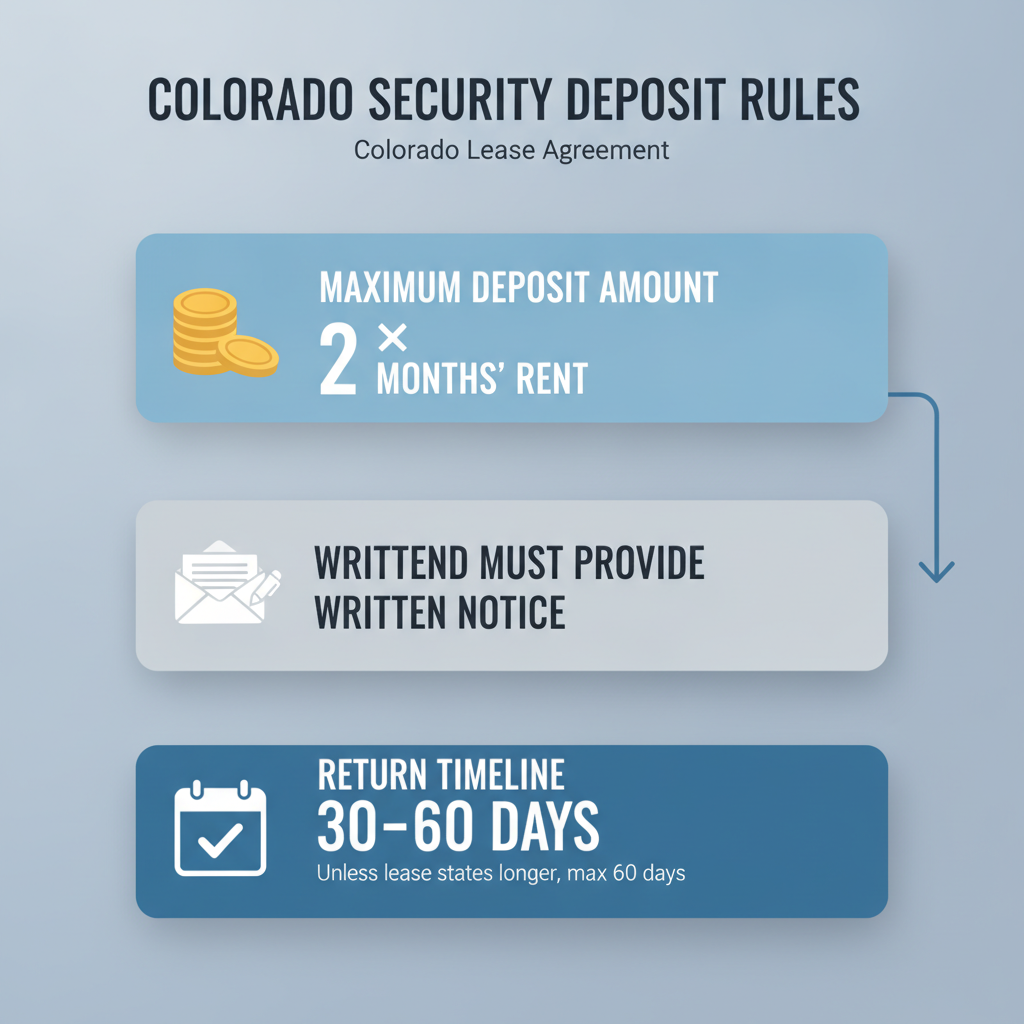
Colorado law imposes specific regulations regarding security deposits to protect both landlords and tenants. These rules govern the maximum amount a landlord can request, as well as the procedures for returning or withholding a deposit.
- Security Deposit Limit - Landlords are prohibited from requiring a security deposit that exceeds two months' rent (content.leg.colorado.gov).
- Written Notice for Withholding - If a landlord intends to withhold any portion of the security deposit, they must provide the tenant with a written notice specifying the exact reasons for the deductions (content.leg.colorado.gov).
- Return Timeline - While not explicitly detailed in the provided sources, generally, Colorado law dictates a specific timeframe for the return of security deposits, often 30 days unless otherwise specified in the lease, with an allowance for up to 60 days if explicitly stated in the lease.
- Allowable Deductions - Deductions from a security deposit are typically permitted for unpaid rent, cleaning costs beyond normal wear and tear, and damages to the property beyond normal wear and tear.
Prohibited Clauses in Colorado Leases
Recent legislative changes in Colorado have introduced specific prohibitions on certain clauses within rental agreements, aiming to ensure fairness and prevent landlords from imposing unreasonable terms on tenants. Landlords must ensure their Colorado Lease Agreements comply with these updated requirements.
- Eviction Penalty Clauses - A written rental agreement must not include any clause that assigns a penalty to a party stemming from an eviction notice or an eviction action resulting from a violation of the rental agreement (HB23-1095).
- One-Way Fee-Shifting Clauses - Any fee-shifting clause in a rental agreement, which typically addresses attorney fees, must award attorney fees to the prevailing party only after a determination that the party prevailed and that the fee amount is reasonable (HB23-1095). This prevents clauses that automatically award fees to one party regardless of outcome or reasonableness.
- Unreasonable Liquidated Damages - Clauses that impose unreasonable liquidated damages for lease violations, such as excessively high fees for minor breaches, are generally not enforceable under Colorado law.
Types of Colorado Lease Agreements
While the fundamental principles remain consistent, lease agreements in Colorado can take various forms depending on the duration of the tenancy and the specific arrangements between the landlord and tenant.
- Fixed-Term Lease Agreement - This is the most common type, establishing a tenancy for a specific, predetermined period, such as six months or one year. Both parties are bound by the terms for the entire duration, and the lease automatically terminates at the end of the term unless renewed.
- Month-to-Month Lease Agreement - This agreement has no fixed end date and automatically renews each month until either the landlord or tenant provides proper notice to terminate. It offers greater flexibility for both parties but also less stability.
- Sublease Agreement - A sublease occurs when an existing tenant (the sublessor) rents out all or part of their leased property to another tenant (the sublessee). The original tenant remains responsible for the lease terms with the primary landlord.
- Commercial Lease Agreement - Distinct from residential leases, this agreement is for the rental of property used for business purposes. Commercial leases typically have different legal protections and negotiation considerations than residential ones.
Frequently Asked Questions
Sources
- Leases and Renting Basics - Provides foundational information on leases and renting in Colorado, including definitions and responsibilities of tenants and landlords.
- Laws Regulating Landlords and Tenants - Offers a comprehensive overview of Colorado laws governing residential lease agreements, including tenant and landlord rights and obligations.
- HB23-1095 Prohibited Provisions In Rental Agreements - Details legislative changes prohibiting certain clauses in rental agreements, such as unreasonable liquidated damages and one-way fee-shifting clauses.
Already have a Lease Agreement?
Get it reviewed free — checked against your state's laws in about a minute.
Not the form you're looking for?
Try our legal document generator to create a custom document
Disclaimer: The templates available on this website are provided for general informational purposes only and do not constitute legal advice. They are not intended to be, and should not be interpreted as, compliant with any specific legal, regulatory, or privacy requirements. These templates are not a replacement for professional legal guidance and should not be relied upon for any particular matter or circumstance. Users are strongly encouraged to seek advice from a qualified attorney licensed in their jurisdiction before using, modifying, or relying on any template.
All templates are provided on an "as is," "with all faults," and "as available" basis. The provider disclaims any and all warranties of any kind, whether express, implied, statutory, or otherwise, including without limitation warranties of merchantability, fitness for a particular purpose, title, or non-infringement.
LegalTemplates.com makes no guarantees or representations regarding the accuracy, completeness, expected outcomes, or reliability of the materials contained in these templates or any materials referenced or linked from them.