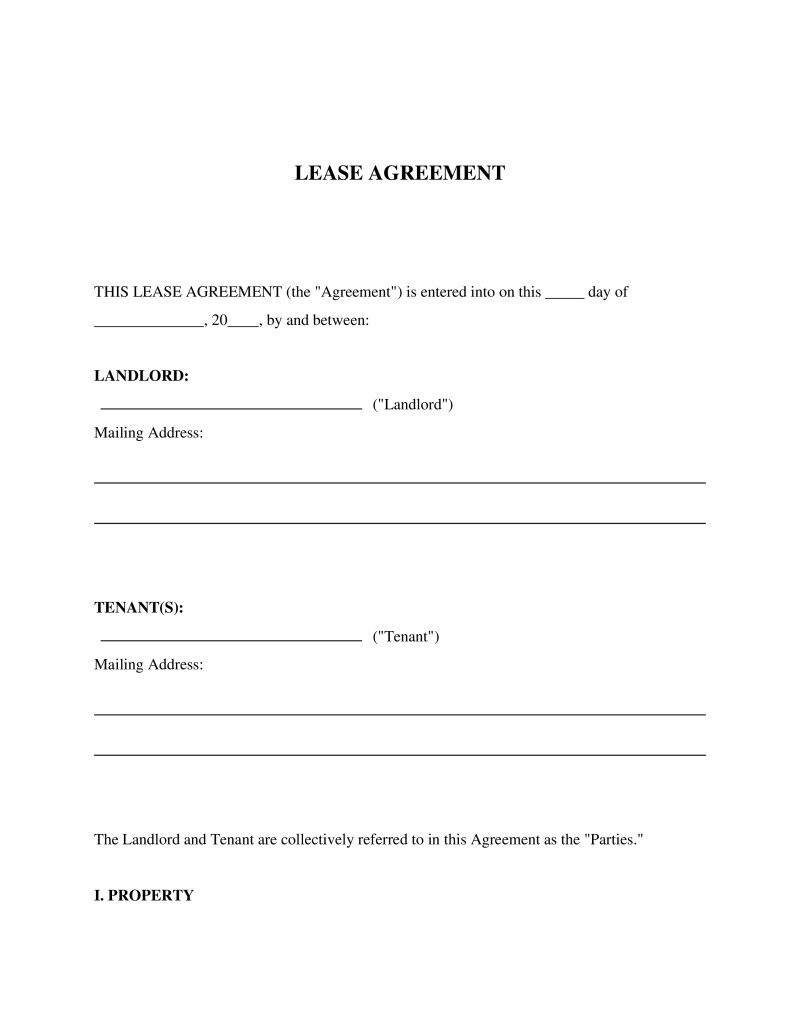
Arizona Lease Agreement
An Arizona Lease Agreement is a legal document that outlines the terms under which a rental property is leased by a landlord to a tenant.
Residential Property Type
Select the residential property category that best describes the rental premises.
Use this if the rental property does not fit one of the listed categories.
Table of Contents
What is an Arizona Lease Agreement?
An Arizona Lease Agreement is a legally binding contract entered into by a landlord and a tenant to outline the terms of a rental arrangement within the state. This document details the rights and responsibilities of both parties regarding the occupation of a residential or commercial property. It establishes critical parameters such as the monthly rental amount, payment due dates, security deposit requirements, and the duration of the tenancy. To be enforceable in a court of law, the agreement must comply with specific state statutes, primarily the Arizona Residential Landlord and Tenant Act found in Title 33 of the Arizona Revised Statutes.
Legal Framework and Statutory Requirements
The governance of rental contracts in Arizona is primarily dictated by the Arizona Residential Landlord and Tenant Act (ARLTA). This legislation, located in Title 33, Chapter 10 of the Arizona Revised Statutes (A.R.S.), sets the foundational rules for residential tenancies. While landlords and tenants have the freedom to negotiate many terms, certain statutory provisions cannot be waived. For instance, any provision in a rental agreement that purports to waive a tenant's rights established by the ARLTA is generally considered void and unenforceable.
Federal laws also intersect with state regulations. The Fair Housing Act prohibits discrimination in housing based on race, color, national origin, religion, sex, familial status, or disability. Additionally, for properties built prior to 1978, federal law mandates the disclosure of lead-based paint hazards. Commercial leases operate under a different set of statutes and generally allow for fewer consumer protections compared to residential agreements, assuming a more equal bargaining power between business entities.
Mandatory Disclosures in Arizona
State law requires landlords to provide specific information to tenants either within the lease document or as an addendum. Failure to provide these disclosures can lead to legal penalties or allow the tenant to terminate the lease.
- Landlord and Agent Identity: Pursuant to A.R.S. § 33-1322, the landlord must disclose the name and address of the property owner and any person authorized to manage the premises.
- Bed Bug Control: Under A.R.S. § 33-1319, landlords must provide existing and prospective tenants with educational materials regarding bed bugs and cannot rent a unit known to have an active infestation.
- Utility Charges: If a landlord charges separately for utilities or if there is a shared meter, A.R.S. § 33-1314.01 requires clear disclosure of how charges are calculated and allocated.
- Non-Refundable Fees: According to A.R.S. § 33-1321, any fee or deposit not designated as non-refundable in writing is deemed refundable.
- Pool Safety Notice: For properties with a swimming pool, the landlord must provide a notice regarding pool safety and education as per A.R.S. § 36-1681.
- Lead-Based Paint: A federal requirement for all homes built before 1978.
Security Deposits and Rent Regulations
Arizona law imposes strict limits on security deposits to protect tenants from excessive upfront costs. Under A.R.S. § 33-1321, a landlord cannot demand or receive security, however denominated, including prepaid rent, in an amount or value in excess of one and one-half month's rent. This limit applies to the total of the security deposit and any prepaid rent, though tenants may voluntarily pay more in advance if they choose.
Upon the termination of the tenancy, the landlord is required to return the refundable portion of the security deposit within 14 business days, excluding Saturdays, Sundays, and legal holidays. Along with the funds, the landlord must provide an itemized list of all deductions made for accrued rent or damages beyond normal wear and tear. Failure to comply with this timeline can result in the landlord being liable for twice the amount of the wrongfully withheld deposit.
Landlord Rights to Access
The tenant's right to privacy is balanced against the landlord's right to maintain the property. A.R.S. § 33-1343 dictates the protocols for entering a rented unit. A landlord generally has no right of access to the dwelling unit without the tenant's consent, except in cases of emergency or under specific court orders. For routine maintenance, inspections, or showing the unit to prospective buyers or tenants, the landlord must provide at least two days' notice.
Entry must occur at reasonable times. If a tenant unreasonably withholds consent, the landlord may seek injunctive relief or terminate the rental agreement. Conversely, if a landlord abuses the right of access or enters without proper notice (except in emergencies), the tenant may obtain injunctive relief or terminate the lease.
How to Execute an Arizona Lease Agreement
- Step 1: Drafting the Agreement - The landlord prepares the document, ensuring all terms regarding rent, duration, and house rules are clearly stated and that all mandatory state disclosures are attached.
- Step 2: Tenant Review - The prospective tenant reviews the contract. This is the stage where negotiation on terms such as lease length or pet policies typically occurs.
- Step 3: Move-in Inspection - Before signing, or immediately upon possession, both parties should conduct a walkthrough. A.R.S. § 33-1321 grants the tenant the right to be present at the move-out inspection, but a move-in checklist is vital for establishing the baseline condition of the property.
- Step 4: Signing and Payment - Both parties sign the Arizona Lease Agreement. The tenant pays the security deposit and the first month's rent (or prorated amount) as stipulated in the contract.
- Step 5: Document Retention - Copies of the signed agreement and the move-in checklist should be retained by both the landlord and the tenant for the duration of the tenancy plus the statutory period for deposit return.
Termination and Eviction Procedures
When a lease term ends, or if a violation occurs, specific legal procedures must be followed to terminate the tenancy. For month-to-month arrangements, A.R.S. § 33-1375 requires a written notice of at least 30 days prior to the periodic rental date. In cases of non-payment of rent, the landlord must issue a 5-day notice to pay or quit. If the tenant fails to remedy the breach, the landlord may file a special detainer action.
For material non-compliance with the lease (other than non-payment), such as unauthorized pets or noise violations, a 10-day notice is typically required. Immediate termination is possible under A.R.S. § 33-1368 for breaches that threaten health and safety or involve criminal activity. Arizona law prohibits "self-help" evictions, meaning a landlord cannot change locks or shut off utilities to force a tenant out without a court order.
Frequently Asked Questions
Arizona Lease Agreement Sample
Already have a Lease Agreement?
Get it reviewed free — checked against your state's laws in about a minute.
Not the form you're looking for?
Try our legal document generator to create a custom document
Disclaimer: The templates available on this website are provided for general informational purposes only and do not constitute legal advice. They are not intended to be, and should not be interpreted as, compliant with any specific legal, regulatory, or privacy requirements. These templates are not a replacement for professional legal guidance and should not be relied upon for any particular matter or circumstance. Users are strongly encouraged to seek advice from a qualified attorney licensed in their jurisdiction before using, modifying, or relying on any template.
All templates are provided on an "as is," "with all faults," and "as available" basis. The provider disclaims any and all warranties of any kind, whether express, implied, statutory, or otherwise, including without limitation warranties of merchantability, fitness for a particular purpose, title, or non-infringement.
LegalTemplates.com makes no guarantees or representations regarding the accuracy, completeness, expected outcomes, or reliability of the materials contained in these templates or any materials referenced or linked from them.