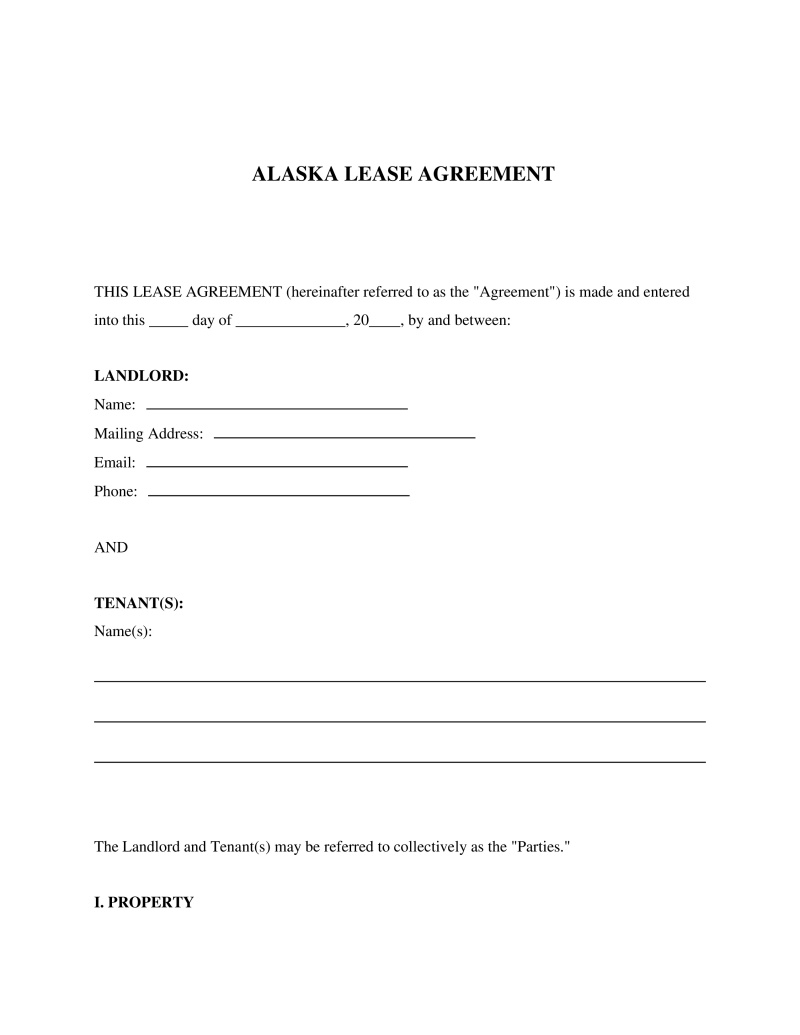
Alaska Lease Agreement
An Alaska Lease Agreement is a legal document that outlines the terms and conditions between a landlord and tenant for the rental of property in Alaska.
Residential Property Type
Select the residential property category that best describes the rental premises.
Use this if the rental property does not fit one of the listed categories.
Table of Contents
What is an Alaska Lease Agreement?
An Alaska lease agreement is a legally binding contract executed between a landlord (lessor) and a tenant (lessee) for the rental of residential or commercial property within the state. This document outlines the terms and conditions of the tenancy, including the duration of the lease, the monthly rental amount, security deposit requirements, and the specific obligations of both parties regarding property maintenance and utilities. It serves as the primary legal instrument governing the landlord-tenant relationship, ensuring that both parties understand their rights and responsibilities under Alaska state law.
Legal Framework and Statutory Compliance
The landlord-tenant relationship in Alaska is primarily governed by the Uniform Residential Landlord and Tenant Act (URLTA), which is codified in Alaska Statutes Title 34, Chapter 03. This comprehensive set of statutes establishes the minimum standards for residential leases and overrides any lease provision that attempts to waive a tenant's statutory rights. While the state allows for flexibility in drafting specific terms, any clause that conflicts with the Alaska Landlord and Tenant Act is considered void and unenforceable. For example, a landlord cannot include a provision that exculpates them from liability arising from their own negligence.
Required Disclosures in Alaska
State and federal laws mandate that specific disclosures be included in the lease agreement or provided as an addendum before the tenancy begins. Failure to provide these disclosures can result in legal penalties or liability for the landlord.
- Lead-Based Paint Disclosure: Pursuant to federal law (42 U.S. Code § 4852d), landlords renting properties built before 1978 must disclose the presence of known lead-based paint and provide the tenant with an information pamphlet.
- Identity of Landlord and Manager: Under AS 34.03.080, the landlord must disclose the name and address of the person authorized to manage the premises and the owner or person authorized to receive notices and demands.
- Absence Notification: Alaska law (AS 34.03.150) allows a landlord to include a provision requiring the tenant to notify the landlord of any anticipated extended absence from the premises in excess of seven days.
Security Deposit Regulations
Alaska enforces strict regulations regarding the collection and return of security deposits under AS 34.03.070. Landlords are generally limited to charging a security deposit equivalent to no more than two months' rent. However, this cap does not apply to rental units where the monthly rent exceeds $2,000. The landlord must keep these funds in a trust account or a separate bank account, distinct from their personal funds.
Upon lease termination, the landlord is required to return the security deposit, less any deductions for accrued rent or damages beyond normal wear and tear. If the tenant provides proper termination notice, the landlord must return the funds and an itemized statement within 14 days. If the tenant fails to provide proper notice, the landlord has up to 30 days to process the return.
Key Elements of a Valid Lease
To ensure enforceability and clarity, a comprehensive rental contract should contain several essential components. These elements protect both the property owner and the occupant by reducing ambiguity.
- Parties and Premises: Full legal names of all adults residing in the unit and the specific physical address of the rental property.
- Term of Tenancy: Specification of whether the lease is a fixed-term arrangement (e.g., one year) or a month-to-month periodic tenancy.
- Financial Terms: The exact amount of rent, the due date, acceptable payment methods, and any applicable late fees.
- Utilities and Services: A clear breakdown of which utilities (heat, electricity, water, internet) are the responsibility of the tenant versus the landlord.
- Occupancy Rules: Guidelines regarding pets, smoking, noise levels, and subletting policies.
Landlord Access and Tenant Privacy
The Alaska Landlord and Tenant Act balances the tenant's right to quiet enjoyment with the landlord's need to maintain the property. According to AS 34.03.140, a tenant may not unreasonably withhold consent for the landlord to enter the unit to inspect the premises, make necessary repairs, or show the unit to prospective buyers or tenants. Except in cases of emergency or abandonment, the landlord must provide at least 24 hours of notice before entering and must enter only at reasonable times.
Termination and Eviction Procedures
The procedures for ending a tenancy depend on the reason for termination. If a tenant fails to pay rent, the landlord may issue a "Notice to Quit" granting the tenant seven days to pay the outstanding balance or vacate the property (AS 34.03.220(b)). For material non-compliance with the lease agreement, such as unauthorized pets or noise violations, the landlord must provide a 10-day notice to remedy the breach. If the breach is not remedied, the tenancy terminates. In instances involving illegal activity or substantial damage to the premises, the notice period generally ranges from 24 hours to five days, depending on the severity of the action.
Frequently Asked Questions
Alaska Lease Agreement Sample
Already have a Lease Agreement?
Get it reviewed free — checked against your state's laws in about a minute.
Not the form you're looking for?
Try our legal document generator to create a custom document
Disclaimer: The templates available on this website are provided for general informational purposes only and do not constitute legal advice. They are not intended to be, and should not be interpreted as, compliant with any specific legal, regulatory, or privacy requirements. These templates are not a replacement for professional legal guidance and should not be relied upon for any particular matter or circumstance. Users are strongly encouraged to seek advice from a qualified attorney licensed in their jurisdiction before using, modifying, or relying on any template.
All templates are provided on an "as is," "with all faults," and "as available" basis. The provider disclaims any and all warranties of any kind, whether express, implied, statutory, or otherwise, including without limitation warranties of merchantability, fitness for a particular purpose, title, or non-infringement.
LegalTemplates.com makes no guarantees or representations regarding the accuracy, completeness, expected outcomes, or reliability of the materials contained in these templates or any materials referenced or linked from them.