Trust Amendment Form
A Trust Amendment Form is a legal document used to make changes to an existing trust agreement without revoking it.
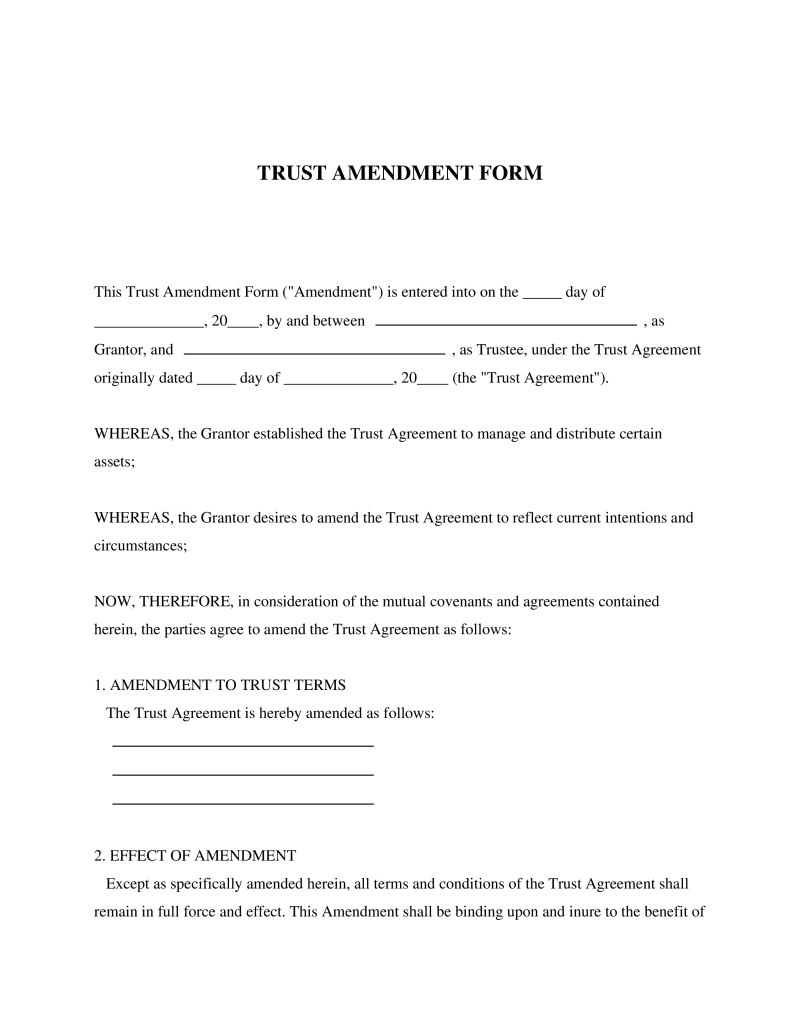
Table of Contents
What is a Trust Amendment Form?
A Trust Amendment Form is a legal document used to make specific changes or modifications to an existing revocable living trust. This form allows the settlor, also known as the grantor or trustor, to alter provisions without having to revoke the entire trust and create a new one. It serves to update the trust's terms to reflect changes in the settlor's wishes, beneficiaries, trustees, or applicable laws over time.
When is a Trust Amendment Form Used?
A Trust Amendment Form is typically employed when the settlor wishes to modify particular aspects of their revocable trust rather than completely overhaul it. Such modifications are common as life circumstances evolve, requiring the trust document to remain current and effective. Utilizing an amendment helps ensure the trust accurately reflects the settlor's current intentions regarding their assets and beneficiaries.
- Changes in Beneficiaries - To add new beneficiaries, remove existing ones, or alter their inheritance shares.
- Changes in Trustees - To appoint new successor trustees, remove current ones, or modify their powers and responsibilities.
- Changes in Trust Property - To add or remove specific assets from the trust, or to clarify how certain property should be managed or distributed.
- Changes in Distribution Terms - To modify the conditions under which beneficiaries receive distributions, such as age requirements or specific events.
- Personal Circumstance Changes - Following events like marriage, divorce, birth of children, or death of a beneficiary or trustee.
- Legal or Tax Law Changes - To ensure the trust remains compliant with current laws and takes advantage of new estate planning strategies.
Who Can Amend a Trust?
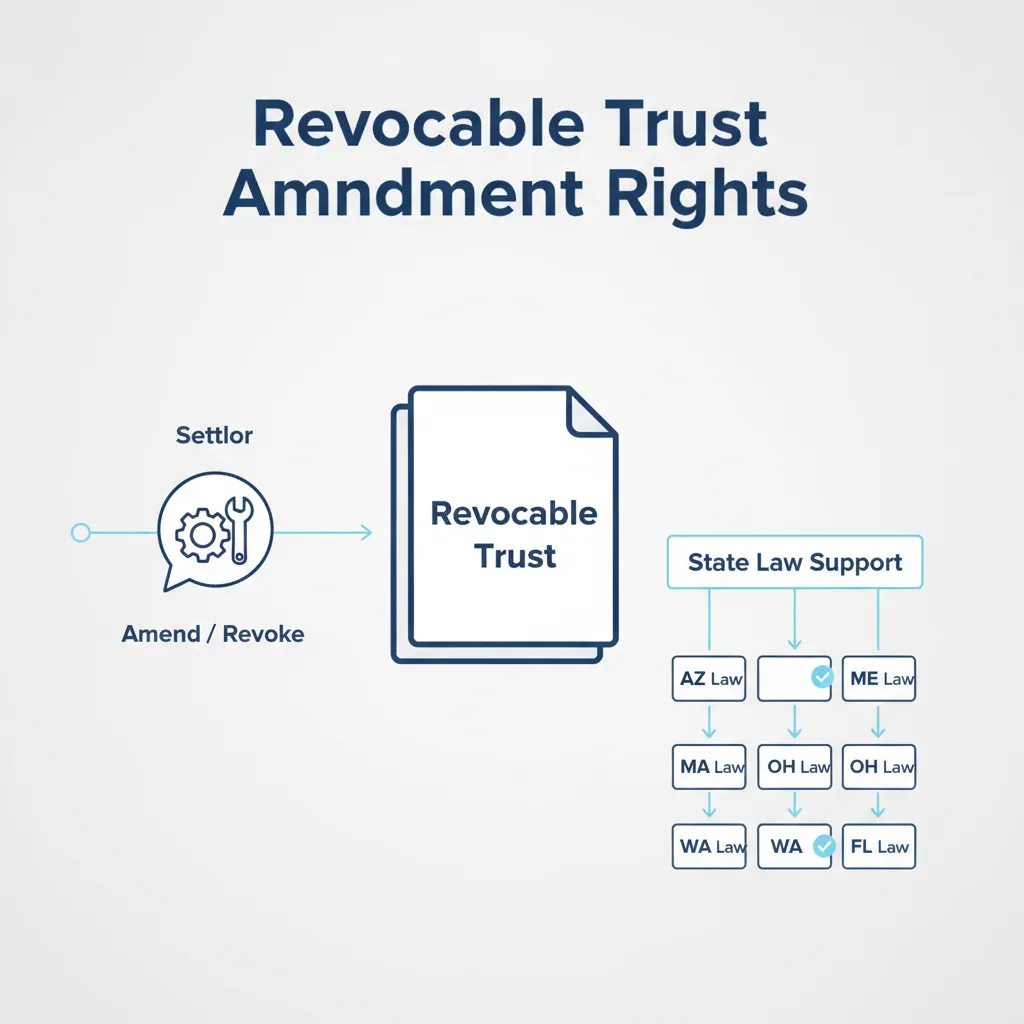
The power to amend a trust primarily rests with the settlor, provided the trust is revocable. A revocable trust, by its nature, allows the settlor to retain control over the trust assets and terms during their lifetime. This flexibility is a key distinction from irrevocable trusts, which generally cannot be amended or revoked without the consent of all beneficiaries, and sometimes court approval.
In many U.S. states, unless a trust is expressly made irrevocable, the settlor has the right to revoke or amend the trust. This principle is codified in various state statutes:
- Arizona Law - Unless the trust terms expressly state it is irrevocable, the settlor may revoke or amend the trust (14-10602).
- Maine Law - A settlor may revoke or amend a revocable trust unless the trust terms expressly provide that it is irrevocable (Title 18-B, §602).
- Massachusetts Law - Unless a trust is expressly made irrevocable, the settlor may revoke or amend the trust (Massachusetts General Laws c.203E § 602).
- Ohio Law - Unless a trust is expressly made irrevocable, the settlor has the power to revoke or amend the trust (Chapter 5806 - Ohio Revised Code).
- Washington State Law - A settlor may revoke or amend a revocable trust unless the trust terms expressly state it is irrevocable (RCW 11.103.030).
Once the settlor passes away, a revocable trust typically becomes irrevocable, and the terms generally cannot be changed by anyone, including the successor trustee or beneficiaries, unless the trust document itself provides specific mechanisms for modification after the settlor's death, or a court order is obtained.
Key Elements of a Trust Amendment Form
A Trust Amendment Form must contain specific information to clearly identify the trust being modified and the exact changes being made. Precision in detailing these elements is crucial to avoid ambiguity and ensure the amendment is legally effective. Any omission or error could lead to disputes or render the amendment invalid.
- Identification of the Trust - The full legal name of the trust, the date it was created, and the name(s) of the original settlor(s) must be clearly stated to distinguish it from any other trusts.
- Statement of Amendment - A clear declaration that the document serves as an amendment to the identified trust.
- Specific Changes - The precise language of the trust provision(s) being amended, added, or deleted. This often involves referring to specific articles, sections, or paragraphs of the original trust document.
- Effective Date - The date on which the amendment officially takes into effect.
- Affirmation of Unchanged Provisions - A statement affirming that all other provisions of the original trust agreement remain in full force and effect, except for those specifically amended.
- Settlor's Signature - The signature(s) of the settlor(s) making the amendment.
- Witnesses and Notarization - Depending on state law and the trust's original terms, the amendment may require witness signatures and notarization to be valid.
Amendment vs. Restatement vs. Revocation
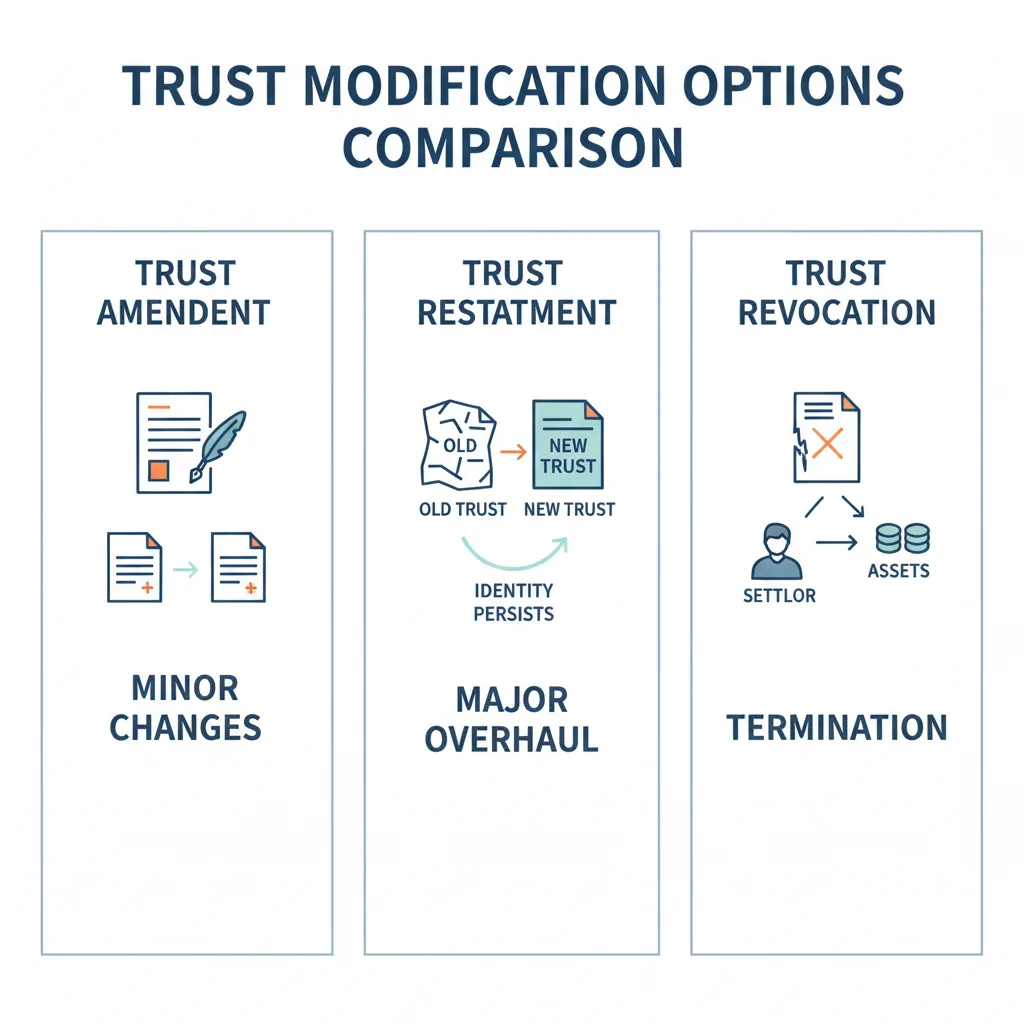
While all three terms relate to altering a trust, they represent different degrees of change and have distinct legal implications. Understanding these differences helps in choosing the appropriate legal instrument to modify a trust.
- Trust Amendment - Used for minor, specific changes to an existing trust. It modifies particular clauses or sections while leaving the bulk of the original trust intact. An amendment adds to, deletes from, or changes specific language within the original document.
- Trust Restatement - Used when significant or numerous changes are desired, or when the trust has undergone multiple amendments, making it cumbersome to read. A restatement completely replaces the original trust document's terms, but it does not create a new trust or change the trust's original date and tax identification number. It typically includes a clause stating that it supersedes all prior versions.
- Trust Revocation - Involves completely terminating the trust. When a trust is revoked, its assets are usually returned to the settlor, and the trust ceases to exist as a legal entity. This is typically done if the settlor decides they no longer need a trust or wishes to create an entirely new trust with a different structure or purpose.
Legal Formalities for Amendment
To ensure a Trust Amendment Form is legally binding and effective, it must adhere to certain formalities, which often mirror those required for the creation of the original trust. These formalities are crucial for preventing fraud, ensuring the settlor's genuine intent, and providing clear evidence of the changes made.
Key legal formalities typically include:
- Written Document - The amendment must be in writing. Oral amendments are generally not recognized as valid.
- Settlor's Signature - The settlor(s) must personally sign the Trust Amendment Form.
- Witness Requirements - Some states or the original trust document itself may require the settlor's signature to be witnessed by one or more disinterested parties. The role of witnesses is to attest that the settlor signed the document voluntarily and appeared to be of sound mind.
- Notarization - Many jurisdictions require a trust amendment to be notarized. A notary public verifies the identity of the signer and witnesses the signature, providing an additional layer of authentication.
- Delivery to Trustee - While not always a legal requirement for validity, it is considered best practice to provide a copy of the executed Trust Amendment Form to the current trustee. This ensures the trustee is aware of their updated duties and the current terms of the trust.
Frequently Asked Questions
Sources
- Massachusetts General Laws c.203E § 602 - Defines the settlor's rights to revoke or amend a revocable trust in Massachusetts.
- RCW 11.103.030: Revocation or amendment - Outlines the conditions under which a settlor can revoke or amend a revocable trust in Washington State.
- Chapter 5806 - Ohio Revised Code - Details the powers of the settlor regarding revocation or amendment of a revocable trust in Ohio.
- Title 18-B, §602: Revocation or amendment of revocable trust - Specifies the conditions under which a settlor can revoke or amend a revocable trust in Maine.
- 14-10602 - Revocation or amendment of revocable trust - Describes the settlor's rights to revoke or amend a revocable trust in Arizona.
Not the form you're looking for?
Try our legal document generator to create a custom document
Disclaimer: The templates available on this website are provided for general informational purposes only and do not constitute legal advice. They are not intended to be, and should not be interpreted as, compliant with any specific legal, regulatory, or privacy requirements. These templates are not a replacement for professional legal guidance and should not be relied upon for any particular matter or circumstance. Users are strongly encouraged to seek advice from a qualified attorney licensed in their jurisdiction before using, modifying, or relying on any template.
All templates are provided on an "as is," "with all faults," and "as available" basis. The provider disclaims any and all warranties of any kind, whether express, implied, statutory, or otherwise, including without limitation warranties of merchantability, fitness for a particular purpose, title, or non-infringement.
LegalTemplates.com makes no guarantees or representations regarding the accuracy, completeness, expected outcomes, or reliability of the materials contained in these templates or any materials referenced or linked from them.