Job Application
A Job Application is a formal document used by employers to collect structured information regarding an applicant's work history, educational background, and professional qualifications.
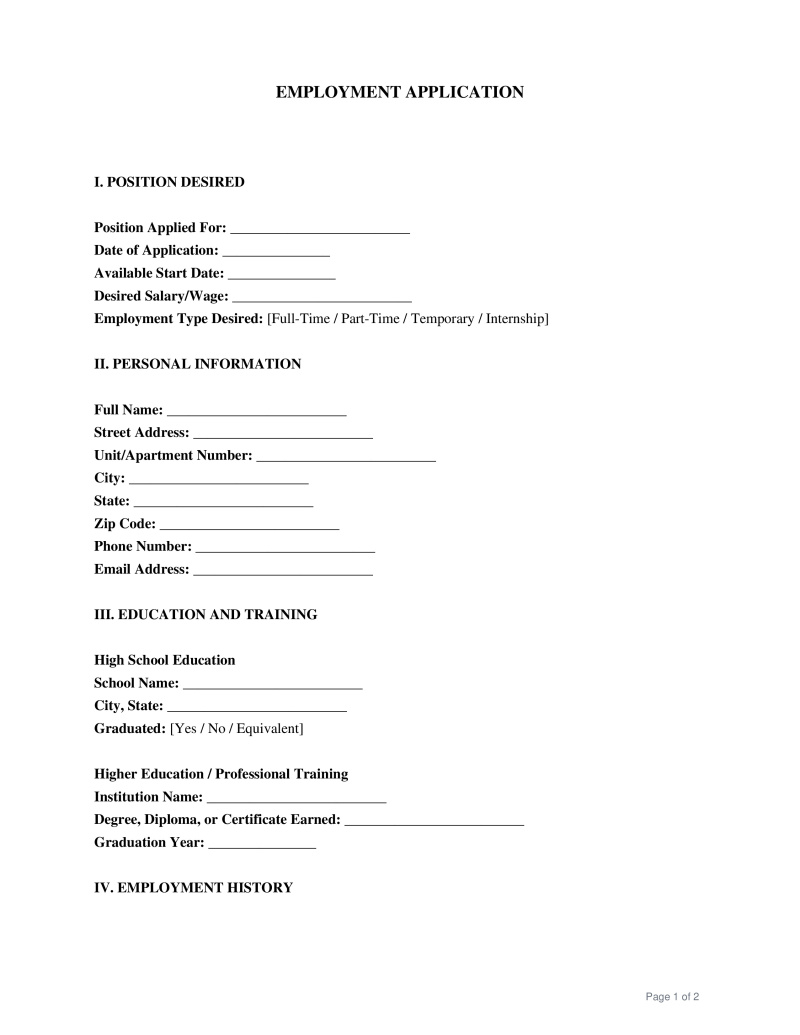
Previously Applied
This helps the employer connect your current application with any prior recruiting records.
An approximate date is fine if you do not remember the exact date.
Include the job title, department, or location if known.
Table of Contents
What is a Job Application?
A job application is a formal document or digital form completed by an individual seeking employment at a specific organization. It serves as an official record of an applicant's interest, qualifications, education, and work history, allowing employers to evaluate suitability for a given role. Organizations use these structured documents to standardize the screening process and compare candidate credentials systematically.
Types of Job Applications
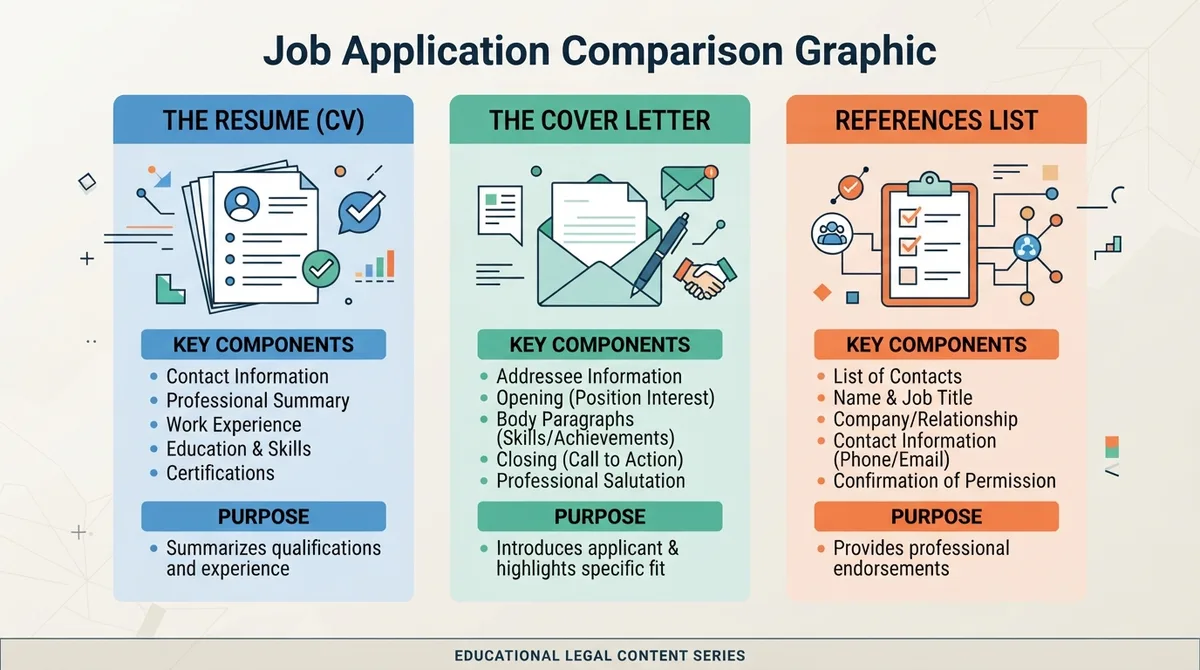
Organizations utilize different formats of applications depending on the industry, position level, and hiring environment:
- Standard Paper Application - A physical form completed by hand, typically used for local, retail, hospitality, or entry-level positions.
- Online Application Portal - A digital form hosted on an employer's website or third-party platform that allows candidates to input information and upload files.
- Federal Job Application - A highly structured application submitted through specialized platforms or forms for employment within government agencies.
- Solicited Application - An application submitted in direct response to an active, announced job opening.
- Unsolicited Application - A general inquiry and submission of qualifications sent to an employer who has not advertised an active vacancy.
Common Information Required in a Job Application
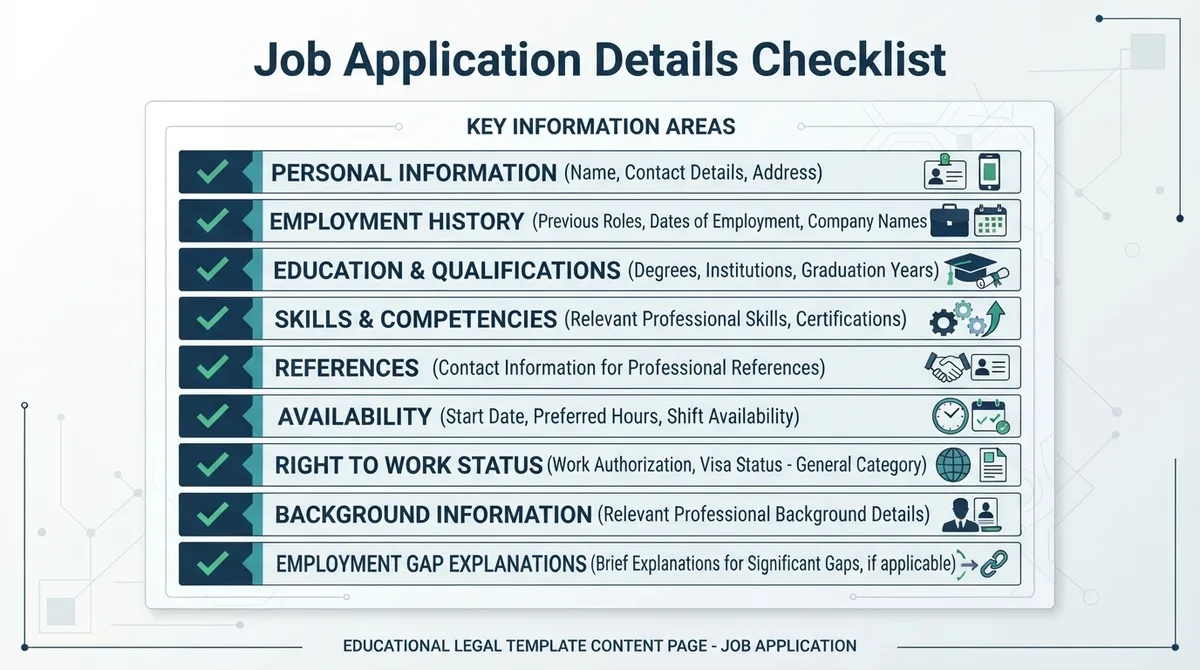
Most employers require standardized categories of information to verify credentials and contact candidates:
- Personal Details - Full legal name, physical address, phone number, and email address.
- Employment History - Names of previous employers, job titles, dates of employment, duties performed, and reasons for leaving.
- Educational Background - High schools, colleges, or vocational institutions attended, degrees obtained, and fields of study.
- Professional References - Contact information for former supervisors, colleagues, or mentors who can vouch for the applicant's work ethic and skills.
- Declarations and Authorizations - Statements verifying the truthfulness of the provided information and granting permission for background checks.
Federal Employment Applications
Applying for employment within the United States federal government involves distinct platforms and standardized documentation managed by the U.S. Office of Personnel Management. The federal hiring process relies on centralized systems to ensure compliance with civil service regulations.
The primary mechanisms for federal job applications include:
- USAJOBS Portal - The official centralized platform for federal job listings and applications across hundreds of federal agencies and organizations. Job seekers use this portal to build a profile, upload resumes, and track their application status.
- Optional Application for Federal Employment - An official form, also known as Form OF 612, used to apply for federal positions when an applicant does not submit a traditional resume. This form requires comprehensive disclosures regarding work experience, education, and specific qualifications.
- Occupational Questionnaires - Series of specific questions used to assess an applicant's level of experience and expertise regarding the duties of the advertised position.
The Standard Screening and Selection Process
Once a job application is submitted, organizations follow a systematic review process to identify qualified candidates. This procedure helps hiring managers filter high volumes of applicants efficiently.
The standard evaluation process typically involves several key stages:
- Initial Automated Screening - Many large organizations use applicant tracking systems to scan digital applications for specific keywords, education levels, and experience requirements.
- Manual Review - Human resource specialists or hiring managers review the filtered applications to evaluate the depth of experience and qualitative fit.
- Credential Verification - Employers verify educational degrees, professional licenses, and employment history listed on the application.
- Reference Checks - Hiring teams contact the listed professional references to confirm the candidate's performance history and professional conduct.
Legal and Regulatory Framework
Federal laws regulate the types of questions employers can ask on a job application to prevent discriminatory hiring practices:
- Title VII Civil Rights Protections - Prohibits employers from asking questions designed to elicit information about race, color, religion, sex, or national origin during the application stage (42 U.S.C. § 2000e et seq.).
- Disability Inquiries Restrictions - Restricts employers from asking pre-employment questions about physical or mental disabilities before a conditional job offer is made (42 U.S.C. § 12112).
- Background Check Disclosures - Mandates written disclosure and authorization before an employer can obtain a consumer report or background check on an applicant (15 U.S.C. § 1681b).
- Age Discrimination Protections - Restricts hiring inquiries that seek to determine an applicant's age unless a bona fide occupational qualification exists (29 U.S.C. § 621 et seq.).
Sources
- USAJOBS: The Federal Government's Official Employment Site - Centralized platform for federal job listings and applications.
- Optional Application for Federal Employment - OF 612 - Official form for applying to federal positions when a resume is not used.
Not the form you're looking for?
Try our legal document generator to create a custom document
Disclaimer: The templates available on this website are provided for general informational purposes only and do not constitute legal advice. They are not intended to be, and should not be interpreted as, compliant with any specific legal, regulatory, or privacy requirements. These templates are not a replacement for professional legal guidance and should not be relied upon for any particular matter or circumstance. Users are strongly encouraged to seek advice from a qualified attorney licensed in their jurisdiction before using, modifying, or relying on any template.
All templates are provided on an "as is," "with all faults," and "as available" basis. The provider disclaims any and all warranties of any kind, whether express, implied, statutory, or otherwise, including without limitation warranties of merchantability, fitness for a particular purpose, title, or non-infringement.
LegalTemplates.com makes no guarantees or representations regarding the accuracy, completeness, expected outcomes, or reliability of the materials contained in these templates or any materials referenced or linked from them.