Rhode Island Power of Attorney Form
A Rhode Island Power of Attorney form is a legally binding document that authorizes a trusted individual to act on behalf of another person in financial, medical, or other designated matters, in accordance with Rhode Island law.
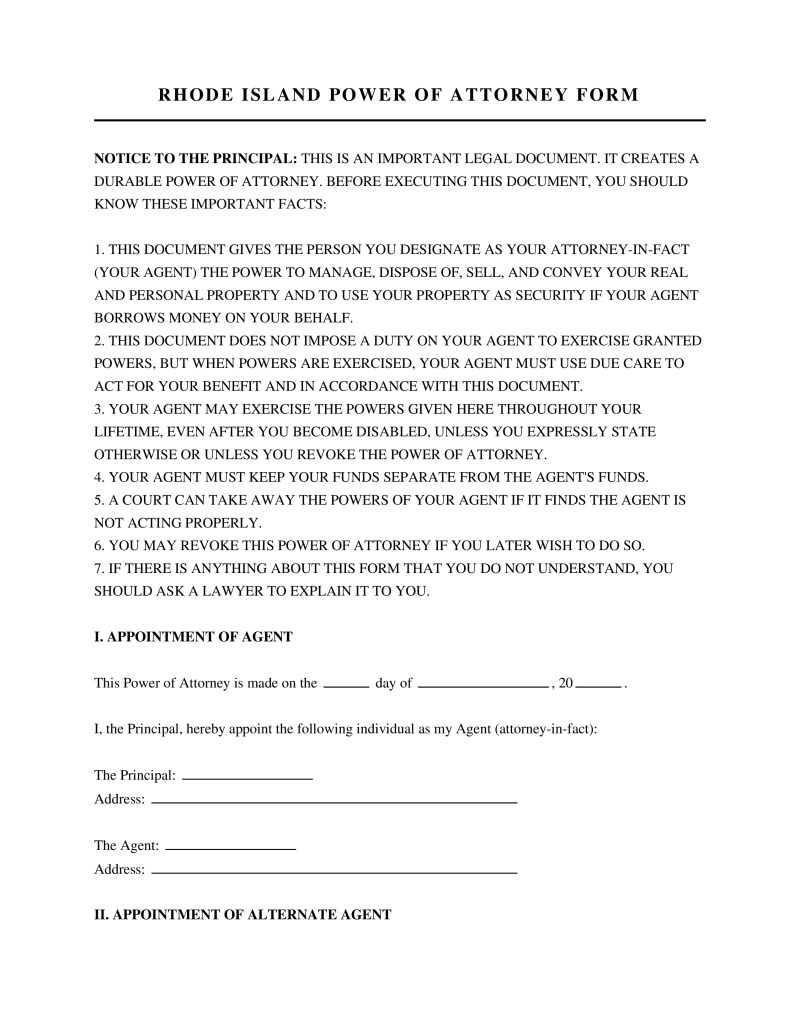
Authority Effective Timing
Many powers of attorney are effective immediately. A springing power of attorney becomes effective only after a stated event, commonly the Principal's incapacity, but some jurisdictions impose special requirements for proving that event.
Use this only if the authority should not begin immediately and should start on a calendar date.
Describe the triggering event clearly, such as written certification of incapacity by one or two licensed physicians.
For springing authority, third parties often need clear proof before accepting the Agent's authority.
Use precise language so banks, healthcare providers, or other institutions can verify when the authority has begun.
Table of Contents
What is a Rhode Island Power of Attorney Form?
A Rhode Island Power of Attorney Form is a legal document that grants one individual, known as the agent or attorney-in-fact, the authority to act on behalf of another individual, the principal, in specific matters. This instrument is crucial for delegating authority for various purposes, allowing the agent to handle particular affairs when the principal is unable or unavailable to do so personally. In Rhode Island, official forms are provided for distinct administrative functions, such as vehicle registration and tax-related matters.
Specific Uses of Rhode Island Power of Attorney Forms
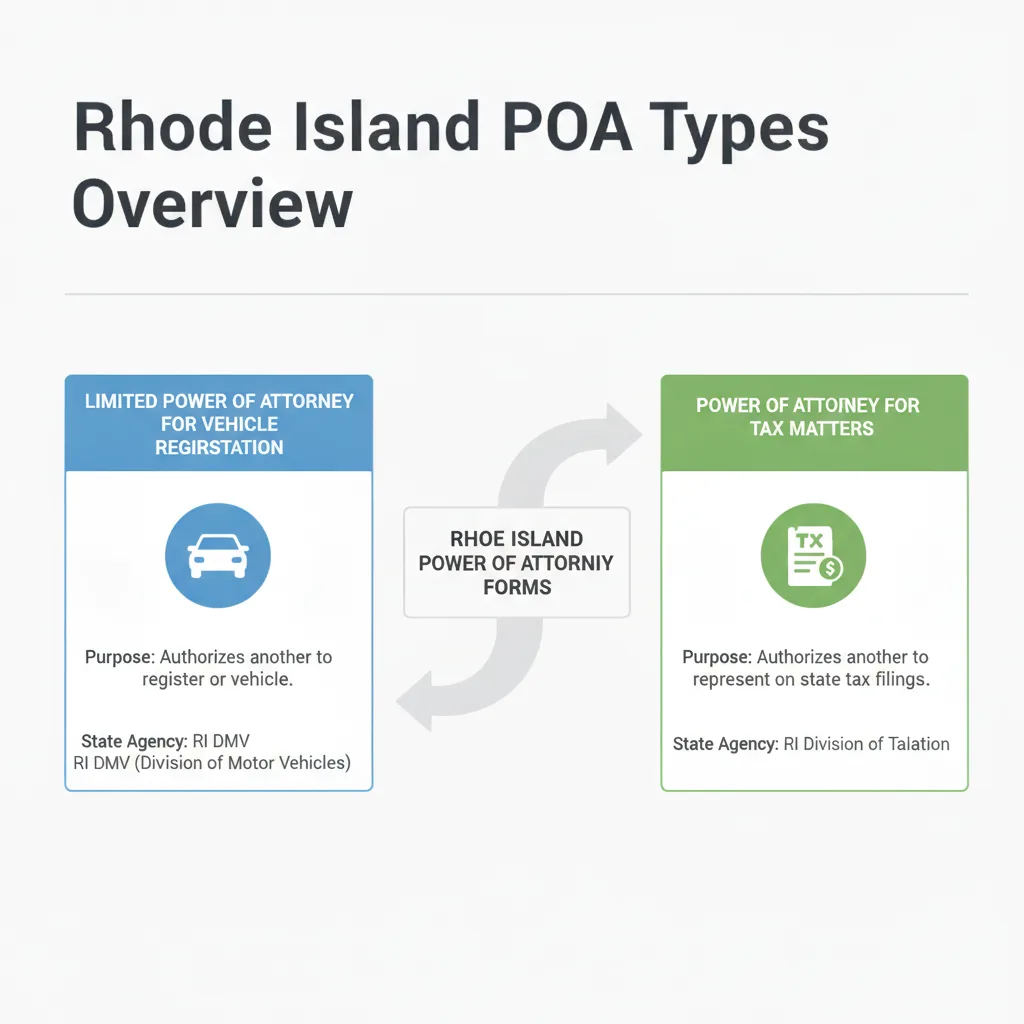
The State of Rhode Island provides official Power of Attorney forms tailored to specific administrative needs, ensuring clarity and legal validity for particular transactions. These specialized forms streamline processes by clearly defining the scope of authority granted to an agent for a narrow set of actions:
- Limited Power of Attorney for Vehicle Registration - This form is specifically designed to allow an agent to act on behalf of the principal in matters related to vehicle registration applications. It authorizes the agent to complete and submit necessary paperwork to the Rhode Island Division of Motor Vehicles (DMV).
- Power of Attorney for Tax Matters - This form is used to grant an agent the authority to represent the principal before the Rhode Island Division of Taxation. It enables the agent to handle tax-related issues, including filing returns, receiving confidential information, and resolving tax liabilities.
Limited Power of Attorney for Vehicle Registration
The Rhode Island Department of State and the Division of Motor Vehicles provide a specific Limited Power of Attorney form for vehicle registration applications. This document is instrumental when the vehicle owner cannot personally attend to the registration process. The authority granted through this form is restricted solely to actions required for vehicle registration, ensuring the agent operates within defined boundaries.
Key aspects and requirements for the Limited Power of Attorney for Vehicle Registration include:
- Purpose - Used specifically for vehicle registration applications with the Rhode Island Division of Motor Vehicles.
- Availability - The official form is accessible through the Rhode Island Department of State and the Division of Motor Vehicles website.
- Execution Requirements - The form must be witnessed and executed before a notary public to ensure its legal validity.
- Instructions - The official form includes specific instructions for its proper completion, which must be followed meticulously.
Power of Attorney for Tax Matters
For individuals or entities needing representation in dealings with the Rhode Island Division of Taxation, a dedicated Power of Attorney form is available. This form allows a principal to authorize an agent to handle various tax-related responsibilities. The scope of authority typically covers interactions with the tax authorities, enabling the agent to act on the principal's behalf for specific tax periods or matters.
Details regarding the Rhode Island Power of Attorney for Tax Matters include:
- Purpose - Grants authority to an agent to represent the principal in tax-related matters before the Rhode Island Division of Taxation.
- Availability - The official form is provided by the Rhode Island Division of Taxation and is typically available in a downloadable Adobe Acrobat (PDF) format.
- Format - The PDF format allows for electronic completion and saving, facilitating easier preparation and retention of the document.
- Scope - The form generally allows the principal to specify the types of tax matters and the tax periods for which the agent is authorized to act.
Execution and Notarization Requirements
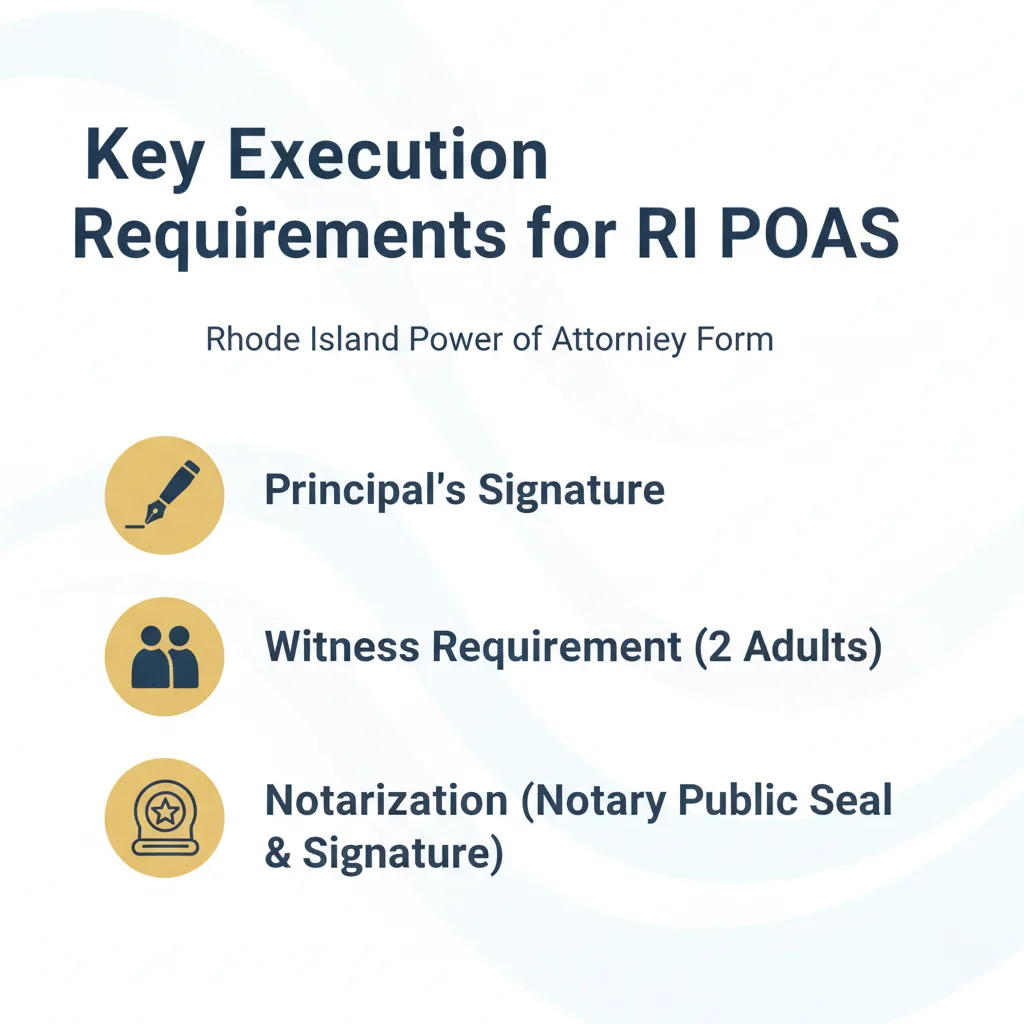
The proper execution of a Power of Attorney form in Rhode Island is critical for its legal enforceability and acceptance by relevant state agencies. For certain official forms, such as the Limited Power of Attorney for Vehicle Registration, specific procedural steps must be followed to validate the document. These steps are designed to confirm the principal's intent and identity, safeguarding against fraud or coercion.
Common execution requirements for official Rhode Island Power of Attorney forms include:
- Witness Requirement - The document must be witnessed, indicating that individuals observed the principal signing the form.
- Notarization - Execution must occur before a notary public, who verifies the identity of the signatory and attests to the authenticity of the signature. This step is mandatory for the Limited Power of Attorney for Vehicle Registration.
- Principal's Signature - The principal must sign the document voluntarily, indicating their consent to grant the specified powers to the agent.
- Agent's Acceptance - While not always explicitly stated on all forms, the agent typically signifies acceptance of their role and responsibilities, often through their signature.
Key Parties and Scope of Authority
Every Power of Attorney involves at least two primary parties: the principal and the agent. The principal is the individual granting the authority, while the agent (also known as the attorney-in-fact) is the individual receiving the authority to act. Understanding the roles and the defined scope of authority is essential for both parties.
For the specific Rhode Island forms, the scope of authority is generally limited:
- Principal - The owner of a vehicle seeking registration or the taxpayer requiring representation before the Division of Taxation. The principal must be of sound mind to understand the document's implications when signing.
- Agent - The person designated to perform specific actions on behalf of the principal. This individual should be trustworthy and capable of fulfilling the designated duties.
- Limited Scope - The official Rhode Island forms typically grant limited authority. For vehicle registration, the agent's power is confined to tasks directly related to the application. For tax matters, the agent's authority is restricted to tax-related interactions with the Division of Taxation for specified periods. These forms do not grant broad general powers over all of the principal's affairs.
Frequently Asked Questions
Sources
- Limited Power of Attorney Form - Rhode Island Department of State - Provides the official regulation for the Limited Power of Attorney form used in vehicle registration applications.
- Limited Power of Attorney Form - Rhode Island Division of Motor Vehicles - Offers the official Limited Power of Attorney form for vehicle registration purposes.
- Power of Attorney Form - Rhode Island Division of Taxation - Provides the official Power of Attorney form for tax-related matters in Rhode Island.
Power of Attorney in other states
Not the form you're looking for?
Try our legal document generator to create a custom document
Disclaimer: The templates available on this website are provided for general informational purposes only and do not constitute legal advice. They are not intended to be, and should not be interpreted as, compliant with any specific legal, regulatory, or privacy requirements. These templates are not a replacement for professional legal guidance and should not be relied upon for any particular matter or circumstance. Users are strongly encouraged to seek advice from a qualified attorney licensed in their jurisdiction before using, modifying, or relying on any template.
All templates are provided on an "as is," "with all faults," and "as available" basis. The provider disclaims any and all warranties of any kind, whether express, implied, statutory, or otherwise, including without limitation warranties of merchantability, fitness for a particular purpose, title, or non-infringement.
LegalTemplates.com makes no guarantees or representations regarding the accuracy, completeness, expected outcomes, or reliability of the materials contained in these templates or any materials referenced or linked from them.