Meeting Agenda Template
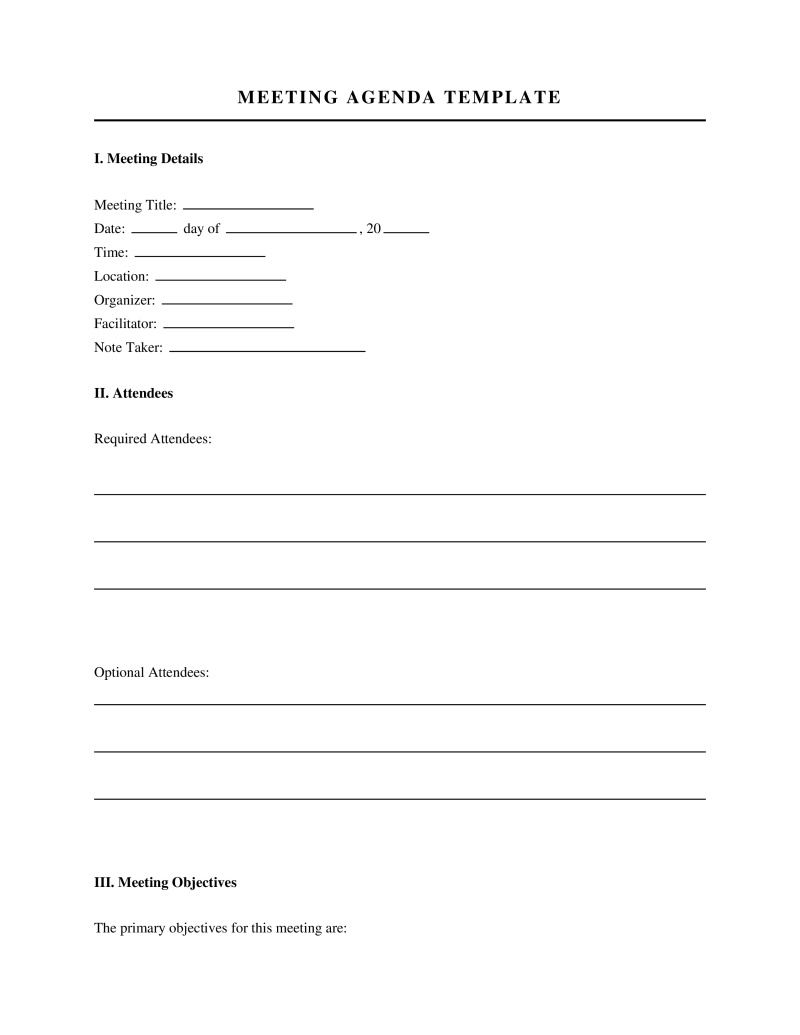
A Meeting Agenda Template outlines the topics, objectives, and schedule for a meeting, facilitating organized discussions and efficient time management.
Meeting Type
Select the primary purpose or format of the meeting. This will help tailor agenda sections and timing.
Provide a brief description of the meeting type if you selected 'Other'.
Table of Contents
What Is a Meeting Agenda Template?
A Meeting Agenda Template is a pre-structured framework designed to organize the topics, participants, objectives, and time allocation for any scheduled discussion. It serves as a roadmap, guiding the flow of a meeting from start to finish. Teams leverage this template to ensure every meeting is purposeful, productive, and efficient, preventing aimless discussions and ensuring that all critical points are addressed within the allotted time. It helps set clear expectations for attendees, fosters accountability, and ultimately leads to more decisive outcomes.
What Is Included
A well-crafted Meeting Agenda Template includes several key sections that ensure comprehensive planning and execution. Here’s a breakdown of the essential components:
- Meeting Title/Purpose - This section clearly states the overarching theme or reason for the meeting, providing immediate context for all participants.
- Date, Time, and Location/Platform - Essential logistical details that inform attendees when and where (or how) to join the discussion, whether it's in a conference room or via a virtual meeting link.
- Meeting Objective(s) - Outlines the specific goals or desired outcomes of the meeting, clarifying what needs to be achieved or decided upon by the end.
- Attendees (Required & Optional) - Lists who is expected to attend and who might benefit from joining, helping participants understand the audience and ensuring critical stakeholders are present.
- Topics for Discussion - The core of the agenda, detailing each subject that will be covered during the meeting, often presented in a logical sequence.
- Presenter/Lead for Each Topic - Assigns responsibility for leading specific discussions, ensuring each item has a clear owner and that preparation is distributed among relevant parties.
- Time Allotment per Topic - Specifies the recommended duration for each discussion point, helping to keep the meeting on schedule and ensuring adequate time for critical items.
- Pre-reading/Materials - Provides links or references to any documents, reports, or data that attendees should review before the meeting to come prepared and informed.
- Decision/Action Items - A dedicated space to capture key decisions made and specific tasks assigned during the meeting, along with owners and due dates, ensuring follow-through.
- Next Steps/Follow-up - Summarizes immediate post-meeting actions or schedules for subsequent meetings, maintaining momentum and ensuring continuity on ongoing projects.
Who Should Use This Template?
The Meeting Agenda Template is a versatile tool, but its utility shines brightest in specific scenarios and for particular user groups. Understanding who benefits most, and who might find it less suitable, helps optimize its application.
Best For
- Teams with Recurring Meetings - Ideal for daily stand-ups, weekly syncs, monthly reviews, or quarterly planning sessions where consistency and structure are paramount.
- Project Managers and Team Leads - Essential for guiding project meetings, ensuring all team members are aligned on tasks, progress, and upcoming milestones.
- Organizations Aiming for Standardized Communication - Companies seeking to improve meeting efficiency and foster a culture of preparedness across departments.
- Remote and Hybrid Workforces - Provides a critical framework for virtual meetings, ensuring clarity and engagement when participants are not co-located.
- Meetings Requiring Specific Decisions or Action Items - When the primary goal is to make choices, assign responsibilities, or solve problems, a clear agenda ensures these outcomes are captured.
- Cross-functional Teams - Facilitates alignment and understanding among diverse groups by clearly outlining topics and objectives relevant to all stakeholders.
Not Ideal For
- Spontaneous, Informal Huddles - For quick, ad-hoc check-ins or informal brainstorming sessions between a few individuals where a rigid structure would stifle spontaneity.
- Highly Creative Brainstorming Sessions - While some structure is useful, a detailed, time-boxed agenda might constrain free-flowing idea generation in early-stage conceptual work.
- Very Small, Ad-Hoc Discussions - For two or three people needing a rapid alignment on a minor point, the overhead of creating a formal agenda might outweigh the benefit.
- Emergency Situations Requiring Immediate Action - In crisis management where rapid, adaptive discussion is needed, a pre-set agenda might be too inflexible.
Quick Start Guide
Implementing a Meeting Agenda Template effectively can transform your meetings from time-sinks into productive powerhouses. Follow these tactical steps to get started:
- Define the Meeting's Core Purpose and Desired Outcomes: Before touching the template, articulate *why* this meeting needs to happen and *what specific decisions or actions* must result from it. This clarity will guide every item you add to the agenda.
- Select the Appropriate Template Detail Level: Consider the nature of your meeting. For a quick daily stand-up, a simple agenda with just topics, owners, and time is sufficient. For a strategic review, opt for a more detailed template that includes pre-reading, specific objectives, and dedicated sections for decisions and next steps.
- Outline Key Discussion Points and Prioritize Them: Brainstorm all topics relevant to your meeting's purpose. Then, arrange them logically, placing the most critical or time-sensitive items earlier in the agenda. Be ruthless in cutting non-essential topics to maintain focus.
- Assign Ownership and Realistic Time Blocks to Each Item: For every agenda item, identify a specific person responsible for leading that discussion. Crucially, allocate a realistic time limit for each topic, including time for questions and discussion, to prevent any single item from derailing the entire meeting.
- Distribute the Agenda with Sufficient Lead Time: Send the completed agenda to all attendees at least 24-48 hours in advance (or even more for complex meetings). This allows participants ample time to review materials, prepare their contributions, and clarify any questions beforehand.
- Facilitate with Discipline and Adaptability: During the meeting, use the agenda as your guide. The facilitator should gently steer discussions back on track if they stray, ensure time limits are respected, and actively capture decisions and action items as they arise. Be prepared to adapt if an urgent, unforeseen topic emerges, perhaps by 'parking' less critical items for a follow-up.
- Document Decisions and Action Items Immediately: As discussions conclude and decisions are made, record them directly within the agenda (or a linked document). Assign clear owners and specific due dates for all action items. This ensures accountability and a clear record of what was accomplished and what needs to happen next.
- Review and Iterate for Continuous Improvement: After the meeting, take a moment to reflect. Did the agenda work well? Were time allocations accurate? What could be improved for the next meeting? Use this feedback to refine your template and facilitation approach, ensuring future meetings are even more effective.
Frequently Asked Questions
Not the form you're looking for?
Try our legal document generator to create a custom document
Disclaimer: The templates available on this website are provided for general informational purposes only and do not constitute legal advice. They are not intended to be, and should not be interpreted as, compliant with any specific legal, regulatory, or privacy requirements. These templates are not a replacement for professional legal guidance and should not be relied upon for any particular matter or circumstance. Users are strongly encouraged to seek advice from a qualified attorney licensed in their jurisdiction before using, modifying, or relying on any template.
All templates are provided on an "as is," "with all faults," and "as available" basis. The provider disclaims any and all warranties of any kind, whether express, implied, statutory, or otherwise, including without limitation warranties of merchantability, fitness for a particular purpose, title, or non-infringement.
LegalTemplates.com makes no guarantees or representations regarding the accuracy, completeness, expected outcomes, or reliability of the materials contained in these templates or any materials referenced or linked from them.