Wisconsin Lease Agreement
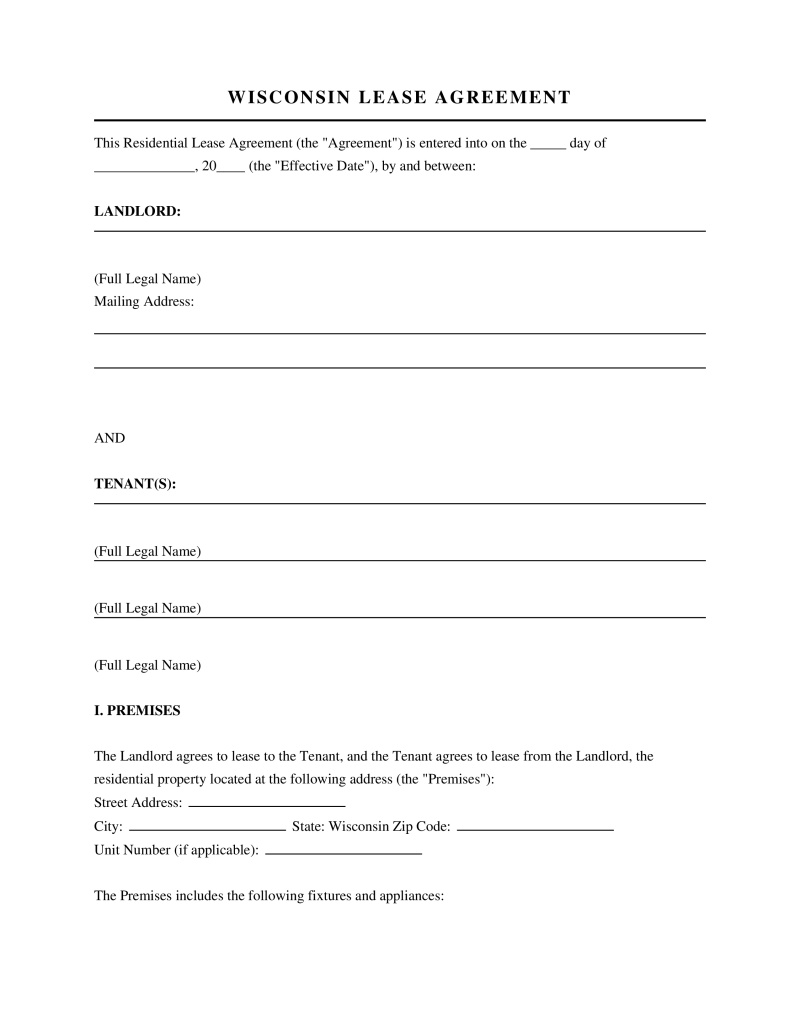
A Wisconsin Lease Agreement is a binding contract between a landlord and tenant that establishes the terms for renting residential property in the state.
Residential Property Type
Select the residential property category that best describes the rental premises.
Use this if the rental property does not fit one of the listed categories.
Table of Contents
What is a Wisconsin Lease Agreement?
A Wisconsin Lease Agreement is a legally binding contract entered into by a landlord and a tenant to outline the terms and conditions associated with renting a property within the state. This document serves to establish the specific rights, responsibilities, and obligations of both parties, ensuring that the tenancy complies with state property laws and regulations. It typically includes essential details such as the monthly rental amount, payment schedules, security deposit specifications, rules regarding property use, and the duration of the occupancy. Both residential and commercial entities utilize this agreement to secure their interests and provide a clear framework for the landlord-tenant relationship.
Legal Framework and Statutory Requirements
Landlord-tenant relationships in Wisconsin are primarily governed by Chapter 704 of the Wisconsin Statutes and Chapter ATCP 134 of the Wisconsin Administrative Code. These laws establish the baseline requirements for rental agreements and override any lease terms that attempt to waive statutory rights. For instance, the state prohibits provisions that allow a landlord to evict a tenant without the judicial process or those that force a tenant to pay the landlord's legal fees in disputes where the tenant prevails. A Wisconsin Lease Agreement must adhere to these statutes to be considered enforceable in a court of law.
Security Deposit Regulations
The handling of security deposits is strictly regulated under Wisconsin Administrative Code Chapter ATCP 134. Unlike some states, Wisconsin does not impose a statutory limit on the amount a landlord can charge for a security deposit. However, the law mandates strict protocols for the return of these funds. Landlords are required to return the security deposit, minus any allowable deductions for damage or unpaid rent, within 21 days after the tenant surrenders the premises. If deductions are made, the landlord must provide a written statement itemizing the physical damages or other reasons for withholding funds. Failure to comply with these timing and reporting requirements can result in the landlord being liable for double the amount of the security deposit plus legal fees.
Mandatory Disclosures
To ensure transparency and validity, a Wisconsin Lease Agreement must contain specific disclosures required by state law. Before entering into a rental agreement or accepting a deposit, landlords must disclose certain conditions affecting the habitability of the property.
- Code Violations: Landlords must disclose any uncorrected building or housing code violations that present a significant threat to the prospective tenant's health or safety.
- Shared Utilities: If the dwelling unit lacks a separate utility meter and charges are not included in the rent, the landlord must disclose how utility charges will be calculated and allocated among tenants.
- Domestic Abuse Protections: Leases must include specific statutory language informing tenants of their rights to terminate the tenancy if they face an imminent threat of serious physical harm, as outlined in Wis. Stat. § 704.16.
Right of Entry and Tenant Privacy
Wisconsin law balances the landlord's property rights with the tenant's right to exclusive possession. Under standard regulations, a landlord must provide at least 12 hours of advance notice before entering the rental unit for inspections, repairs, or showings. Entry must occur at reasonable times. The only exceptions to the notice requirement are in cases of emergency where immediate access is necessary to protect the property or occupants from harm. The lease document often reiterates these state standards to prevent disputes regarding privacy and access.
Essential Elements of a Valid Wisconsin Lease
For a rental contract to be effective and legally robust, it should contain comprehensive details regarding the tenancy. Missing information can lead to ambiguity and legal challenges.
- Parties Involved: The full legal names of the landlord and all adult tenants responsible for the lease.
- Property Description: The complete address of the rental unit, including apartment numbers where applicable.
- Term of Tenancy: Clear start and end dates for fixed-term leases, or the commencement date for month-to-month arrangements.
- Rent Specifics: The amount of rent, the due date, acceptable payment methods, and the address where rent should be sent.
- Security Deposit: The amount collected and the terms for its return.
- Signatures: Dated signatures from the landlord and all named tenants to signify mutual assent.
Termination and Eviction Procedures
The process for terminating a lease depends on the type of tenancy and the reason for termination. For month-to-month tenancies, either party typically must provide a 28-day written notice to terminate the arrangement. In cases of lease violations, such as non-payment of rent, Wisconsin law prescribes specific notice periods. For example, a landlord may issue a 5-Day Notice to Pay or Quit for unpaid rent. If the tenant fails to remedy the situation, the landlord may proceed with an eviction lawsuit in small claims court. It is illegal for landlords to engage in "self-help" evictions, such as changing locks or removing tenant property, without a court order.
Frequently Asked Questions
Lease Agreement in other states
Already have a Lease Agreement?
Get it reviewed free — checked against your state's laws in about a minute.
Not the form you're looking for?
Try our legal document generator to create a custom document
Disclaimer: The templates available on this website are provided for general informational purposes only and do not constitute legal advice. They are not intended to be, and should not be interpreted as, compliant with any specific legal, regulatory, or privacy requirements. These templates are not a replacement for professional legal guidance and should not be relied upon for any particular matter or circumstance. Users are strongly encouraged to seek advice from a qualified attorney licensed in their jurisdiction before using, modifying, or relying on any template.
All templates are provided on an "as is," "with all faults," and "as available" basis. The provider disclaims any and all warranties of any kind, whether express, implied, statutory, or otherwise, including without limitation warranties of merchantability, fitness for a particular purpose, title, or non-infringement.
LegalTemplates.com makes no guarantees or representations regarding the accuracy, completeness, expected outcomes, or reliability of the materials contained in these templates or any materials referenced or linked from them.