Illinois Lease Agreement
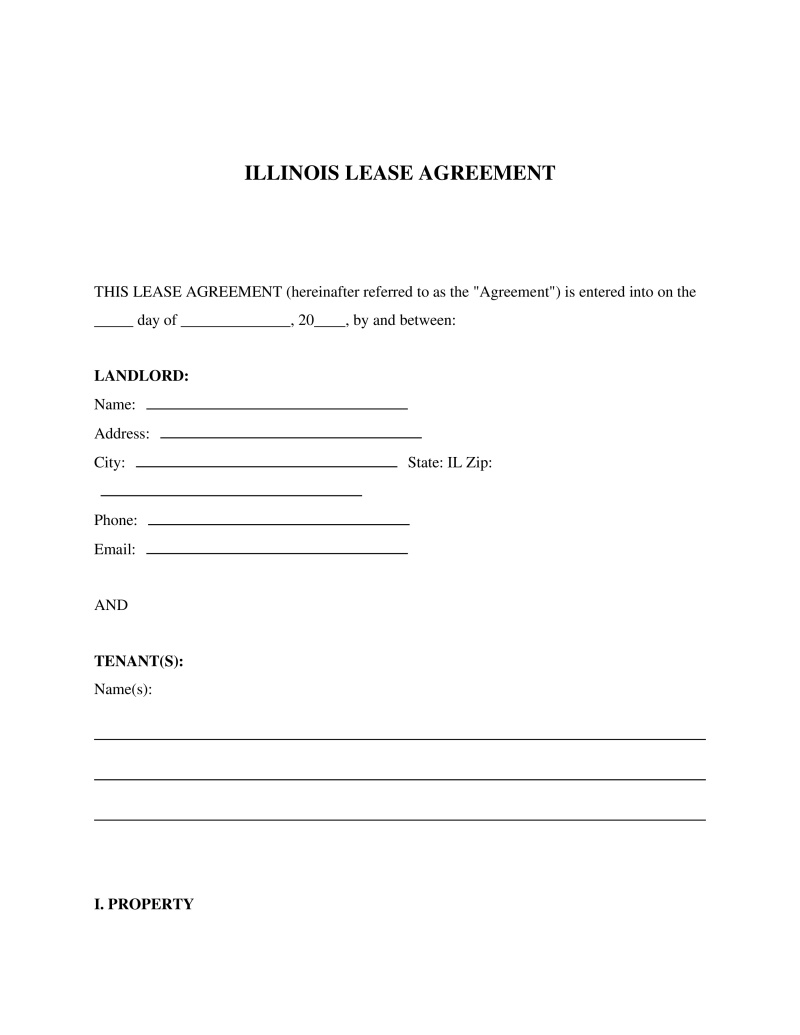
An Illinois Lease Agreement is a legally binding contract that establishes the specific terms and conditions for renting real property within the State of Illinois.
Residential Property Type
Select the residential property category that best describes the rental premises.
Use this if the rental property does not fit one of the listed categories.
Table of Contents
What is an Illinois Lease Agreement?
An Illinois Lease Agreement, particularly in the context of commercial law, is a contractual arrangement where one party (the lessor) transfers the right to possession and use of goods to another party (the lessee) for a specified term. This transfer occurs in return for consideration, typically in the form of periodic payments. Such agreements are governed by the Illinois Uniform Commercial Code (UCC), specifically Article 2A, which addresses leases of goods rather than real property.
Scope and Application of Illinois Lease Agreements
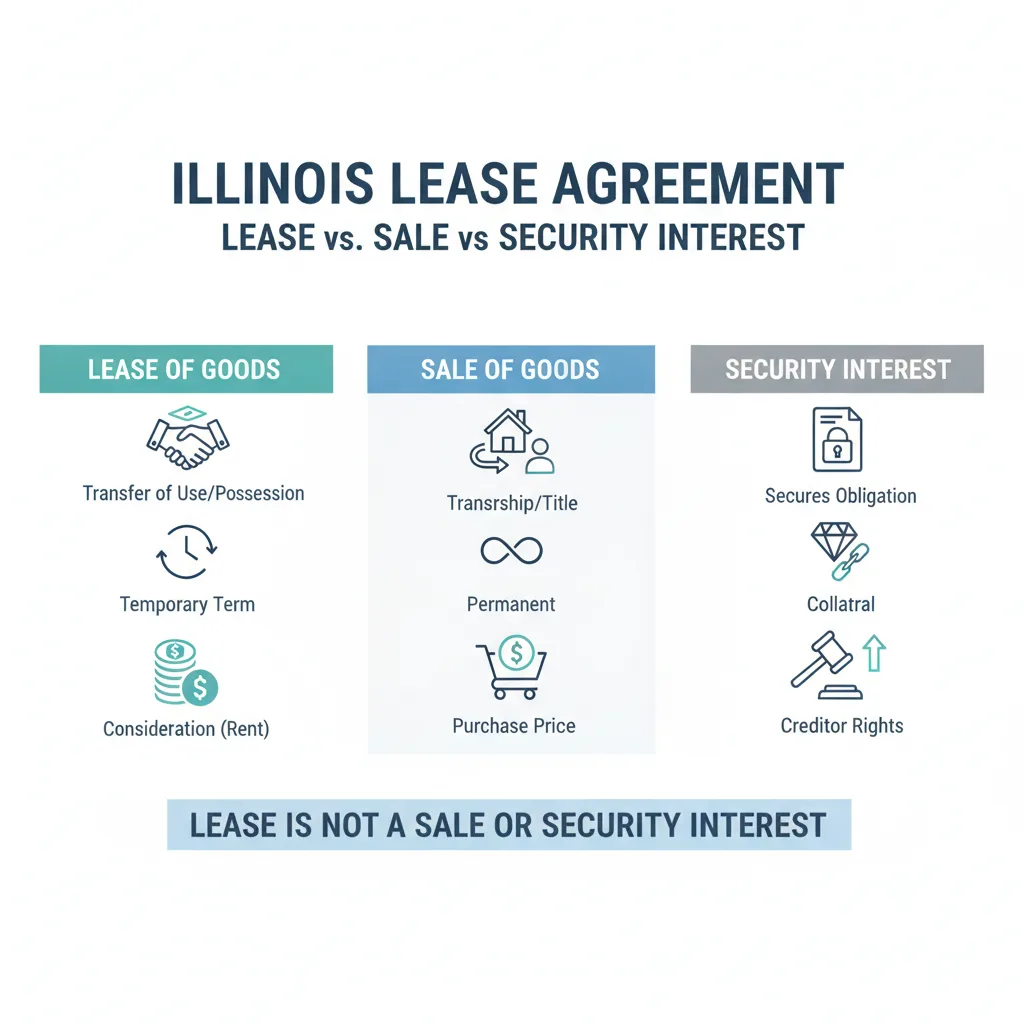
The Illinois Uniform Commercial Code, Article 2A, defines a “lease” as a transaction involving the transfer of the right to possession and use of goods for a term, in exchange for consideration. This definition is crucial for distinguishing a true lease from other types of commercial transactions that might appear similar on the surface but carry different legal implications.
Key distinctions under Illinois law include:
- Lease vs. Sale - A lease specifically involves the transfer of the right to possession and use, not ownership. A sale, including a sale on approval or a sale or return, involves the transfer of title and is explicitly stated not to be a lease (810 ILCS 5/2A-103).
- Lease vs. Security Interest - While similar in some aspects, a lease does not inherently create a security interest. A security interest typically secures an obligation and gives the creditor rights in collateral. The determination of whether a transaction in the form of a lease creates a lease or a security interest is made based on the specific facts of each case (810 ILCS 5/2A-509).
Key Elements of an Illinois Lease Agreement
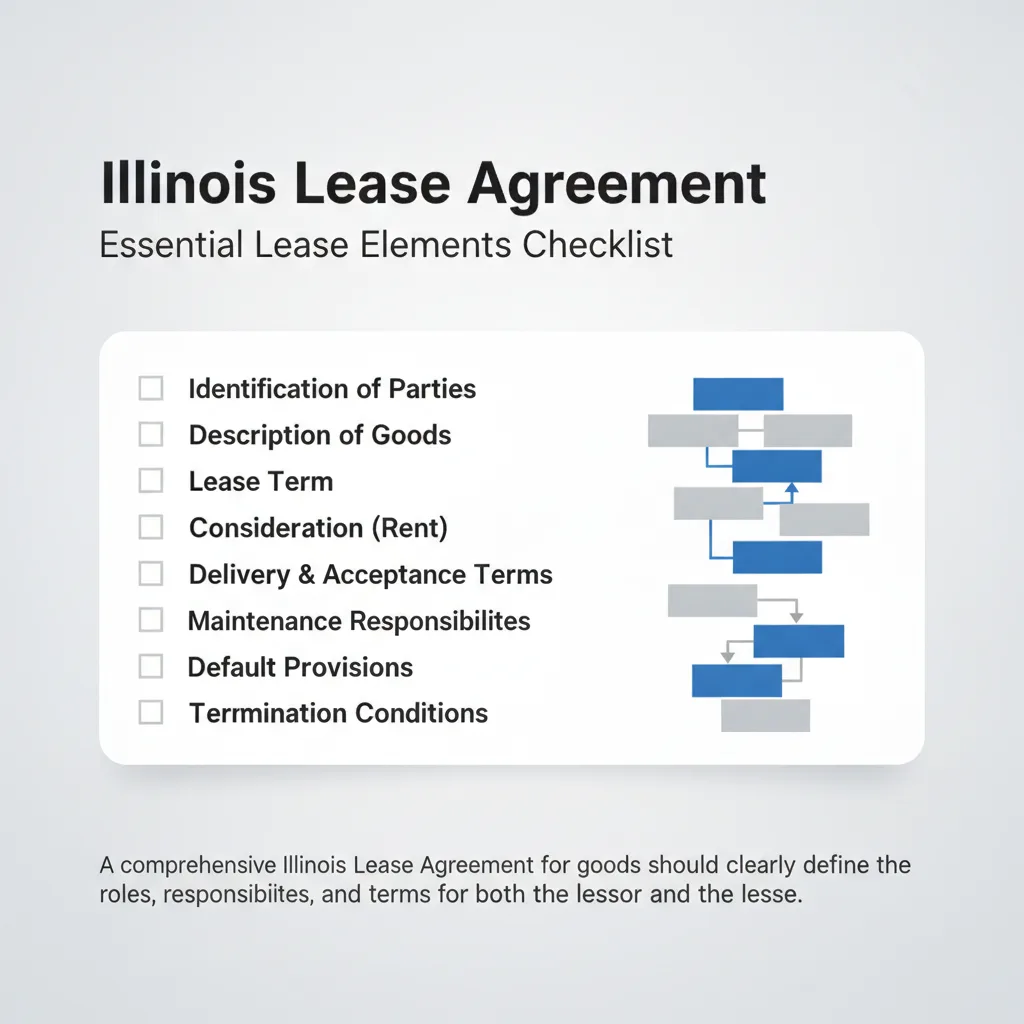
An effective Illinois Lease Agreement for goods outlines the fundamental terms and conditions governing the relationship between the lessor and the lessee. These agreements ensure clarity regarding the rights and responsibilities of each party throughout the lease term. The specific elements can vary depending on the nature of the goods being leased and the commercial context.
Common elements typically found in an Illinois Lease Agreement include:
- Identification of Parties - Clearly states the full legal names and addresses of both the lessor and the lessee.
- Description of Goods - A precise and detailed description of the goods being leased, including model numbers, serial numbers, and any unique identifying features.
- Lease Term - Specifies the duration of the lease, including the start and end dates.
- Consideration (Rent) - Details the amount, frequency, and method of payment for the use of the goods. This constitutes the “rent” for the lease.
- Delivery and Acceptance Terms - Outlines when and how the goods will be delivered to the lessee and the process for the lessee to accept them.
- Maintenance and Repair Responsibilities - Assigns responsibility for routine maintenance, repairs, and any associated costs during the lease term.
- Insurance Requirements - Specifies any insurance coverage the lessee must maintain for the leased goods.
- Default Provisions - Describes what constitutes a default by either party and the remedies available in such an event.
- Termination Conditions - Explains how the lease can be terminated, including early termination clauses and end-of-term procedures.
Lessee's Obligations and Acceptance of Goods
Under an Illinois Lease Agreement, the lessee assumes specific obligations upon taking possession of the leased goods. These obligations are critical to the proper functioning of the lease contract and are directly tied to the lessee's acceptance of the goods.
Key aspects of a lessee's obligations and acceptance include:
- Payment for Accepted Goods - A lessee is obligated to pay rent for any goods that have been accepted in accordance with the terms of the lease contract. This payment obligation must account for any goods that were rightfully rejected or not delivered (810 ILCS 5/2A-516).
- Effect of Acceptance - Once a lessee accepts goods, they are generally precluded from subsequently rejecting those same goods. Acceptance signifies that the lessee has, after a reasonable opportunity to inspect, indicated that the goods conform to the contract or that they will retain them despite any nonconformity (810 ILCS 5/2A-516).
- Opportunity for Inspection - Before acceptance, a lessee typically has a reasonable opportunity to inspect the goods to ensure they conform to the lease agreement. Failure to inspect or notify the lessor of defects within a reasonable time after discovery can impact the right to reject.
Distinguishing a Lease from a Security Interest
The legal distinction between a true lease and a transaction that creates a security interest is significant under Illinois law because it affects the rights and remedies of the parties, particularly in cases of default or bankruptcy. The Illinois Uniform Commercial Code provides guidance on this differentiation, emphasizing that the form of the transaction is not always determinative.
A transaction structured as a lease will be deemed to create a security interest if:
- Non-Terminable Obligation - The consideration the lessee is required to pay the lessor for the right to possession and use of the goods is an obligation for the entire term of the lease and is not subject to termination by the lessee (810 ILCS 5/2A-509).
- Economic Life Test - One of several conditions is met, indicating that the lessee effectively acquires the economic substance of ownership. These conditions include:
- The original lease term is equal to or greater than the remaining economic life of the goods.
- The lessee is bound to renew the lease for the remaining economic life of the goods or is bound to become the owner of the goods.
- The lessee has an option to renew the lease for the remaining economic life of the goods for no additional consideration or for nominal additional consideration.
- The lessee has an option to become the owner of the goods for no additional consideration or for nominal additional consideration upon compliance with the lease agreement (810 ILCS 5/2A-509).
If these criteria are met, the transaction is functionally a secured sale rather than a pure lease, subjecting it to the provisions of Article 9 of the UCC concerning secured transactions.
Frequently Asked Questions
Sources
- Illinois Uniform Commercial Code - Lease Definitions - Defines key terms related to lease agreements under Illinois law.
- Illinois Uniform Commercial Code - Lease Acceptance and Default - Outlines the effects of acceptance of goods and procedures for default in lease agreements.
- Illinois Uniform Commercial Code - Lease Creation and Security Interest - Details when a lease creates a security interest under Illinois law.
Lease Agreement in other states
Already have a Lease Agreement?
Get it reviewed free — checked against your state's laws in about a minute.
Not the form you're looking for?
Try our legal document generator to create a custom document
Disclaimer: The templates available on this website are provided for general informational purposes only and do not constitute legal advice. They are not intended to be, and should not be interpreted as, compliant with any specific legal, regulatory, or privacy requirements. These templates are not a replacement for professional legal guidance and should not be relied upon for any particular matter or circumstance. Users are strongly encouraged to seek advice from a qualified attorney licensed in their jurisdiction before using, modifying, or relying on any template.
All templates are provided on an "as is," "with all faults," and "as available" basis. The provider disclaims any and all warranties of any kind, whether express, implied, statutory, or otherwise, including without limitation warranties of merchantability, fitness for a particular purpose, title, or non-infringement.
LegalTemplates.com makes no guarantees or representations regarding the accuracy, completeness, expected outcomes, or reliability of the materials contained in these templates or any materials referenced or linked from them.