Land Purchase Agreement
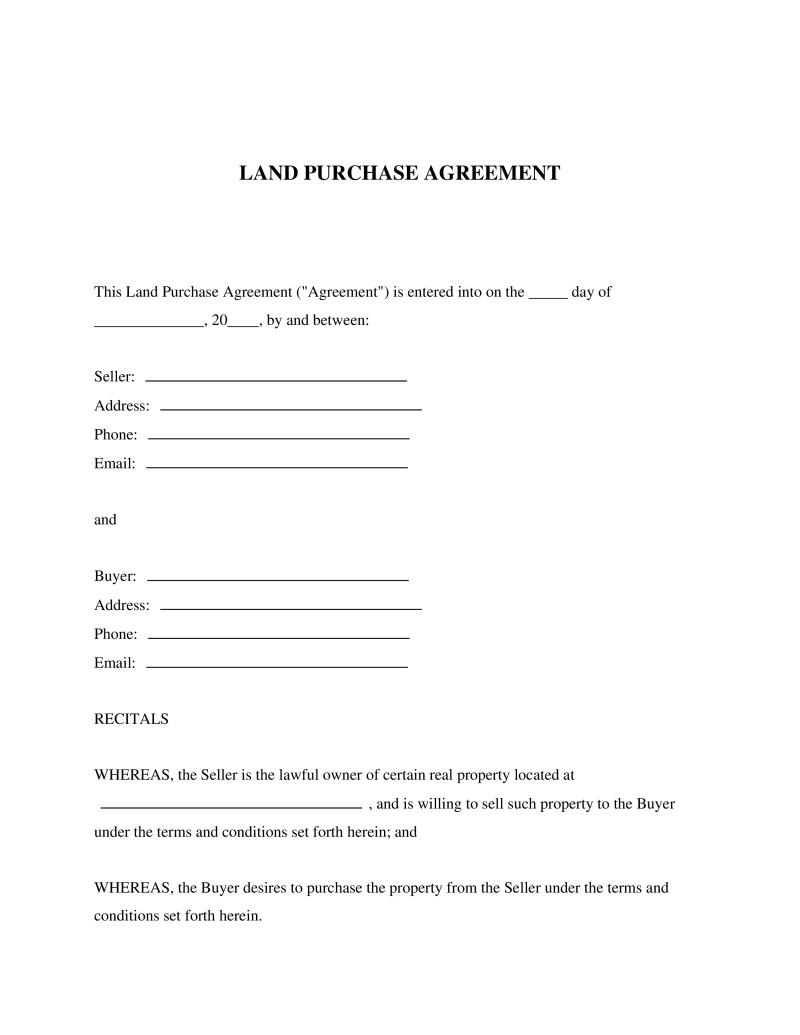
A Land Purchase Agreement is a legal contract that outlines the terms for buying and selling a parcel of land.
Are You The Buyer Or Seller
Select whether you are representing the Buyer or Seller in this transaction.
Table of Contents
What is a Land Purchase Agreement?
A Land Purchase Agreement is a legally binding document that outlines the terms and conditions under which land is sold and purchased. It serves as a contract between the buyer and seller, specifying details such as the purchase price, description of the property, and any contingencies that must be met before the sale can proceed. This document is essential for both parties involved in the transaction to ensure clarity, prevent misunderstandings, and provide a clear path to transfer ownership of the land. It is particularly crucial for individuals or entities looking to acquire land for development, investment, or personal use to secure their interests legally and financially.
Key Features
Important Provisions
- Description of Property - clause providing an exact location and boundaries of the land being sold.
- Purchase Price and Payment Terms - section detailing how and when payment will be made.
- Contingencies - clauses outlining conditions that must be met prior to finalizing the sale.
- Closing Date and Possession - specifying when ownership will officially change hands.
Pros and Cons
Pros
- +Provides a comprehensive framework for negotiating terms, protecting both buyer's and seller's interests.
- +Helps avoid potential disputes by clearly outlining all terms and conditions of the sale.
- +Facilitates a smoother transaction by detailing steps each party must take to fulfill their end of the bargain.
- +Ensures legal compliance by incorporating necessary legal provisions and disclosures.
- +Can be customized to address specific requirements of the property or needs of the parties involved.
Cons
- -May require professional legal assistance to understand complex legal jargon and ensure enforceability.
- -Could potentially delay proceedings if parties disagree on specific terms outlined in the agreement.
- -Modifications or amendments to the agreement must be agreed upon by both parties, which can complicate negotiations.
Common Uses
- Buying or selling undeveloped land for residential construction.
- Transferring ownership of agricultural land between entities.
- Acquiring commercial property for development projects.
- Divesting surplus property as part of estate planning or liquidation.
- Settling land disputes through agreed-upon sales.
Frequently Asked Questions
Not the form you're looking for?
Try our legal document generator to create a custom document
Disclaimer: The templates available on this website are provided for general informational purposes only and do not constitute legal advice. They are not intended to be, and should not be interpreted as, compliant with any specific legal, regulatory, or privacy requirements. These templates are not a replacement for professional legal guidance and should not be relied upon for any particular matter or circumstance. Users are strongly encouraged to seek advice from a qualified attorney licensed in their jurisdiction before using, modifying, or relying on any template.
All templates are provided on an "as is," "with all faults," and "as available" basis. The provider disclaims any and all warranties of any kind, whether express, implied, statutory, or otherwise, including without limitation warranties of merchantability, fitness for a particular purpose, title, or non-infringement.
LegalTemplates.com makes no guarantees or representations regarding the accuracy, completeness, expected outcomes, or reliability of the materials contained in these templates or any materials referenced or linked from them.