Profit and Loss Statement
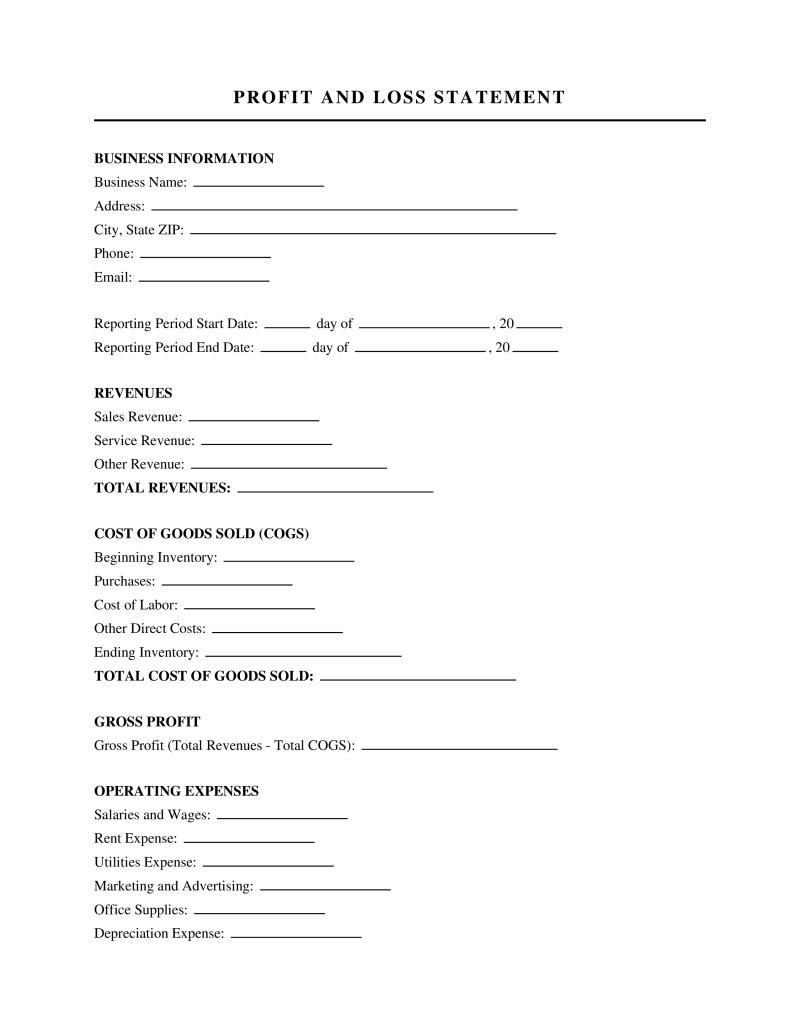
A Profit and Loss Statement, often abbreviated as P&L, is a vital financial report that summarizes a company’s revenues, costs, and expenses over a specific period.
Reporting Basis
Select the accounting method used for this Profit and Loss Statement.
Table of Contents
What is a Profit and Loss Statement?
A Profit and Loss Statement (P&L), also known as an Income Statement or Statement of Earnings, is a financial document that summarizes a company's revenues, costs, and expenses over a specified period. It provides a comprehensive view of a business's financial performance, indicating whether the company generated a net profit or incurred a net loss during that time. The fundamental purpose of a P&L is to measure net income or loss, which is calculated by subtracting total expenses from total revenues (Glossary of Business Financial Terms, SBA.gov). Businesses, investors, and creditors frequently use P&Ls to assess financial health, track performance trends, and make informed decisions.
Components of a Profit and Loss Statement
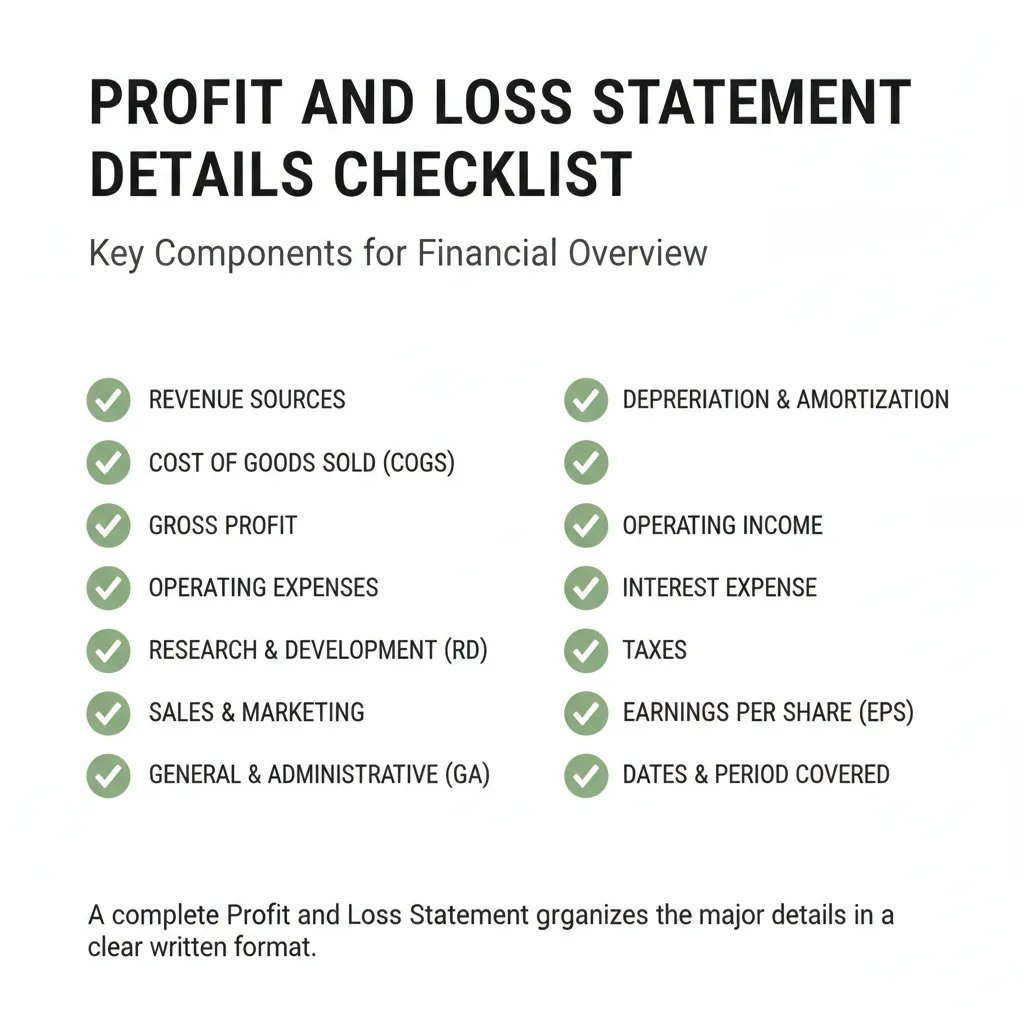
A Profit and Loss Statement is structured to present a clear picture of how revenues are transformed into net income. It typically begins with revenue and progressively deducts various costs and expenses to arrive at the final profit or loss figure.
- Revenue (Sales) - The total amount of money generated from the sale of goods or services before any expenses are deducted. This is often the first line item on a P&L.
- Cost of Goods Sold (COGS) - The direct costs attributable to the production of the goods sold by a company. This includes the cost of materials and direct labor used to create the product, but excludes indirect expenses like marketing or distribution.
- Gross Profit - Calculated by subtracting the Cost of Goods Sold from Revenue. This figure represents the profit a company makes before accounting for operating expenses, interest, or taxes. Publication 334 (2025), Tax Guide for Small Business, details how to calculate gross profit for small businesses.
- Operating Expenses - Costs incurred in the normal course of business operations that are not directly tied to production. Examples include salaries, rent, utilities, marketing, and administrative expenses.
- Operating Income (EBIT) - Earnings Before Interest and Taxes, derived by subtracting operating expenses from gross profit. This shows a company's profitability from its core operations.
- Interest Expense - The cost of borrowing money, such as interest paid on loans or lines of credit.
- Taxes - The amount of income tax owed by the business, calculated based on its taxable income.
- Net Income (Net Profit or Loss) - The final figure on the P&L, representing the total profit or loss for the period after all revenues and expenses, including taxes, have been accounted for. This is the ultimate measure of a company's profitability.
Purpose and Importance
The Profit and Loss Statement serves multiple critical functions for businesses, stakeholders, and regulatory bodies. It is a fundamental tool for understanding a company's financial performance over a specific period, typically a quarter or a year.
- Performance Evaluation - Allows business owners and managers to assess the effectiveness of their operations, identify trends, and pinpoint areas for improvement. By comparing P&Ls from different periods, businesses can track growth, profitability, and expense control.
- Decision Making - Provides essential data for strategic planning, budgeting, and investment decisions. For instance, understanding gross profit margins can inform pricing strategies, while analyzing operating expenses can guide cost-cutting initiatives.
- Tax Reporting - The information contained in a P&L is crucial for preparing tax returns. Businesses use their net income or loss to calculate their tax liability or claim deductions, as explained in resources like Publication 334 (2025), Tax Guide for Small Business.
- Attracting Investors and Lenders - Potential investors and lenders rely heavily on P&Ls to evaluate a company's profitability and financial viability before committing capital or extending credit. A strong history of net profit signals a healthy and sustainable business.
- Compliance and Transparency - Publicly traded companies are required to disclose their P&Ls to maintain transparency for shareholders and comply with regulatory standards. Even small businesses often need to provide P&Ls to demonstrate financial health for various purposes.
Calculating Profit and Loss
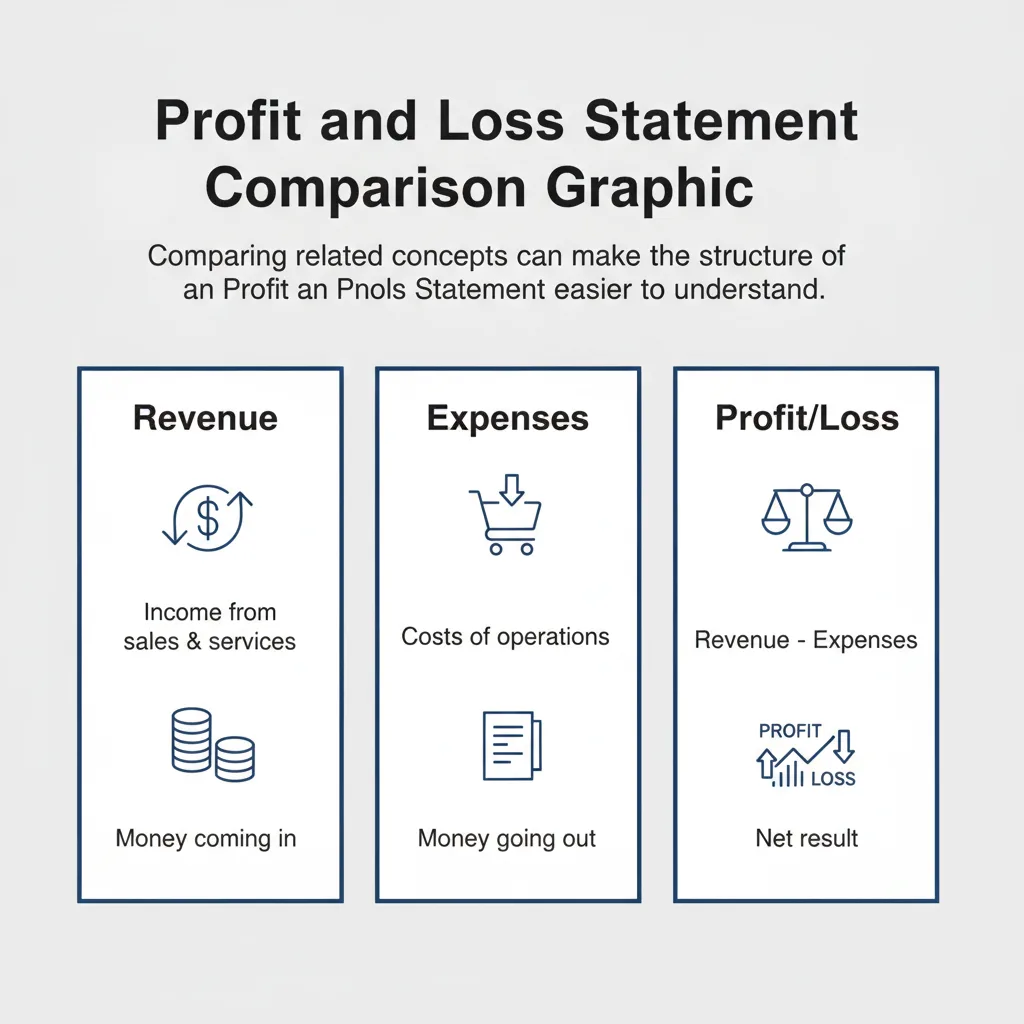
The calculation of profit and loss follows a systematic deduction process, starting from total revenues and progressively subtracting various types of costs and expenses. This tiered approach allows for the analysis of different levels of profitability within a business.
The fundamental formula for net income is:
Revenues – Expenses = Net Income/Loss (Glossary of Business Financial Terms, SBA.gov)
However, a P&L typically breaks down expenses further to show intermediate profit figures:
- Gross Profit Calculation - This is the first level of profit, indicating how much money a company makes from its core product or service sales before considering overheads. It is calculated as: Revenue – Cost of Goods Sold = Gross Profit.
- Operating Income Calculation - This shows the profit generated from a company's primary business activities, excluding non-operating items like interest and taxes. It is calculated as: Gross Profit – Operating Expenses = Operating Income.
Frequently Asked Questions
Sources
- Instructions for Schedule F (Form 1040) - Profit or Loss From Farming - Provides instructions for reporting profit or loss from farming activities, including details on income and expenses.
- Publication 334 (2025), Tax Guide for Small Business - Offers guidance on various aspects of small business taxation, including the preparation of profit and loss statements.
- Glossary of Business Financial Terms - Defines key financial terms, including 'Profit and Loss Statement' (P&L), also known as the Income Statement or Statement of Earnings.
Not the form you're looking for?
Try our legal document generator to create a custom document
Disclaimer: The templates available on this website are provided for general informational purposes only and do not constitute legal advice. They are not intended to be, and should not be interpreted as, compliant with any specific legal, regulatory, or privacy requirements. These templates are not a replacement for professional legal guidance and should not be relied upon for any particular matter or circumstance. Users are strongly encouraged to seek advice from a qualified attorney licensed in their jurisdiction before using, modifying, or relying on any template.
All templates are provided on an "as is," "with all faults," and "as available" basis. The provider disclaims any and all warranties of any kind, whether express, implied, statutory, or otherwise, including without limitation warranties of merchantability, fitness for a particular purpose, title, or non-infringement.
LegalTemplates.com makes no guarantees or representations regarding the accuracy, completeness, expected outcomes, or reliability of the materials contained in these templates or any materials referenced or linked from them.